“Which would you rather scale: an army of identical machines that never call in sick, or thousands of kitchens that depend on humans to show up?”
You are standing at the threshold of a choice that will define growth, margin and resilience for your chain. Autonomous fast food and human-run outlets promise different things: speed to scale, predictable unit economics, and reduced labor exposure on one side; familiarity, flexibility and lower upfront hardware cost on the other. You will care most about scalability and maintenance; those two levers decide whether a roll-out turns into a domino of profitable cluster launches, or a costly series of one-off problems.
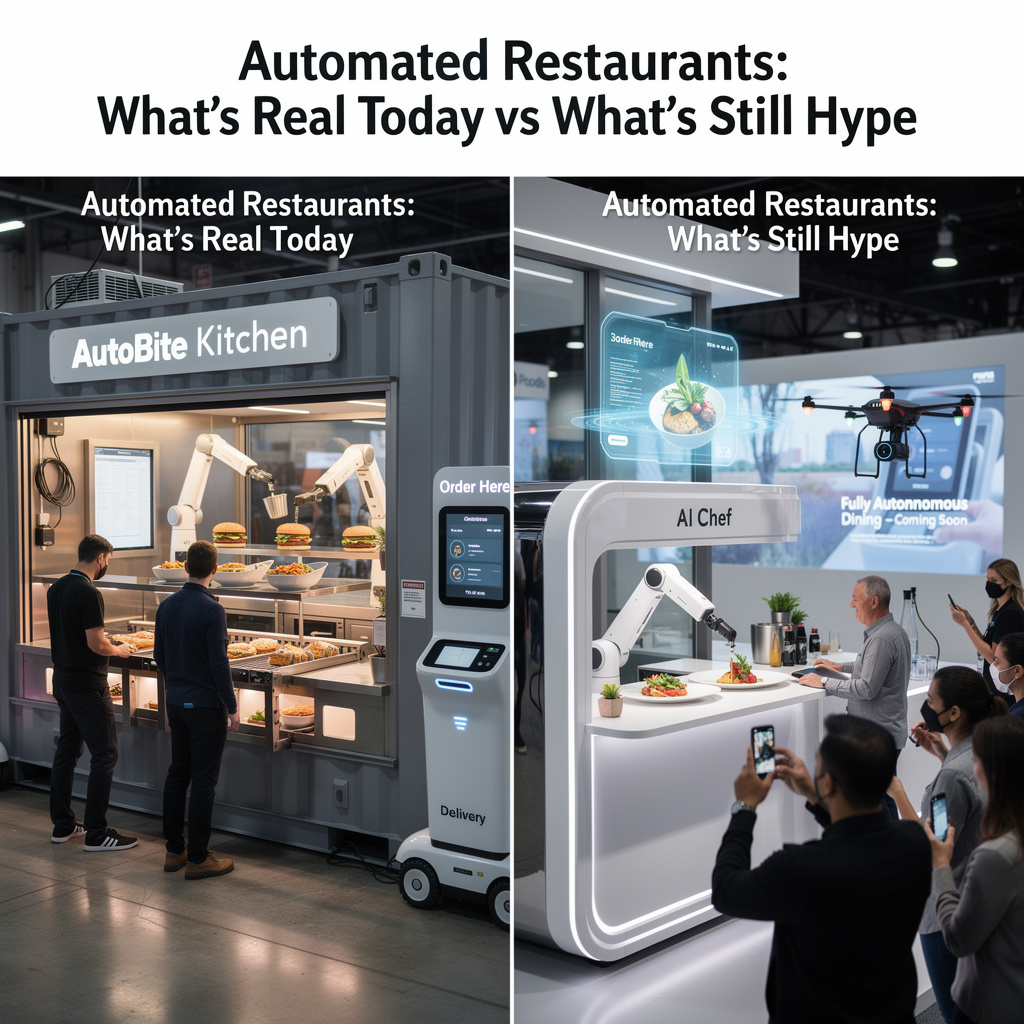
Early pilots and market studies show automation can cut labor spend substantially, and market demand for robotic kitchens is rising quickly, which matters if you are planning hundreds or thousands of locations. See for example internal analysis that suggests robotics can cut fast-food labor costs by up to 50 percent in large deployments and a market estimate that the restaurant robotics market was roughly $1.8 billion in 2026, growing faster than many expected .
Table of contents
- What you will read about
- Why this decision matters to enterprise chains
- Scalability comparison
- Cost and ROI fundamentals
- Maintenance and reliability: the operational spine
- Food safety, cleaning and regulatory compliance
- Cybersecurity and data governance
- Vertical-specific considerations
- Risks, limitations and mitigation
- Implementation checklist and pilot plan
- Comparison table: side-by-side attributes
- Promises versus reality for each model
Why this decision matters to enterprise chains
You need growth that scales predictably. Labor constraints, wage inflation and the relentless shift to delivery compress margins. Autonomous fast food offers a path to accelerate expansion and defend margins. Human-run outlets offer local adaptability and lower early capex. Your choice is not one-size-fits-all. It depends on orders per day, density, regulatory complexity and how much you value consistent throughput over local customization. Reports and pilots tell the same story: the economics shift in favor of automation once you hit cluster scale and tight delivery catchment areas. For high-volume, repeatable menus, robotics shine. For highly variable menus or low-volume neighborhoods, humans still make sense.
Scalability: how the two models expand
Autonomous fast food: deployment speed and footprint
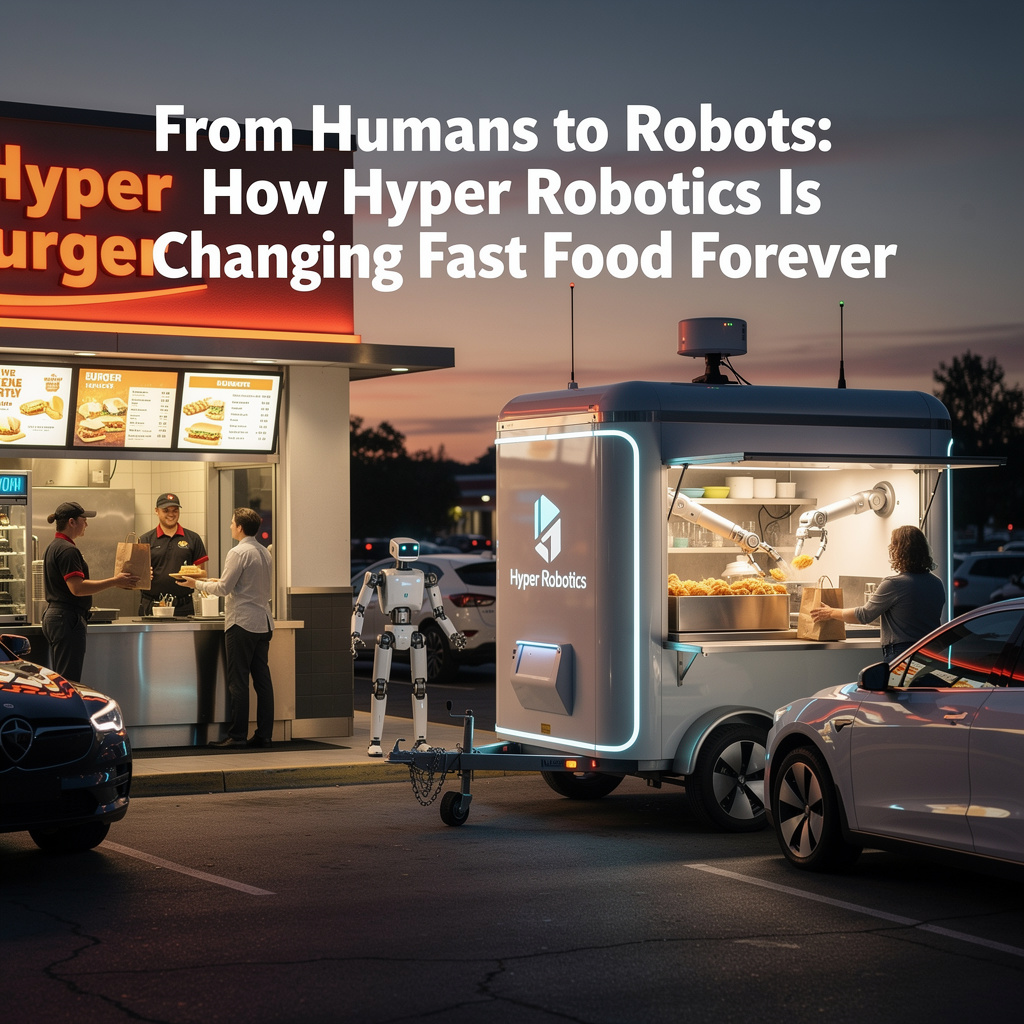
You can pre-assemble a containerized kitchen, ship it, and commission in days. Factory testing reduces commissioning risk. A 20- to 40-foot container approach decouples you from local contractor schedules and complex build-outs. That means you scale by shipping units rather than hiring and training dozens of crews.
Human-run outlets: deployment speed and footprint
You depend on construction timelines, local permitting, hiring and training. Typical conventional store build-outs often take months and vary wildly by geography. That variability slows portfolio roll-outs and increases project management overhead.

Autonomous fast food: standardization and brand consistency
Robots execute recipes the same way, every time. Machine vision and sensor-driven controls enforce portion sizes and cook times, which reduces waste and complaint rates. That yields predictable average ticket and repeatable margins per location.
Human-run outlets: standardization and brand consistency
You get flexibility but at a cost. Training, shift changes and local manager discretion introduce variability in quality and throughput. You can invest heavily in training and QA, but human variability never reaches the consistency of a well-designed robotic workflow.
Autonomous fast food: fleet and cluster orchestration
You will need a central orchestration layer to manage software updates, menu changes and demand routing across clusters. This orchestration is critical if you want to scale to hundreds of units while keeping unit economics predictable.
Human-run outlets: fleet and cluster orchestration
Your orchestration is organizational. You manage SOPs, regional managers and training programs. Software helps, but people still carry core execution risk.
Cost and ROI fundamentals
Autonomous fast food: CapEx, OpEx and labor economics
Expect higher upfront hardware cost per unit and lower direct labor cost over time. A proper financial model tracks hardware amortization, network and service contracts, spare parts, and energy use. For many enterprise pilots, the math flips positive when labor savings and higher throughput offset CapEx within a defined payback window.
Human-run outlets: CapEx, OpEx and labor economics
Lower initial hardware, but recurring and rising labor expense. Labor inflation and turnover create unpredictability in OpEx. Training, scheduling and benefits are ongoing line items that scale with locations.
Autonomous fast food: throughput, yield and revenue density
Robotic workflows optimize for cycle time and utilization. You can often run extended service windows and increase orders per hour during peaks, which raises revenue per square foot. In delivery-focused hubs that see sustained demand, this multiplies quickly.
Human-run outlets: throughput, yield and revenue density
You can flex staff to peak demand, but human limits cap sustained throughput and accuracy. Breaks, mistakes and training gaps reduce effective throughput. For some menus, human speed is competitive. For high-repetition tasks, automation tends to win.
Maintenance and reliability – the operational spine
You should treat maintenance as a strategic function, not a cost center. Your uptime target will determine spare parts inventory, the SLA for field service, and the mix of preventive and predictive maintenance you adopt.
Autonomous fast food: preventive versus predictive maintenance
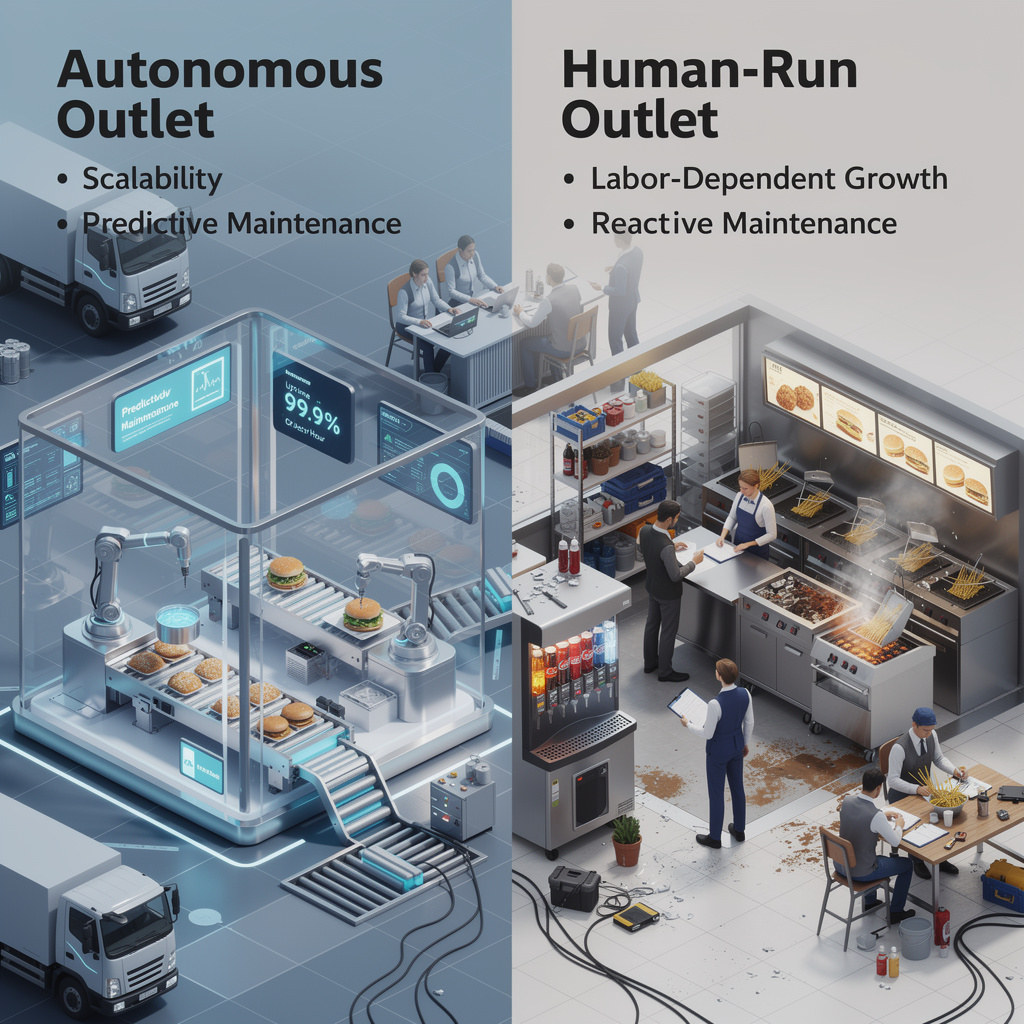
Sensors and telemetry enable predictive maintenance models. You can analyze vibration, temperature, cycle counts and error logs to predict failure windows. Predictive maintenance reduces unplanned downtime and keeps spare parts leaner.
Human-run outlets: preventive versus predictive maintenance
Maintenance centers on equipment service schedules, vendor visits and operator checks. Predictive tools exist for ovens and refrigeration, but human variability in reporting issues lengthens time-to-repair.
Autonomous fast food: MTTR, remote diagnostics and hot-swap design
Design your units for low mean time to repair. Modular subsystems, hot-swappable components and remote diagnostics let you fix many faults without on-site visits. A robust remote-first playbook will reduce travel costs and speed restoration.
Human-run outlets: MTTR, diagnostics and vendor dependence
You depend on local technicians and vendor response times. Parts procurement and scheduling often delay repairs. MTTR is a function of local service ecosystems and contract terms.
Food safety, cleaning and regulatory compliance
Automated units excel at traceability and digital HACCP logs. Integrated temperature sensors, automated cleaning cycles and documented sanitation events simplify audits. You must still certify materials and processes for local health codes.
Cybersecurity and data governance
You must treat robot fleets as distributed IoT systems. Apply device provisioning, certificate-based auth, OTA update controls and network segmentation. Define data ownership and analytics access in contracts to avoid disputes with franchisees or partners.
Vertical-specific considerations
Different menu verticals create specific maintenance and operational demands. Pizza automation needs robust dust and flour management. Burger lines require grease control and thermal safety. Cold-prep salad units must manage refrigeration with rapid failover. Ice cream systems demand careful freeze-thaw and sanitation cycles.
| Attribute | Autonomous fast food (typical) | Human-run outlets (typical) |
|---|---|---|
| Deployment time | days to weeks (containerized) | 3–9 months (build-out) |
| Initial capex per unit | high (hardware + integration) | moderate (fit-out + equipment) |
| Operating expense drivers | energy, service contract, parts | labor, utilities, maintenance |
| Labor cost reduction | up to 50% in pilots (vendor dependent) | none to modest (process improvement) |
| Orders per hour (peak) | higher with continuous workflow | limited by staffing and human speed |
| Uptime target | 99%+ with predictive maintenance | depends on local support and scheduling |
| Mean time to repair (MTTR) | low if modular design + remote diag | variable, often higher |
| Regulatory complexity | high on certification, but uniform | high and variable by locale |
| Time to scale nationally | months for clusters | years for thousands of stores |
Continue the breakdown by axis and evaluate promised potential vs real-world performance.
Promises versus reality: autonomous fast food
Autonomous fast food: promises
You are promised plug-and-play rollouts, uniform quality, labor savings and near-continuous operation. Vendors pitch remote patching, predictive maintenance, and fleet orchestration that lets you scale faster than franchise roll-outs. Some firms promise payback in a short window if order density meets thresholds.
Autonomous fast food: reality
Reality includes integration friction, certification cycles, and service ecosystem setup. Predictive maintenance works, but only after you instrument units and collect failure-mode data. Remote fixes cover many cases, but spare-part logistics matter. Early adopters found that labor savings approached vendor claims once clusters reached adequate throughput. A sensible pilot will reveal true MTTR and actual labor displacement rates in your geography.
Promises versus reality: human-run outlets
Human-run outlets: promises
You are promised lower initial hardware expense, local adaptability and the ability to tailor service. Human teams can upsell and handle nonstandard requests easily. Community acceptance is typically higher with staff on site.
Human-run outlets: reality
Turnover and training gaps create recurring costs. Quality drift over time is real. Scaling thousands of consistent locations requires heavy investment in training and QA. Labor shortages and wage growth make future OpEx uncertain. If your growth plan requires rapid geographic expansion into low-labor regions, human-run models struggle.
Which model delivers closer to its promises?
You will find that autonomous systems deliver closer to promised consistency and labor savings when you design maintenance, spares and SLAs from day one. Human-run outlets deliver on flexibility and lower capex but under-deliver on predictable throughput at scale. The right answer is hybrid in many cases: deploy autonomous, containerized units where demand density and menu repetition make automation efficient, and use human-run stores for flagship locations or where local service differentiates the brand.
Implementation checklist and pilot plan for CTO/COO
Choose a delivery-dense pilot site. Define KPIs: orders/day, order accuracy, uptime target (for example, 99.5%), average ticket, cost per order. Contract a service SLA with defined MTTR and parts availability. Instrument units with telemetry and ensure remote diagnostic access. Prepare a spare-parts staging area within target regions to meet SLA windows. Integrate POS, aggregators and analytics before customer-facing launch. Train a small field-service team and run simulated failures before go-live.
Data and market signals you should watch
Market reports indicate rapid growth in service robotics and delivery automation; the near-term opportunity is concentrated in QSR and delivery hubs. For more context on market projections and deployment guides see a 2026 summary of restaurant robotics and trend analysis on restaurant automation you can reference here . For delivery robot market dynamics and last-mile impact see https://www.coherentmarketinsights.com/market-insight/autonomous-delivery-robots-market-5147.
Real-life examples and numbers you should care about
Miso Robotics and similar vendors have piloted automated fry and assembly stations; Creator has demonstrated automated burger lines in public rollouts. Internal Hyper-Robotics pilots suggested a 50 percent reduction in the labor component for repetitive roles when properly instrumented [https://www.hyper-robotics.com/blog/can-robotics-in-fast-food-solve-labor-shortages-by-2030]. Use those pilots as benchmarks, then run a one-month live pilot in a high-density catchment and track real order counts, downtime minutes, MTTR and cost per order.
Practical tips to control maintenance costs
Design for modular swaps. Keep a local spares pool sized for your SLA. Monitor component lifecycles and rotate stock before failure windows. Invest in edge analytics that convert telemetry into actionable tickets. Negotiate service credits for missed SLA windows. Train local technicians with vendor-certified curricula and keep escalation paths clear.
Consumer acceptance and change management
You will persuade customers by making the experience seamless. Provide clear UI, easy substitution options, and a human fallback for complex requests. Pilot with heavy signage and staff to explain the experience. Report accuracy and speed metrics publicly to build trust.
Legal, insurance and regulatory notes
Early engagement with local health departments reduces surprises. Maintain documentation for HACCP-style traceability and material certifications. Clarify insurance coverage for robotics and product liability. Put data ownership terms in franchise and aggregator contracts.
What to expect in the first 24 months
If you run disciplined pilots and instrument systems, expect measured improvements: fewer order errors, lower labor spend in automated roles, and faster regional scaling where demand exists. Expect a learning curve in MTTR and spare parts inventory optimization. After one year, predictive maintenance models should meaningfully reduce unplanned downtime.
How to decide for your portfolio
Map locations by order density, delivery demand, and labor cost risk. Run a fast ROI sensitivity model: orders/day, average ticket, labor cost per hour, hardware amortization period, and service fee. Deploy autonomous units where the model shows clear payback within your target horizon.
Key partnerships you should explore
You will need strong vendors for hardware, a regional service partner for field repairs, and software providers for orchestration. Build relationships with logistics providers for spare parts and with local health authorities early. Consider multiple component vendors to reduce single-source risk.
Key performance monitoring dashboard
Track uptime, MTTR, orders per hour, order accuracy, energy cost per order, spare parts turnover, and service response times. These metrics will tell you when to scale clusters or re-evaluate SLA terms.

Key takeaways
– Start with a high-density pilot, instrument heavily, and measure MTTR, orders/day and cost per order before committing to scale.
– Design autonomous units for modular maintenance, remote diagnostics and regional spare parts staging to meet SLAs.
– Use a hybrid portfolio: automate repeatable, delivery-focused units, keep human-run locations for brand experience and complex orders.
– Negotiate clear data ownership and cybersecurity responsibilities before deployment.
– Use predictive maintenance and telemetry to drive uptime targets above 99 percent and minimize unexpected service trips.
FAQ
Q: How quickly can I deploy autonomous units at scale?
A: Deployment speed depends on your site selection and permitting. Containerized autonomous units can be commissioned in days to weeks once a site is prepped, but you must factor in certification, connectivity and staff for initial rollout. For nationwide scaling, plan regional spares hubs and trained field teams to maintain SLAs. A staged cluster approach will let you learn and replicate faster.
Q: What are realistic uptime and MTTR targets?
A: Aim for uptime above 99 percent for revenue-critical units. MTTR targets depend on modularity and spares availability; a realistic early target is 24 hours for non-critical faults and 4–8 hours for hot-swappable module replacement if you maintain regional spare pools. Track failure modes closely and adjust spares to meet SLA windows.
Q: How do I calculate ROI for autonomous vs human-run?
A: Build a sensitivity model with inputs: hardware amortization, orders per day, average ticket, labor cost savings, service fees, energy costs and expected downtime. Run conservative, base and aggressive cases. Use pilot data to validate assumptions and refine payback windows.
Ask yourself three questions as you plan next steps: Are your demand clusters dense enough to justify hardware amortization? Do you have the regional maintenance capacity to meet aggressive SLAs? Are your franchise agreements and data policies ready for a connected, robotic future?
About Hyper‑Robotics
Hyper Food Robotics specializes in transforming fast-food delivery restaurants into fully automated units, revolutionizing the fast-food industry with cutting-edge technology and innovative solutions. We perfect your fast-food whatever the ingredients and tastes you require.
Hyper-Robotics addresses inefficiencies in manual operations by delivering autonomous robotic solutions that enhance speed, accuracy, and productivity. Our robots solve challenges such as labor shortages, operational inconsistencies, and the need for round-the-clock operation, providing solutions like automated food preparation, retail systems, kitchen automation and pick-up draws for deliveries.