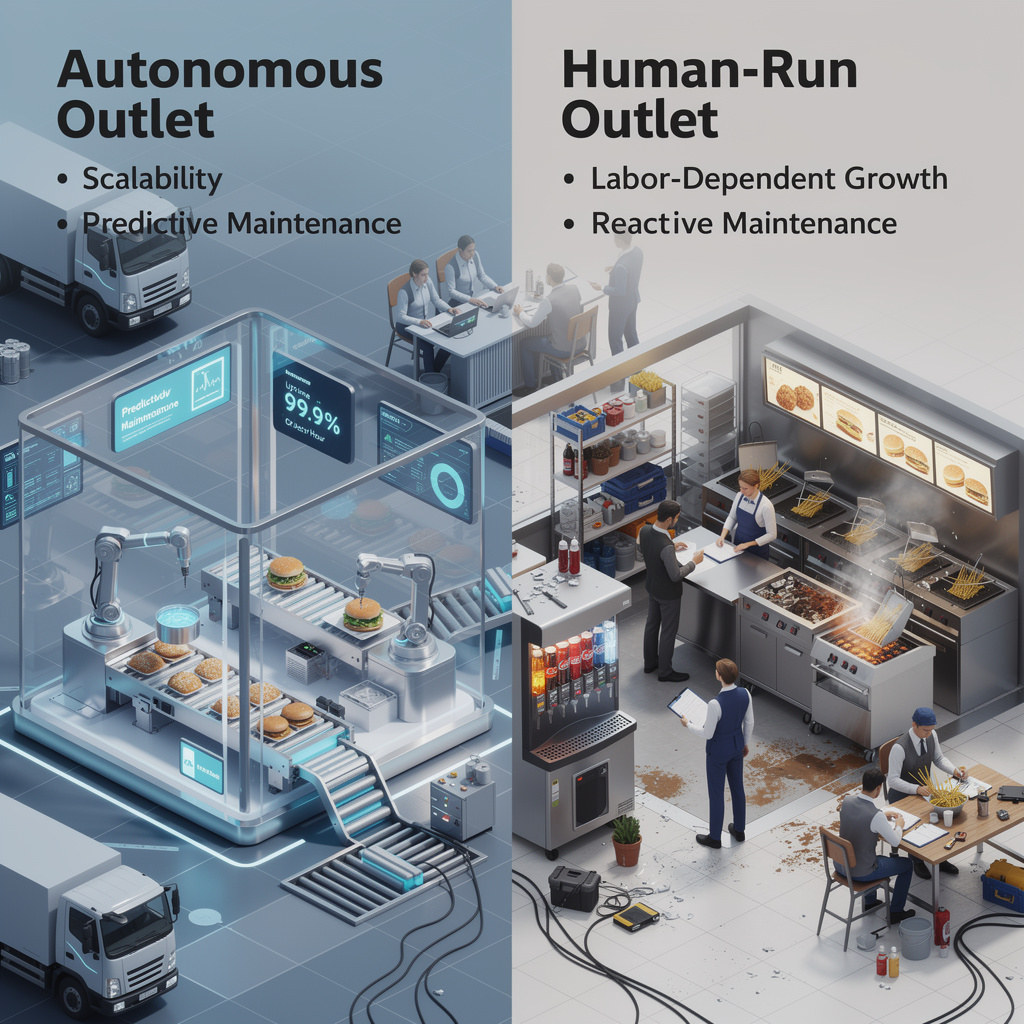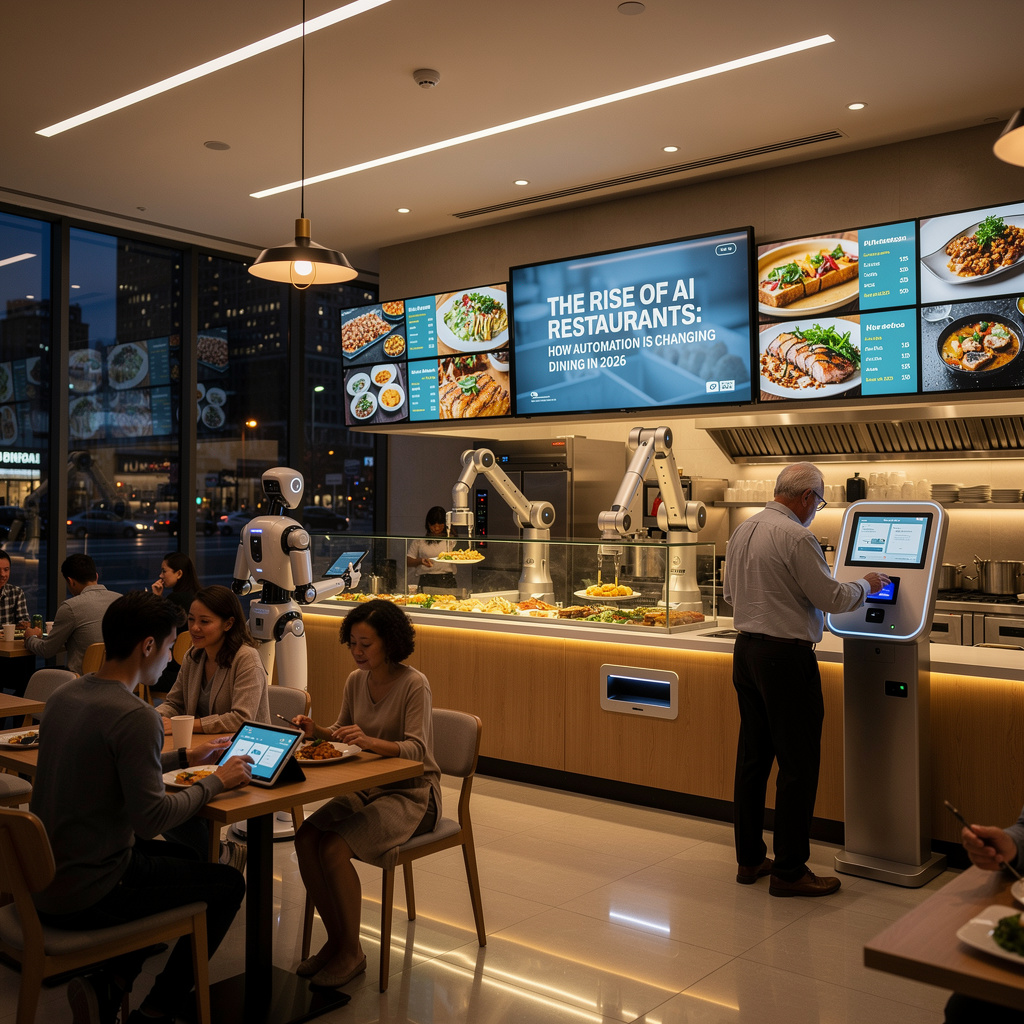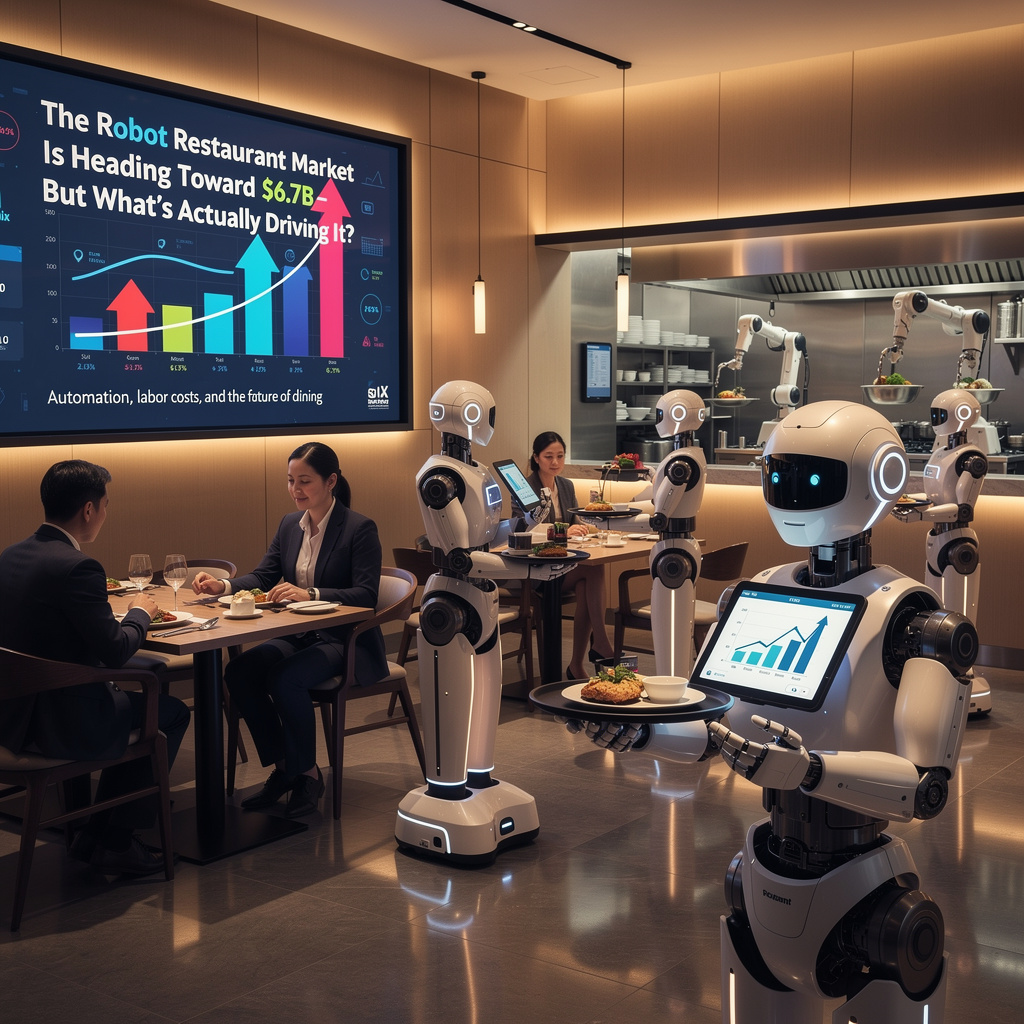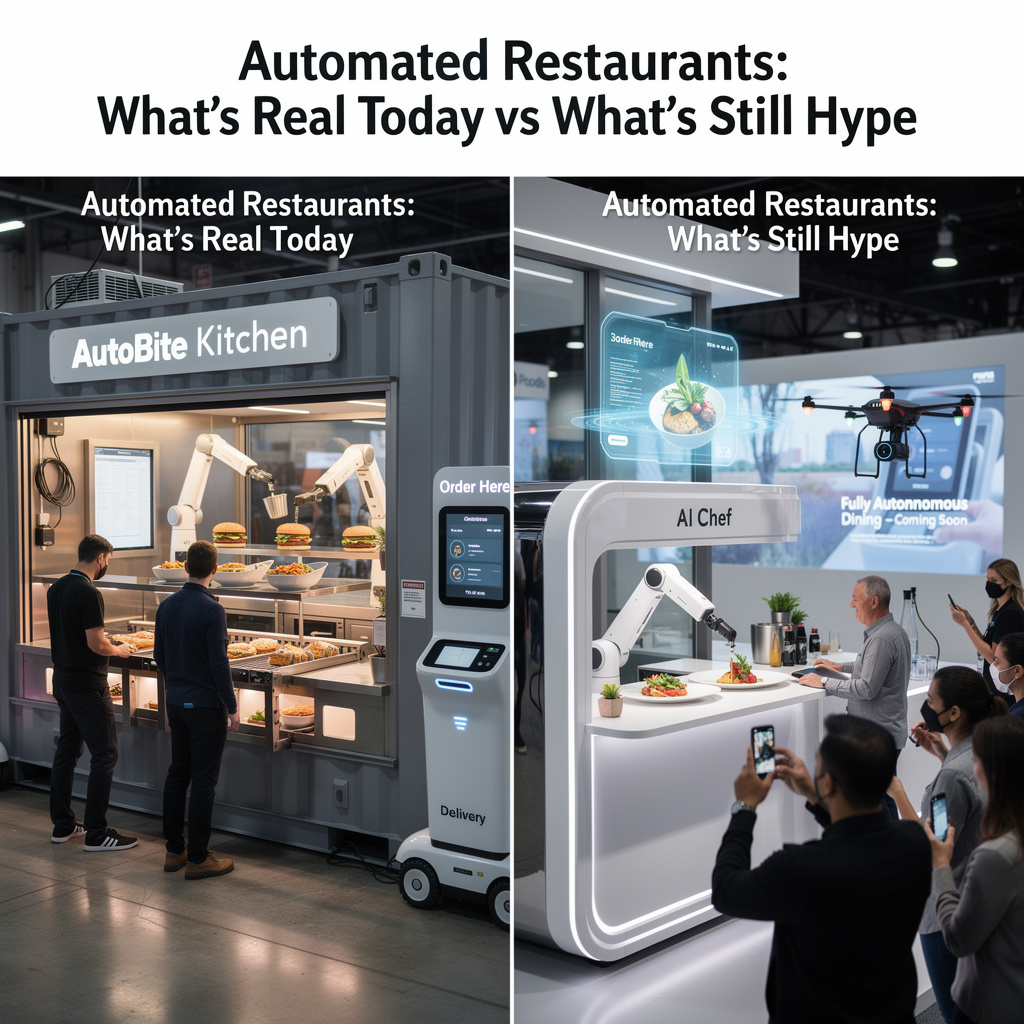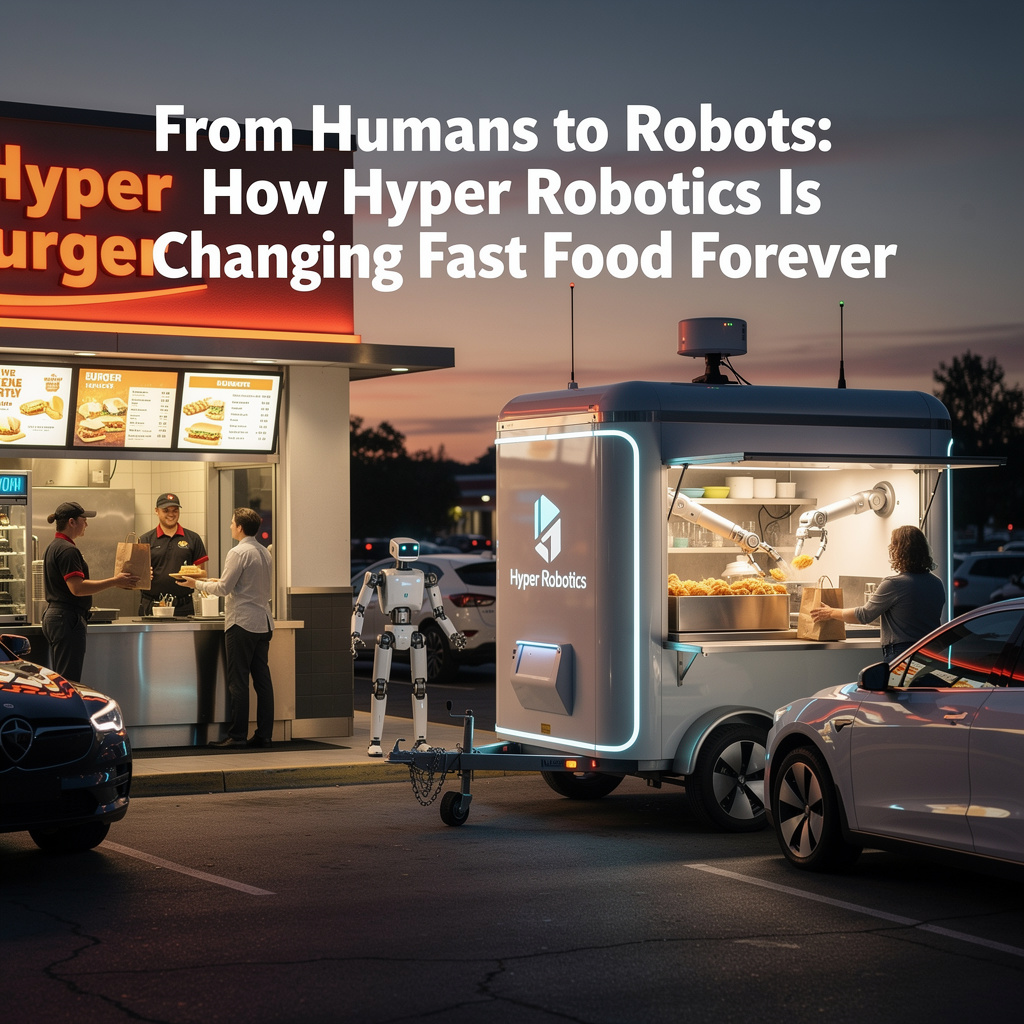
Fast food is at a tipping point. Autonomous fast food solutions, fast food robots, and robotics in fast food are moving from pilots to production. Rising labor costs, chronic staffing gaps, and booming delivery demand force chains to rethink store economics and speed. Hyper Robotics answers with plug-and-play, IoT-enabled, fully functional 40-foot and 20-foot container restaurants that deliver consistent quality, faster scale, and round-the-clock fulfillment, while cutting waste and improving food safety.
Table Of Contents
- The State Of Fast Food Today
- Meet Hyper Robotics
- How Robotics Fixes Core Operational Problems
- Vertical Use Cases
- Technology Architecture For CTOs
- Business Impact And ROI
- Implementation Roadmap
- Objections And Answers
- Sustainability And Brand Opportunity
- Key Takeaways
- FAQ
- About Hyper-Robotics
The State Of Fast Food Today
Labor shortages and rising wages squeeze margins. Turnover increases training costs and creates inconsistent execution. Delivery and ghost kitchen demand shift volume to time-sensitive fulfillment, straining legacy kitchens and service models. Observers note robotics are quietly entering the market and reshaping roles and processes; see this industry analysis of how automation is infiltrating fast food for broader context [how robots are quietly taking over fast food].
Meet Hyper Robotics
Hyper Robotics builds modular, full-stack robotic restaurants that are designed for rapid enterprise deployment. The company’s core offering is IoT-enabled, fully-functional 40-foot container restaurants that operate with zero human interface, ready for carry-out or delivery, and compact 20-foot automated units optimized for delivery-first operations. For a strategic view of how robotics will reshape menus and scale through 2030, see our detailed perspective on the future format. For an operational overview of the shift from manual kitchens to automated systems, review our company overview [From Manual to Machine – how Hyper Robotics are changing fast food].

How Robotics Fixes Core Operational Problems
Speed and throughput improve because robots maintain strict cycle times and enable efficient batching. Consistency increases through machine vision and precise actuators, so every sandwich, pizza, or bowl follows the same recipe. Food safety improves with no-touch handling and automated sanitation, reducing cross-contamination risk. Waste drops thanks to exact portioning and inventory-driven production. Autonomous units also operate 24/7, creating new revenue windows without shift premiums.
Vertical Use Cases
Pizza
Automated dough handling, consistent stretching, and controlled bake profiles produce repeatable pies at scale. Order batching optimizes oven runs for delivery windows.
Burgers
Automated griddles and robotic assembly maintain doneness, portion control, and build sequence even at peak throughput. This reduces refunds and remakes.
Salad Bowls
Portion-controlled dispensers and freshness sensors minimize spoilage. Automated allergen separation reduces cross-contact risk.
Ice Cream
Precision dispensing and temperature-stable storage allow rapid customization without over-portioning or meltdown losses.
Technology Architecture For CTOs
Units are systems of systems. Machine vision with multiple AI cameras verifies placement and completion. Hundreds of distributed sensors monitor temperature, humidity, and equipment health. Edge nodes handle real-time control, while cloud clusters orchestrate multi-unit fleets and balance regional demand. Cybersecurity is built in, with encrypted communications, role-based access, and audit trails to protect OT and IT integrations such as POS and aggregator APIs. Integration patterns should include secure API gateways, event-driven telemetry, and automated firmware update pipelines to maintain fleet-wide consistency and compliance.
Business Impact And ROI
Plug-and-play containers shorten time-to-market compared with traditional builds. Lower labor expense, less waste, and higher throughput drive improved unit economics. Clustered deployments enable controlled rollouts and rapid geographic expansion. Pilots should measure order accuracy, throughput, delivery time, and food cost to build a site-specific payback model. Early enterprise rollouts have shown material improvements in consistency and capacity when measured against comparable staffed locations.
Implementation Roadmap
Start with a focused pilot, with clear KPIs and a test menu. Integrate POS, loyalty, and delivery partners in the pilot phase. Use cluster orchestration to add units and smooth regional demand. Standardize SOPs and SLAs before a full roll-out. Maintain remote diagnostics and a field-service plan to ensure uptime. Plan integration sprints early to prevent delays during pilot to scale phases, and use telemetry-driven maintenance to reduce mean time to repair.
Objections And Answers
Robots cannot match human taste preferences, some say. Automation is calibrated to sensory and thermal controls, and pilots often show parity or improvement in consistency. Customer acceptance is a marketing challenge, and co-branded launches and transparency about process help adoption. Security and privacy concerns require encryption, audits, and documented data governance. CapEx questions are addressed through deployment and financing models that convert large upfront costs into predictable OpEx where needed.
Sustainability And Brand Opportunity
Automation reduces overproduction and chemical use through precise cleaning and portioning. Localized fulfillment lowers delivery distance, which can cut emissions. For brands, autonomous units are a visible innovation story and a 24/7 channel for incremental revenue. Piloted deployments also create searchable metrics for ESG reporting and marketing.

Key Takeaways
- Pilot before scale: define order accuracy, throughput, and delivery KPIs, then iterate.
- Use cluster orchestration to balance regional demand and accelerate expansion.
- Prioritize integrations: POS, aggregators, and inventory systems deliver measurable ROI.
- Measure total cost of ownership, including uptime, waste reduction, and labor savings.
- Communicate clearly to customers to drive trial and acceptance of automation.
FAQ
Q: How long does a typical pilot take to show results?
A: A well-scoped pilot runs 6 to 12 weeks for initial operational tuning, with measurable KPI shifts often visible within the first month. Start small with a limited menu to stabilize cycles, then expand to full menu items. Measure order accuracy, throughput, and delivery times daily to guide adjustments. Use those metrics to model payback and decide on cluster expansion.
Q: How does Hyper Robotics handle food safety and sanitation?
A: Autonomous units use no-touch handling for critical steps, automated sanitation cycles, and food-grade materials such as stainless steel. Temperature and humidity sensors monitor conditions continually, and machine vision verifies procedural compliance. These systems generate audit logs to support health inspections and compliance. Regular maintenance and remote diagnostics ensure sanitary systems remain effective.
Q: What integrations are required for enterprise deployment?
A: Core integrations include the POS, loyalty, online ordering, and delivery aggregator APIs. Inventory and production management systems must sync in real time to avoid stockouts and overproduction. Authentication and role-based access should align with corporate IT policies. Plan integration sprints early to prevent delays during pilot to scale phases.
Q: How do you address cybersecurity concerns for connected robotic units?
A: Security should be treated as part of the product design, not an afterthought. Use encrypted communications, segmented networks for OT and IT, and role-based access controls. Implement audit trails and automated alerts for anomalous behavior. Perform regular security assessments and keep firmware updated via secure channels.
Would you like to schedule a pilot demo or receive a technical spec sheet to evaluate potential deployment in your regions?
About Hyper-Robotics
Hyper Food Robotics specializes in transforming fast-food delivery restaurants into fully automated units, revolutionizing the fast-food industry with cutting-edge technology and innovative solutions. We perfect your fast-food whatever the ingredients and tastes you require.
Hyper-Robotics addresses inefficiencies in manual operations by delivering autonomous robotic solutions that enhance speed, accuracy, and productivity. Our robots solve challenges such as labor shortages, operational inconsistencies, and the need for round-the-clock operation, providing solutions like automated food preparation, retail systems, kitchen automation and pick-up draws for deliveries.