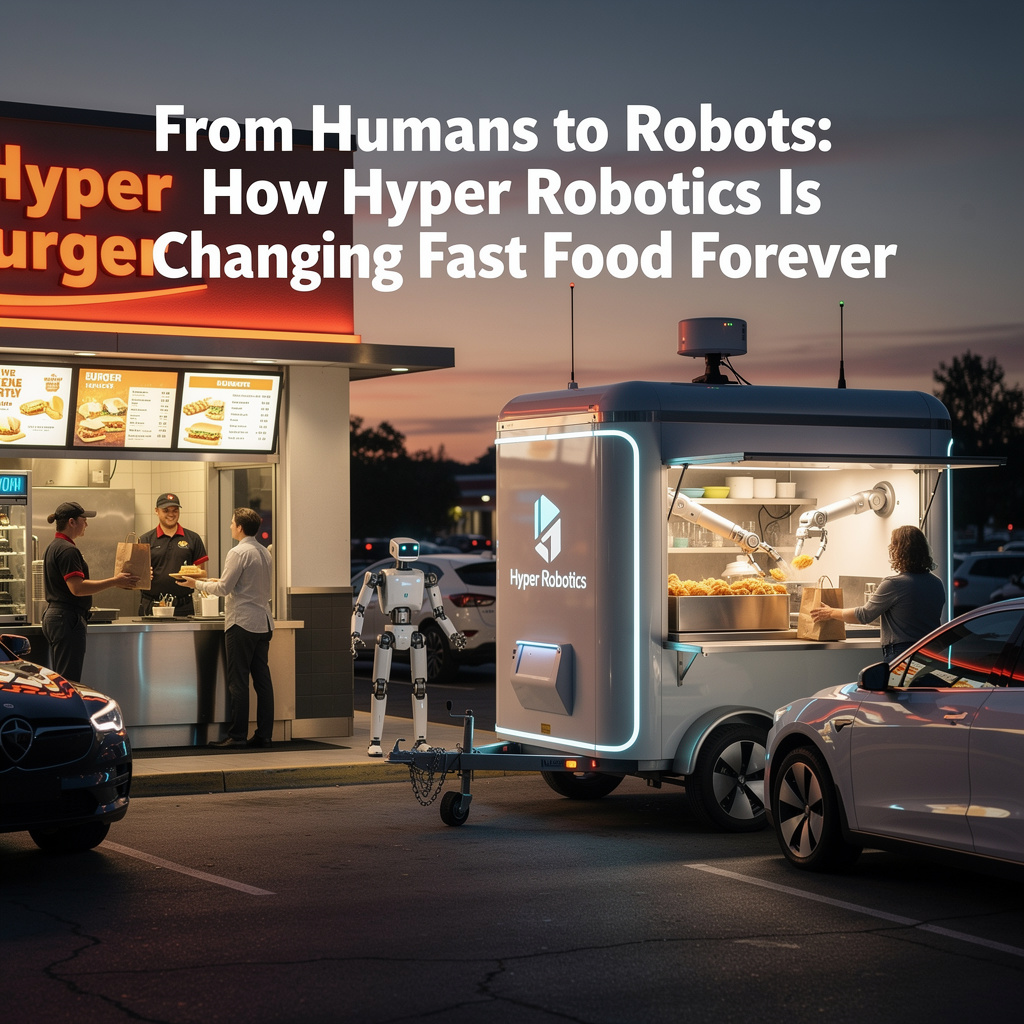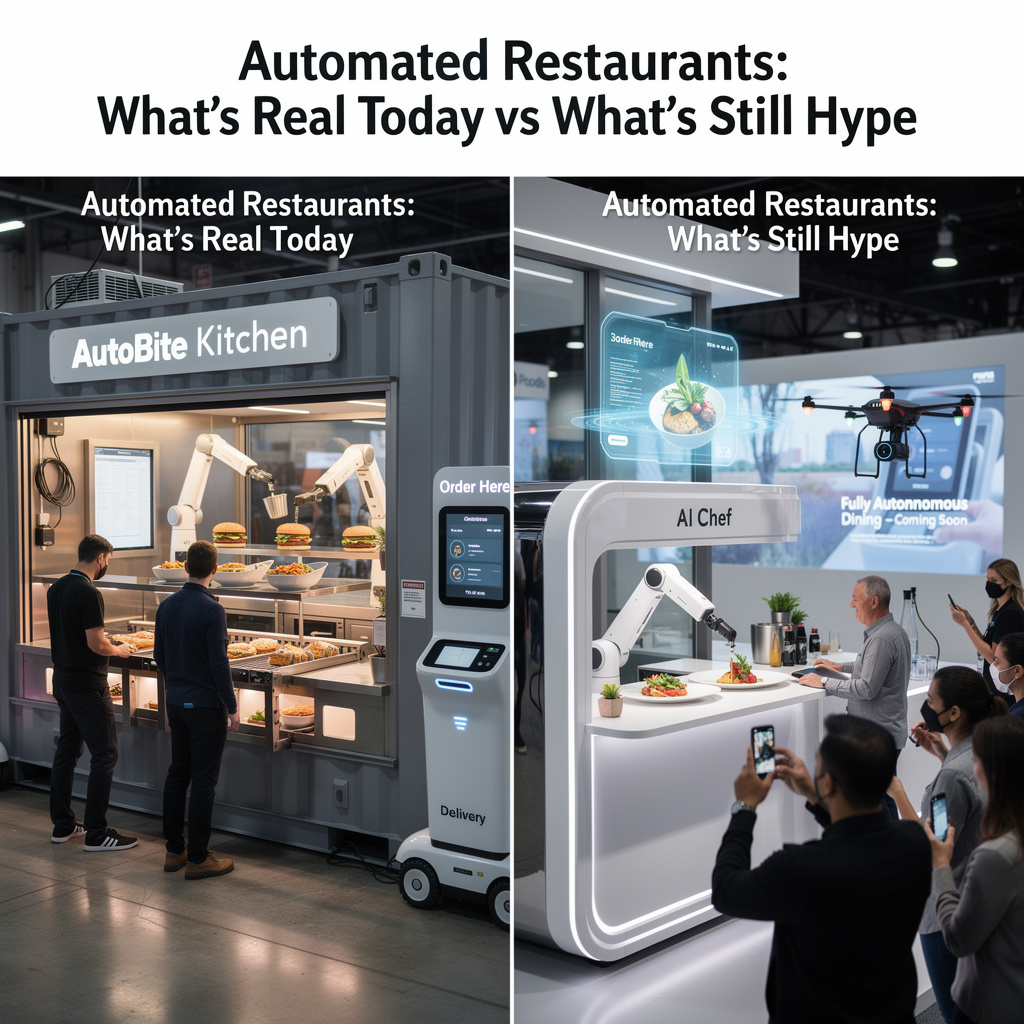
You pull into a strip mall at 2:15 a.m. You expect a locked door and a neon sign. Instead you find a 40-foot stainless container, lights on, robotic arms placing toppings, and a small hatch where a paper bag slides out. No staff. No line. The order app pings. The pizza is exactly as ordered. You feel a mix of unease and awe. You also feel the urge to call your CFO.
Why are investors watching this space so closely? Because what you just saw is not a gimmick.
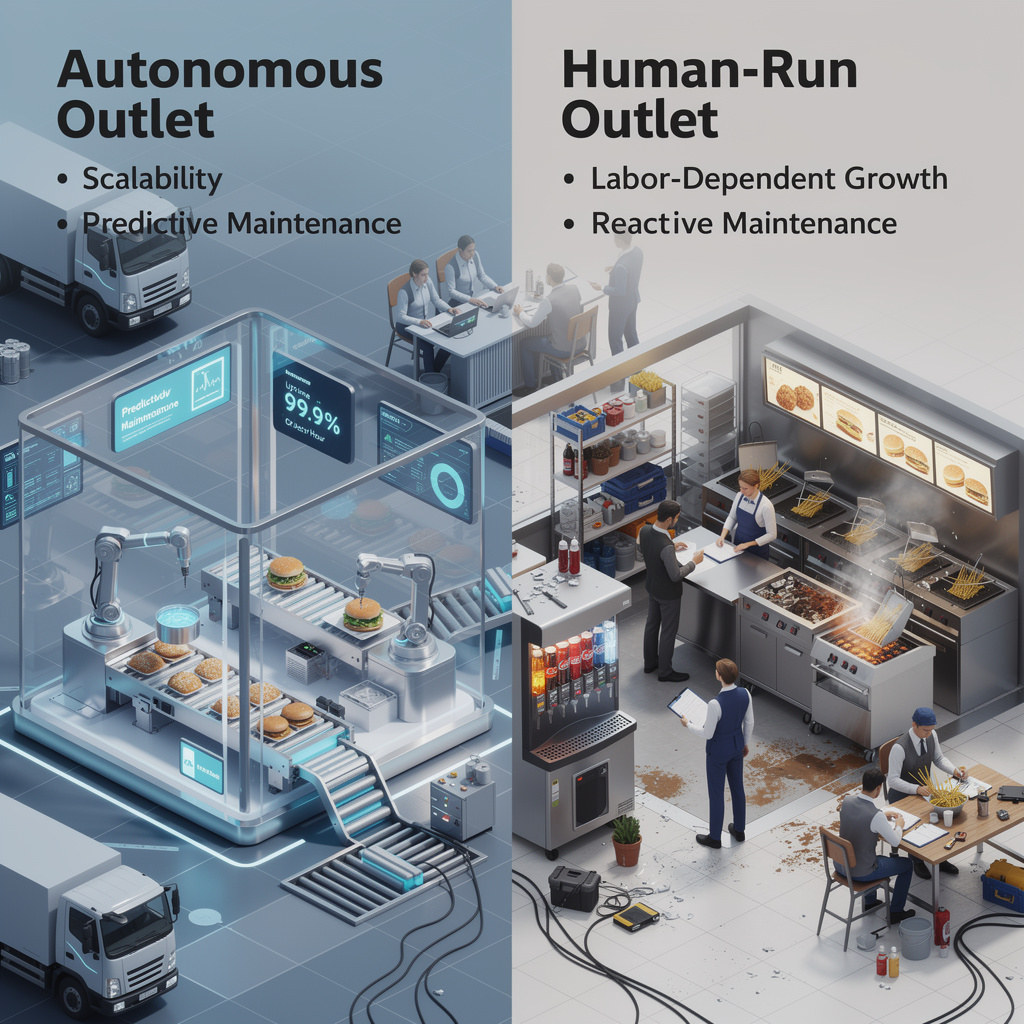
- It is a capitalized, repeatable system that converts labor variability into predictable hardware and software revenue.
- It captures delivery demand at low cost.
- It creates data that compounds with scale.
And it can be deployed near customers without the overhead of a traditional store. That matters to you if you manage margins, expansion plans, or a portfolio that bets on platform businesses.
Table Of Contents
- Executive Introduction
- Why This Question Matters Now
- Market Signals Investors Track
- What An Autonomous Restaurant Actually Is
- Unit Economics That Change The Math
- Where Automation Returns Fastest
- Defensibility And The Risks Investors Price
- How You Should Evaluate Suppliers
- What To Watch Next
- Key Takeaways
- Faq
- About hyper-robotics
Executive Introduction
You want clarity. Investors want returns. Autonomous restaurants answer both. In short, these are containerized, robotic kitchens that lower variable labor costs, increase throughput, and create recurring software and service revenue. The result is a hybrid of hardware, SaaS, and operations that looks like infrastructure to investors, not like a discretionary restaurant experiment. You will read concrete numbers and named sources as you go. You will also get the exact evaluation checklist you need to vet vendors and pilots.
The next sections expand on why the timing is now, what the business model looks like, and how to size risk versus reward. You will find data from industry reporting, signals from trade shows, and a practical checklist for CTOs, COOs, and investors who need to decide quickly.
Why This Question Matters Now
Imagine you run a fast-growing delivery brand. You face rising wages, a hiring crisis for night shifts, and inconsistent order accuracy that lands customers in your app store review trenches. Meanwhile your competitor opens ten small, automated units near dense neighborhoods. Those units run 24/7 with predictable costs. They push delivery times down and keep waste low.
- That scenario explains the core challenge.
- You need reliable capacity close to customers.
- You need predictable margins.
- You need to scale speeds without a matching headcount.
Autonomous restaurants promise all three.
They do this by replacing variable labor with a capital asset that produces repeatable outcomes, and by layering software that sells as a recurring service.

Market Signals Investors Track
You invest with confirmation, not hope. Right now you can point to three signals.
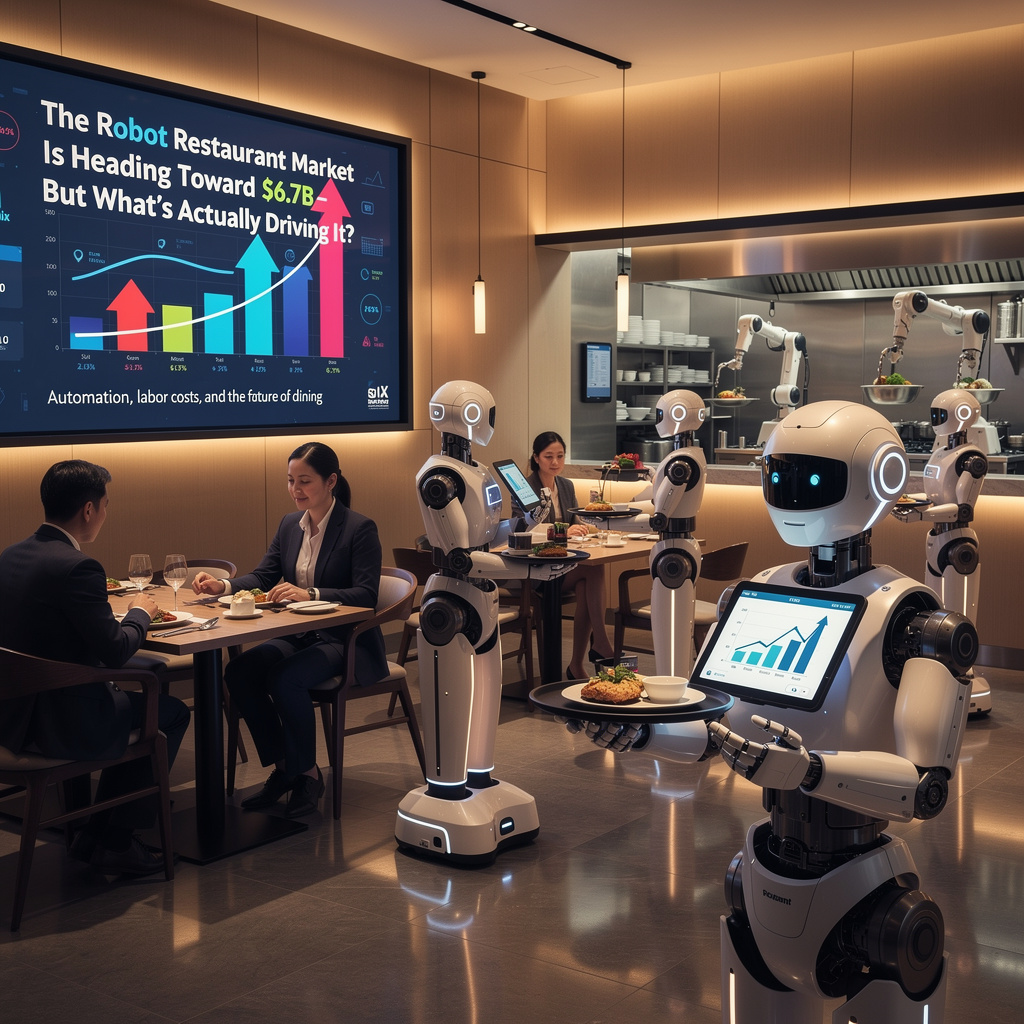
First, market size and growth. Industry forecasts show rapid acceleration in restaurant technology. One market overview projects the restaurant technology market growing from $5.93 billion in 2026 toward $20 billion by 2033, a compound annual growth rate of roughly 16.39 percent, driven by software, automation, and delivery-focused systems. See the analysis at Incentivio market overview for market figures and operator outcomes such as improved efficiency and retention.
Second, the industry is public-facing about the transition. Trade coverage at CES 2026 highlighted automation platforms aimed directly at foodservice, from robotic baristas to automated kitchens. That show illustrated a pipeline of products that are ready for pilot and early rollouts. Read the Food Institute CES coverage for examples and exhibitor highlights.
Third, editorial and analyst voices assert that 2026 will be a tipping point for AI-driven restaurants. Major industry outlets are treating invisible, back-of-house automation as operational necessity rather than novelty. For perspective, see reporting and expert commentary that frames embedded AI and automation as an operational pivot.
These signals matter because they show supply, demand, and narrative alignment. You want to invest when technology readiness, buyer need, and industry attention converge.
What An Autonomous Restaurant Actually Is
You should stop imagining a humanoid chef. Autonomous restaurants are engineered production units. They are modular, containerized kitchens that come plug-and-play. They tie together mechanical systems, sensors, camera-based quality control, and cloud software that schedules, monitors, and analyzes operations.
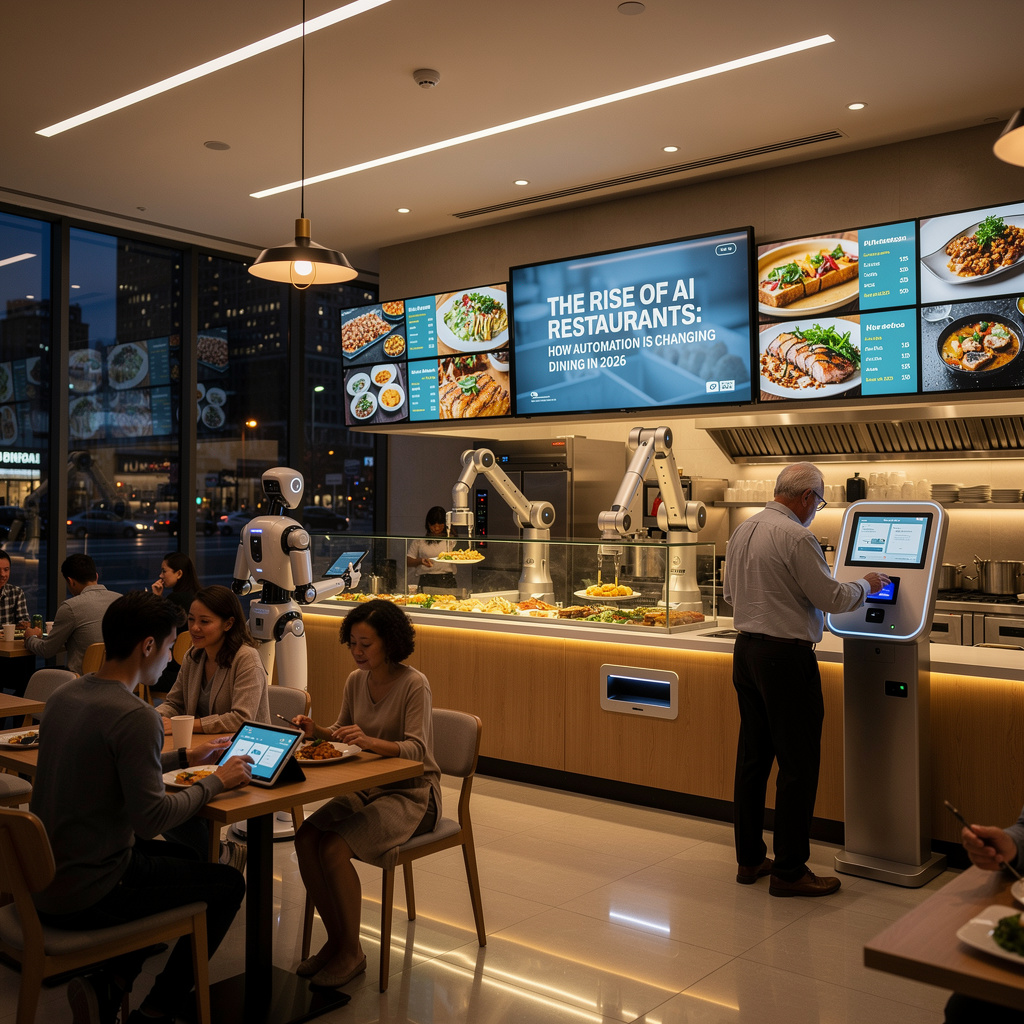
A practical example is a 40-foot stainless container outfitted for pizza production, or a 20-foot unit sized for delivery-only burger or salad lines. These units include portion dispensers, ovens or grills, refrigerated staging, and packing hatches. They cover food-safety zones with temperature controls and automated sanitization cycles. Systems can include tens or hundreds of sensors and multiple AI cameras that monitor every stage of production. For deeper technical context on these capabilities, see the Hyper-Robotics write-up at Hyper-Robotics: The Rise of AI Restaurants.
The architecture matters because it separates one-off kitchen retrofits from repeatable, scalable units you can deploy like cell towers. That gives you predictable installation timelines, standardized maintenance, and consistent output.
Unit Economics That Change The Math
Investors care about cash flows. Autonomous restaurants change how cost and revenue line items behave.
You convert variable labor into fixed capital and recurring service revenue. That looks like this:
- One-time hardware sale or lease, followed by SaaS fees for production scheduling, analytics, and order routing.
- Maintenance contracts and spare parts sales that create after-sale revenue.
- Transaction-level uplifts from higher order accuracy, faster delivery, and extended hours.
- Lower food waste because portioning is precise and inventory is tracked to the plate.
Quantify it for yourself. If a unit costs X in capex but reduces hourly labor by Y hours per week while increasing throughput Z percent during peak times, your payback window can fall into a 12 to 24 month range in many pilots. Investors prize that profile because hardware sales plus recurring software and services match what private equity and strategic buyers like to buy. You are buying a stream, not a one-time product.
Where Automation Returns Fastest
Not every menu is equally automatable. You should prioritize verticals with repetition, clear quality metrics, and narrow temperature ranges.
- Pizza
Pizza production is a high-throughput, repetitive process. Dough handling, topping placement, and oven timing follow tight sequences. Automated lines reduce cycle time and improve topping consistency. - Burgers
Grills can be instrumented for precise cook profiles. Automated assembly reduces cross-contamination risk and speeds packaging. Burger formats with standardized components show strong ROI. - Salads And Bowls
Portioning and chilled staging are mechanical tasks that automation handles well. These menus benefit from reduced waste and precise nutritional control. - Desserts And Frozen Treats
Portion control matters for margins. Automated dispensing reduces shrinkage and speeds peak-hour service.
Look at pilots from companies such as Miso Robotics and historical lessons from Zume to see which formats scale and which require more human finesse. Investors study these case examples to map unit economics to menu complexity.
Defensibility And The Risks Investors Price
You need to know what investors are buying and what they are hedging.
Defensive levers
- Hardware design and manufacturing scale that reduce per-unit costs with volume.
- Software, machine vision models, and operational data that improve uptime and yield as you deploy more units.
- Service networks for maintenance and spare parts that preserve uptime.
- Partnerships with QSR brands and delivery platforms that increase distribution.
Risks on the table
- Food-safety certification and regulatory divergence across jurisdictions.
- Consumer acceptance, especially for premium or human-centric brands.
- Cybersecurity for IoT endpoints that control food handling and payments.
- Operational complexity of distributed hardware and logistics.
- Capex intensity that requires financing models to make deployments attractive to operators.
Investors are actively pricing these risks. You need answers on SLAs, third-party certification, penetration test results, and pilot performance metrics before capital moves at scale.
How You Should Evaluate Suppliers
You will ask hard questions. You should demand transparent answers. Here is a checklist to use when you interview vendors or consider a pilot.
- Uptime and throughput evidence: ask for verified metrics from production deployments, not lab tests. Request third-party audits where possible.
- Food-safety certifications: demand HACCP plans, sanitation validation, and temperature monitoring logs.
- Maintenance and SLAs: require clear service level agreements, spare parts turnaround times, and remote monitoring features.
- Software integration: verify POS, delivery platform, and loyalty system compatibility.
- Cybersecurity posture: request SOC reports, penetration test summaries, and firmware update policies.
- Unit cost and financing models: compare outright purchase, leasing, and revenue-sharing pilots to find the right opex/capex mix.
- Customer experience: sample order accuracy rates, delivery time improvements, and NPS changes from pilots.
When you press providers, watch for clarity. Vague answers mean you will build risk into your forecasts.
What To Watch Next
You should monitor four developments that will shape where value accrues.
- Proof of scale
Look for deployments that prove 12 to 24 month payback windows with verifiable metrics. That is when investors move from pilots to rollouts. - Brand partnerships
When recognizable QSRs sign long-term pilots, it signals commercial validation and distribution scale. - Regulatory clarity
Watch local food-safety authorities and new rules for unattended food production. Clear guidance reduces execution risk. - Financing innovations
Leasing, revenue share, and equipment-as-a-service models will lower upfront barriers for operators. Investors will gravitate to providers with flexible financing options.

Key Takeaways
- Pilot with metrics: require uptime, throughput, and order accuracy data from live deployments before scaling.
- Insist on certifications: demand HACCP, sanitation validation, and cybersecurity reports.
- Model total cost: calculate payback including capex, SaaS, and maintenance over a realistic 24-month window.
- Prioritize vertical fit: choose menus with repetitive tasks and narrow process variance for fastest ROI.
- Structure financing: prefer pilots that include leasing or revenue-sharing to preserve cash while proving economics.
Faq
Q: How much can automation reduce labor costs in a typical QSR deployment?
A: Automation can significantly lower labor dependency, but the exact reduction depends on menu and hours of operation. Pilots often show labor hour reductions during night shifts and peak windows where delivery volume is high. Some operators report double-digit percentage declines in hourly labor expense for production tasks. You should model reductions conservatively and include maintenance and service costs in your net savings estimates.
Q: What certifications should I require from a vendor before running a pilot?
A: Require HACCP-compliant food-safety plans, third-party sanitation validation, and documentation of temperature control systems. Also insist on maintenance SLAs and independent uptime reporting. For cybersecurity, ask for penetration test results and SOC or ISO summaries. These documents reduce operational risk and make it easier to get approvals from local health departments.
You will have questions after a pilot. That is a sign you are engaging like an investor.
What will you do with this knowledge? Will you pilot one unit to test real delivery economics near a dense neighborhood, or will you wait for more proof?
About hyper-robotics
Hyper Food Robotics specializes in transforming fast-food delivery restaurants into fully automated units, revolutionizing the fast-food industry with cutting-edge technology and innovative solutions. We perfect your fast-food whatever the ingredients and tastes you require.
Hyper-Robotics addresses inefficiencies in manual operations by delivering autonomous robotic solutions that enhance speed, accuracy, and productivity. Our robots solve challenges such as labor shortages, operational inconsistencies, and the need for round-the-clock operation, providing solutions like automated food preparation, retail systems, kitchen automation and pick-up draws for deliveries.
For technical context, pilot planning, or investor materials, review the company’s analysis on the rise of AI restaurants at Hyper-Robotics: The Rise of AI Restaurants.
What will your next move be, now that the unit economics and strategic logic are clear?