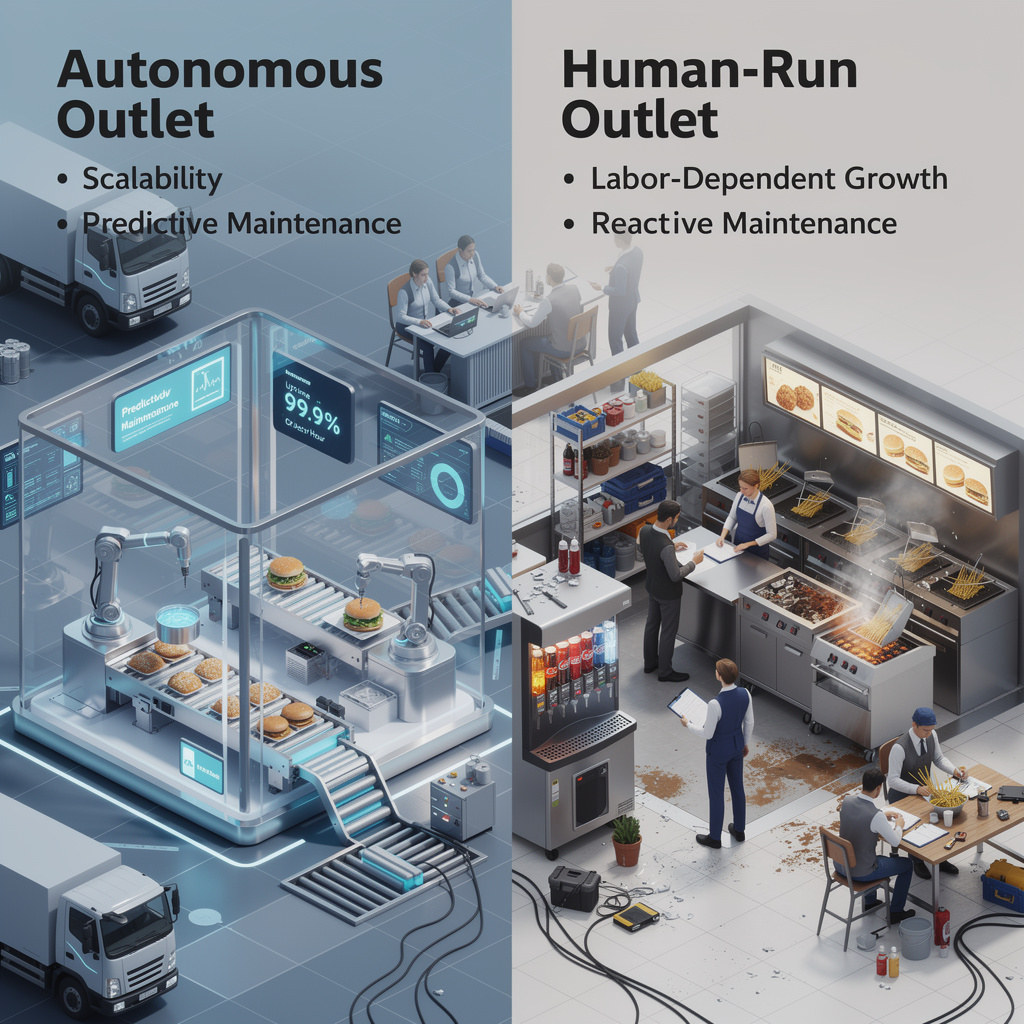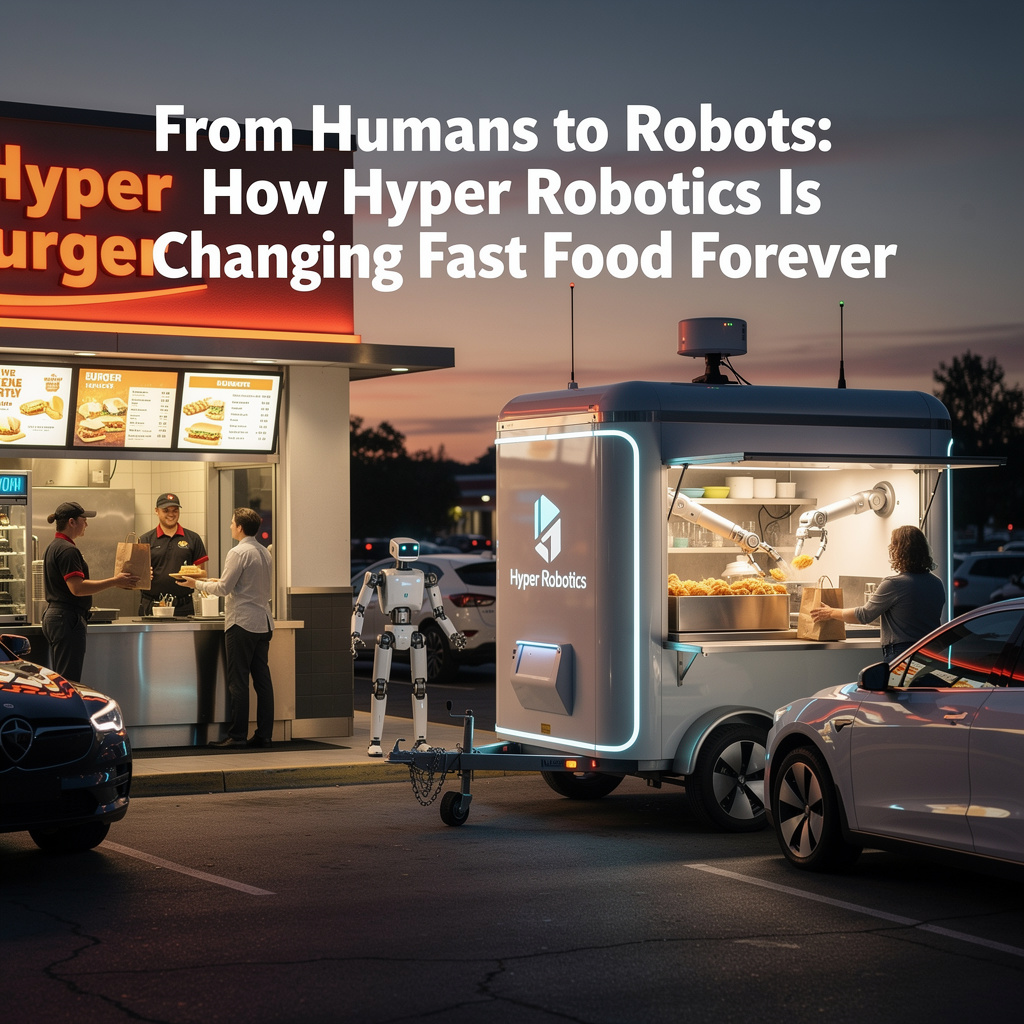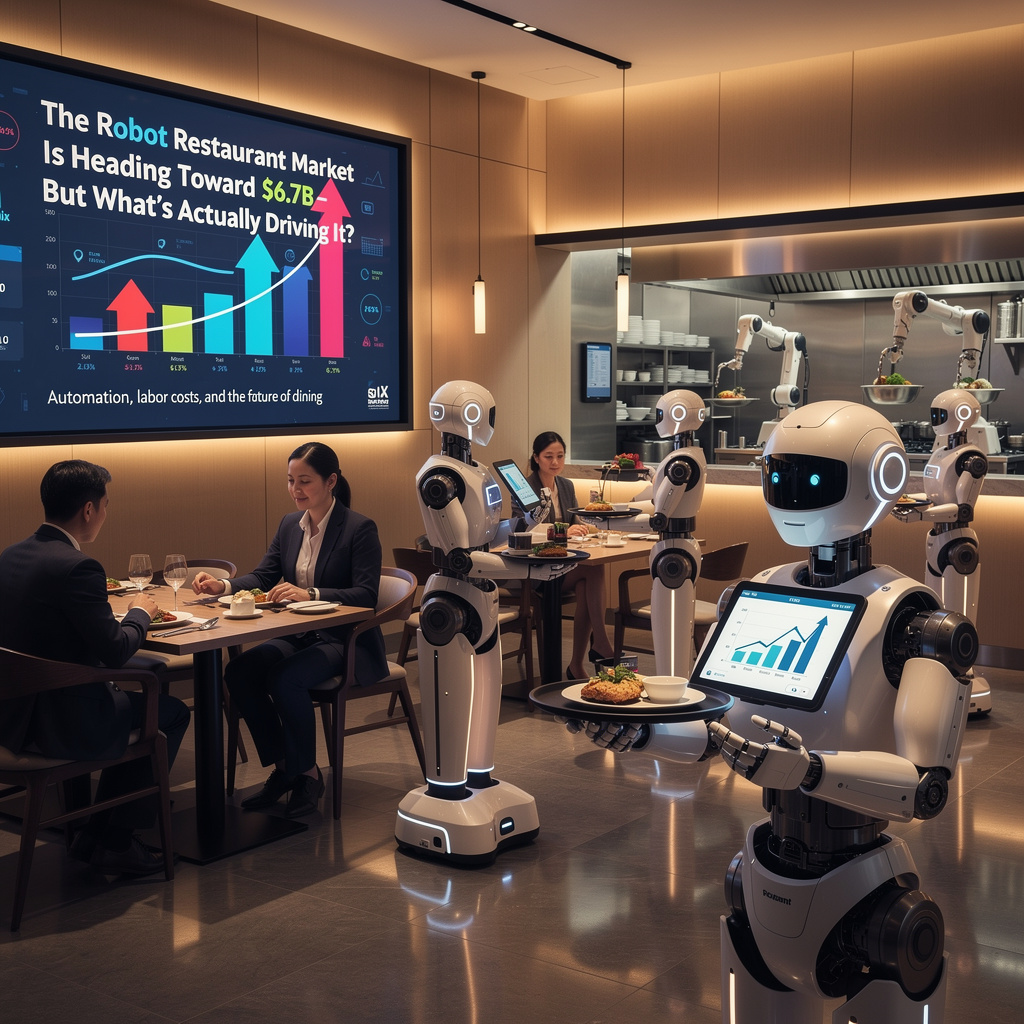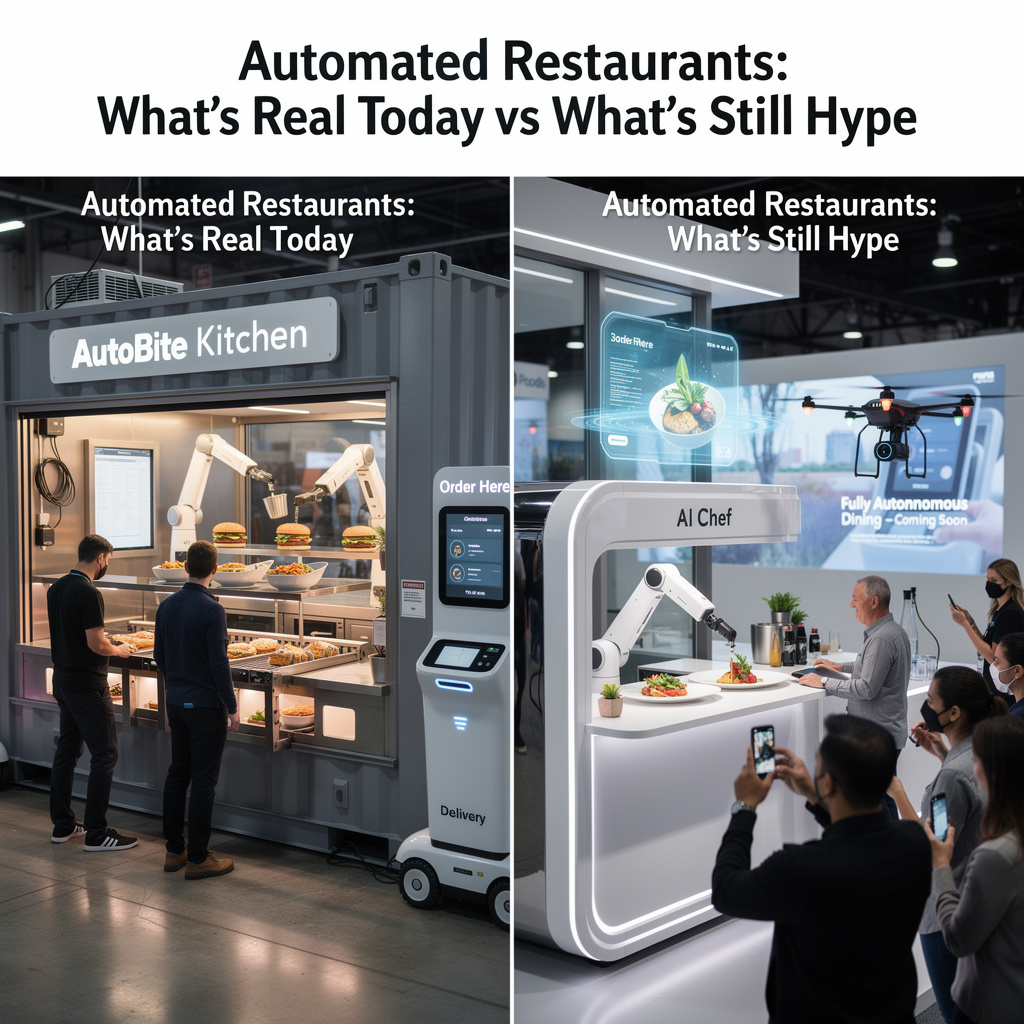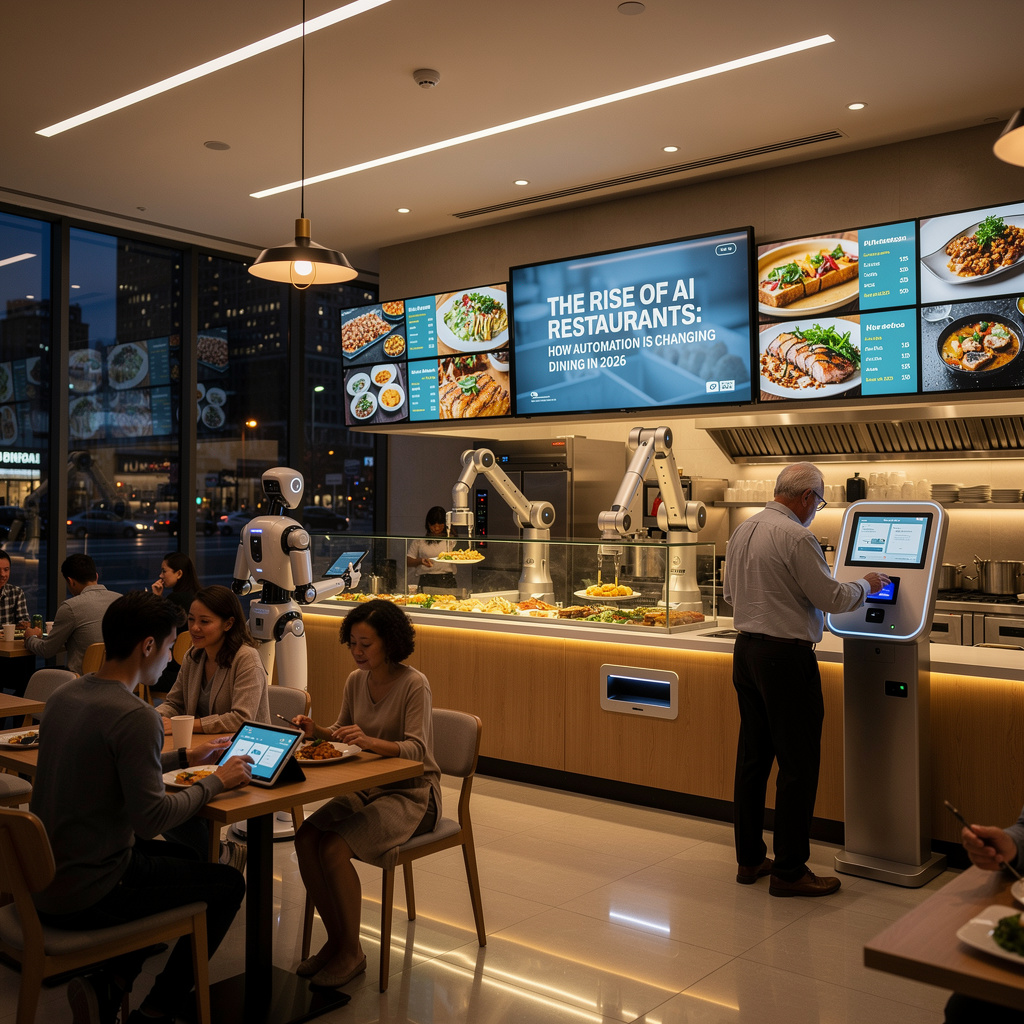
The fast-food model is being rebuilt in real time. By 2026, artificial intelligence restaurants and dining automation will no longer be experimental, they will define how leading operators scale. The rise of AI restaurants is not a trend; it is a structural shift in how food is prepared, fulfilled, and delivered. Robot restaurants, autonomous fast food units, kitchen robotics systems, and AI-driven chefs are already delivering consistent quality, reducing labor exposure, and enabling 24/7, delivery-optimized operations at scale. The question is no longer if this transformation will happen, but who will execute it best. This article breaks down where the Fast Food Delivery Robotics and Automation Technology market stands in the US, the core commercial drivers behind adoption, and the decisive moves CTOs, COOs, and CEOs must make now to stay competitive.
Table Of Contents
- Executive Summary
- Market Snapshot
- Core Trends
- Data & Evidence
- Competitive Landscape
- Industry Pain Points
- Opportunities & White Space
- What This Means For Your Role
- Outlook & Scenario Analysis
- Key Takeaways
- FAQ
- About Hyper-Robotics
Executive Summary
The fast food industry is shifting from incremental automation to integrated autonomous restaurant deployments. Enterprise-ready form factors, including plug-and-play 40-foot units and compact 20-foot delivery units, now combine robotics, machine vision, IoT, and cloud orchestration to produce food with predictable throughput and near-perfect consistency. These systems are designed for delivery-first economics and extended dayparts, addressing chronic labor shortages and margin compression while improving food safety controls. Early adopters see cluster-managed units enabling 5 to 10 times faster geographic expansion versus traditional builds, a dynamic detailed in the Hyper-Robotics market analysis. For executives, the near-term decision is whether to pilot and build integration and service capabilities now, or risk ceding a delivery-optimized channel to more agile competitors.
Market Snapshot
Market size and growth rate: The US fast-food delivery robotics and automation market is in high-growth mode. Investment in kitchen robotics and back-of-house AI systems accelerated in the early 2020s and moved into commercialization by 2026, driven by demand for delivery capacity and predictable unit economics. Geographic hotspots include dense delivery markets such as New York, Los Angeles, Chicago, Dallas, and Atlanta where unit economics favor compact autonomous deployments. Demand drivers are persistent: labor scarcity, a structurally higher delivery share of sales, tighter food safety expectations, and the capital available to test new form factors. Industry commentary supports 2026 as an inflection point for operationalizing AI-driven restaurants, as noted in the QSRWeb analysis of AI-driven restaurants.

Core Trends
Below are seven core trends shaping the market, with practical implications for senior leaders.
1) Plug-and-play autonomous units scale expansion
- What is happening
Enterprise chains are deploying containerized restaurants and compact automated units to scale rapidly. - Why it is happening
These units reduce site build time and standardize operations across markets. - Who it impacts most
Real estate, operations, and expansion teams. - Strategic implications
Prioritize pilot markets where delivery density and permitting are favorable. Design integration of POS, aggregator APIs, and inventory telemetry from day one.
2) Delivery-first design reshapes menus and workflows
- What is happening
Kitchens are optimized for order batching and insulated handoffs rather than dine-in throughput. - Why it is happening
Delivery and off-premise sales represent large and growing revenue shares; automation is more valuable for delivery consistency than for sit-down service. - Who it impacts most
Menu development, culinary R&D, and marketing. - Strategic implications
Revisit menu engineering to favor items that lend themselves to robotic assembly and stable reheating.
3) Machine vision and AI enforce quality at scale
- What is happening
Vision systems perform portioning checks, cook validation, and final QA. - Why it is happening
Vision and edge AI are now accurate and affordable enough to remove many human QA steps. - Who it impacts most
Quality assurance, compliance, and legal teams. - Strategic implications
Specify camera and sensor SLAs, and require HACCP-style audit trails in procurement contracts.
4) Cluster orchestration and centralized ops
- What is happening
Operators manage fleets of units with centralized orchestration for load balancing, software updates, and inventory replenishment. - Why it is happening
Clusters improve utilization and allow dynamic routing of demand between nearby units. - Who it impacts most
Operations centers and supply chain teams. - Strategic implications
Invest in remote-ops capability, redundant connectivity, and a regional service hub model.
5) Labor rebalancing, not simple elimination
- What is happening
Automation reduces repetitive production roles and increases demand for higher skilled maintenance and data roles. - Why it is happening
Robotics require technicians, data analysts, and exception handlers. - Who it impacts most
HR, learning and development, and labor planning. - Strategic implications
Re-skill frontline employees for maintenance and customer experience roles, and plan headcount transition budgets.
6) Regulatory and compliance focus intensifies
- What is happening
Health departments and insurers increase scrutiny of automated food preparation and audit trails. - Why it is happening
New technologies require updated inspection processes and liability frameworks. - Who it impacts most
Legal and compliance teams. - Strategic implications
Engage regulators early, design systems that produce verifiable logs, and pursue recognized certifications.
7) New partnerships and delivery economics
- What is happening
Brands partner with robotics vendors, logistics providers, and cloud platforms to enable nationwide rollouts. - Why it is happening
Complex integrations and service models require ecosystem collaboration. - Who it impacts most
Business development and procurement. - Strategic implications
Structure vendor agreements with uptime SLAs, shared KPIs, and joint go-to-market pilots.
Data & Evidence
Industry reporting and analysis point to rapid adoption and operational benefits. Commentary from QSRWeb frames 2026 as an operational necessity for many brands, driven by labor and margin pressures, as discussed in the QSRWeb analysis of AI-driven restaurants. The Food Institute documents workforce shifts and technology adoption patterns that validate the labor and skill-set transition implied by automation, summarized in the Food Institute report on AI impact. Hyper-Robotics analysis highlights cluster effects, noting that automated units can accelerate expansion 5 to 10 times compared with traditional builds when integrated into a regional orchestration layer, as outlined in our Hyper-Robotics market analysis. Operators piloting robotic lines report measurable improvements in order accuracy, throughput consistency, and waste reduction, although specific ROI timelines are sensitive to utilization and financing terms.
Competitive Landscape
- Established players
Large equipment providers and legacy kitchen-equipment vendors are retrofitting automation into existing footprints. QSR brands with deep capital are funding pilots and joint development programs. - Disruptors
Startups offering turnkey containerized kitchens, advanced machine-vision stacks, and robotics-as-a-service business models are emerging. These players accelerate time-to-live and reduce integration complexity. - New business models
Robotics-as-a-service, revenue-share pilots, and white-label ghost kitchen networks are becoming common. Some vendors offer subscription maintenance and performance guarantees. - How competition is shifting
Competition is moving from single-unit proof-of-concept to fleet-level service quality. Winning vendors will couple reliable hardware, software lifecycle management, and regional maintenance capacity.
Industry Pain Points
- Operational
Downtime, spare parts logistics, and integration with legacy POS and ERP systems remain friction points. - Cost
High upfront CapEx and unclear depreciation models complicate financial planning. - Regulatory
Local health codes and inspection processes are not yet standardized for autonomous food systems. - Staffing
New skill requirements create short-term workforce disruptions. - Technology
Security of edge devices and data privacy need robust controls and independent validation.
Opportunities & White Space
Underexploited growth areas
- Tailored vertical stacks for menu categories such as pizza, burgers, and cold bowls.
- Regional service hubs that convert CapEx-heavy models into Opex-friendly subscriptions.
- Data-driven menu optimization products that use production telemetry to reduce waste.
What incumbents are missing
Many incumbents focus on single-unit vendors. The white space is in cluster orchestration, spare-part logistics, and integrated SLA-backed services that guarantee uptime for enterprise chains.
What This Means For Your Role
- CEO
Decide whether automation is a strategic channel or a tactical experiment. Approve pilot budgets and align M&A or partnership strategies to accelerate capability acquisition. - COO
Define operational KPIs for pilots, build regional service models, and prioritize integration with supply chain and POS systems. - CTO
Specify the secure-by-design architecture, API standards for aggregator integration, and requirements for edge-to-cloud telemetry and OTA update governance.

Outlook & Scenario Analysis
- If conditions stay the same
Steady adoption will continue in dense delivery markets. Clusters and plug-and-play units will become a common extension of existing networks. - If a major disruption happens
A rapid labor shock or a surge in delivery demand could accelerate conversion of real estate into automated clusters. Vendors with ready fleets and maintenance networks will capture market share. - If regulation shifts
Standardized inspection frameworks and certification pathways would reduce audit friction and lower deployment time, creating a larger addressable market.
Key Takeaways
- Pilot now with a clear KPI set, focusing on throughput, order accuracy, and uptime, to validate unit economics before scale.
- Design for cluster orchestration and remote operations, not isolated unit rollouts.
- Invest in workforce re-skilling and regional service hubs to preserve uptime and customer experience.
- Require verifiable audit trails and security certifications from vendors to reduce regulatory and insurance friction.
FAQ
Q: How fast can autonomous restaurant units be deployed?
A: Deployment for plug-and-play units is typically measured in days to weeks for site hook-up, subject to local permitting. Software and POS integrations can add time, so plan for an initial integration window and parallel acceptance testing. Pilots should include defined rollback and fail-safe procedures. Ensure the vendor provides remote diagnostics and an SLA for first-line support.
Q: Will automation eliminate frontline jobs?
A: Automation reduces repetitive production roles, but it also creates higher-skilled jobs in maintenance, data operations, and remote-ops. Expect a headcount shift rather than simple elimination. Plan a re-skilling program and phased transition to manage labor relations. Transparency with staff and local communities will aid workforce transitions.
Q: What are the main regulatory hurdles?
A: Health inspections and liability frameworks are the primary hurdles. Regulators need verifiable logs, temperature records, and cleaning cycles. Engage local health authorities early, design HACCP-compliant audit trails, and pursue recognized certifications to smooth inspections. Liability and insurance coverage should be clarified before public rollouts.
Q: How do I secure these systems?
A: Security requires device hardening, network segmentation, end-to-end encryption, and independent penetration testing. Define security SLAs in vendor contracts and require regular firmware audits. Plan for incident response and secure supply chain reviews for third-party components.
Are you ready to design a pilot that answers your three most important questions about throughput, accuracy, and uptime?
About Hyper-Robotics
Hyper-Robotics specializes in transforming fast-food delivery restaurants into fully automated units, revolutionizing the fast-food industry with cutting-edge technology and innovative solutions. We perfect your fast-food whatever the ingredients and tastes you require.
Hyper-Robotics addresses inefficiencies in manual operations by delivering autonomous robotic solutions that enhance speed, accuracy, and productivity. Our robots solve challenges such as labor shortages, operational inconsistencies, and the need for round-the-clock operation, providing solutions like automated food preparation, retail systems, kitchen automation and pick-up draws for deliveries.