How to Be The Fast-Food Chain That Scales 10X Faster Using Autonomous Fast Food Robots?
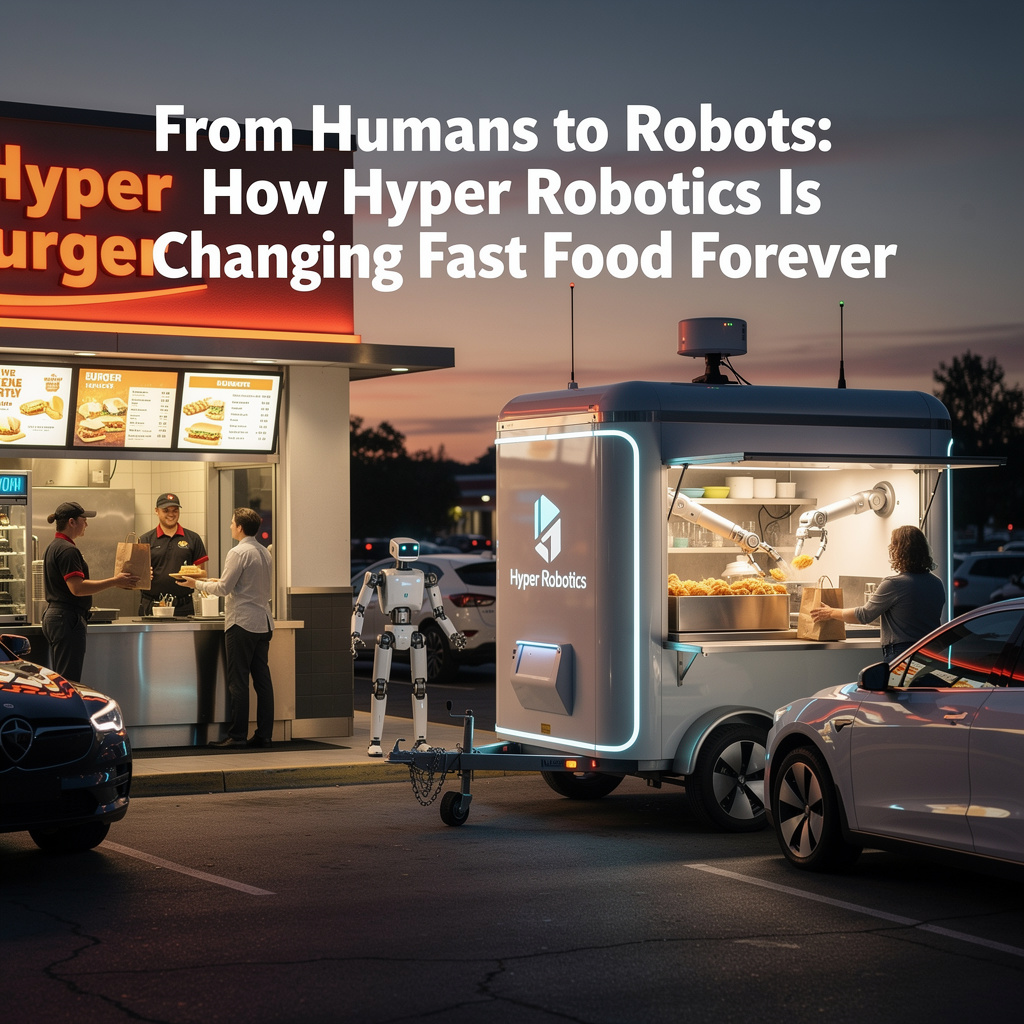
You watch a 40-foot stainless container pull up to an empty lot, and within days a fully functioning robot restaurant is taking orders, cooking, and sending hot boxes out the door. You feel a mix of disbelief and hunger. Can you really shrink months of permitting, construction, hiring, and training into weeks, and preserve brand, quality, and margins while moving at a different speed?
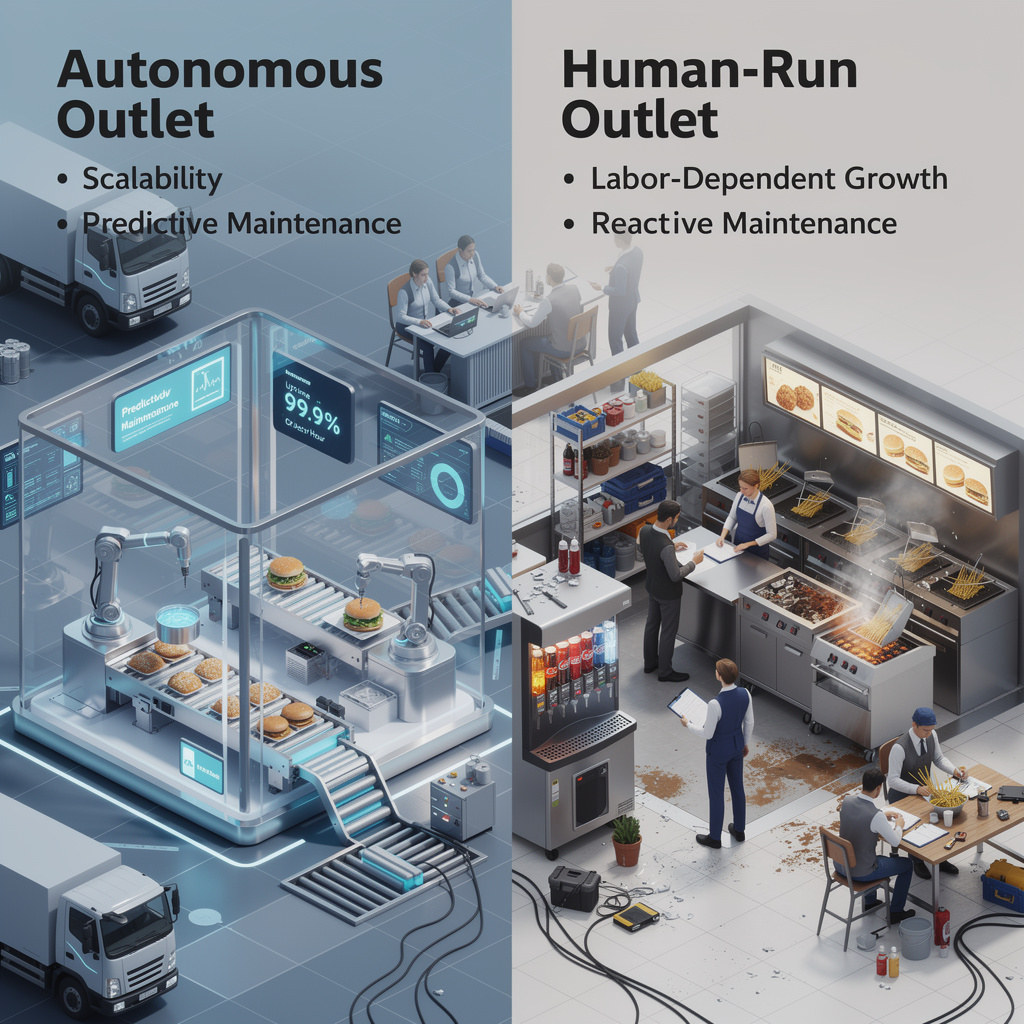
In short, yes. Autonomous fast food robots and robot restaurants are practical today. Plug-and-play, IoT-enabled container kitchens and compact robotic units compress site build times, lower labor dependency, and standardize quality across markets. These solutions tie mechanically repeatable workflows to cloud orchestration, remote monitoring, and analytics, so you scale predictably rather than hope for it.
Table Of Contents
- Why Automation Is Now A Strategic Imperative
- What Autonomous Fast-Food Robots Look Like Today
- How Robotics Lets You Scale 10x Faster
- Vertical Playbooks: Pizza, Burgers, Salads And Ice Cream
- A Simple Financial Model And Payback Example
- Pilot To Enterprise: Your Implementation Roadmap
- Integration, Operations And Maintenance Best Practices
- Food Safety, Hygiene And Sustainability Wins
- Security, Data Governance And Regulatory Strategy
- Handling Objections: Customers, Regulators And Workforce Transitions
Why Automation Is Now A Strategic Imperative
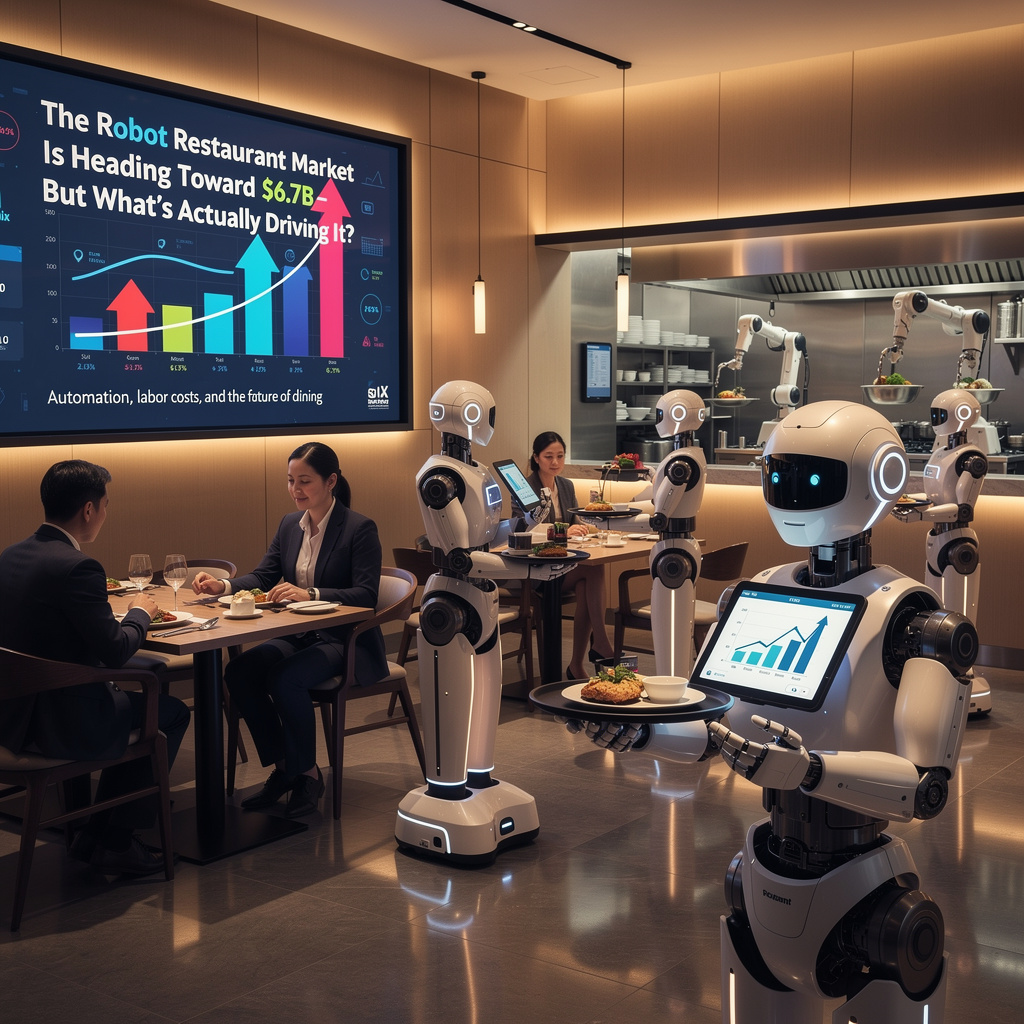
You are competing in an industry that is growing fast and changing shape. The global fast-food market is projected to expand from roughly $658.85 billion in 2025 to about $868.19 billion by 2030, a CAGR of 5.7 percent, driven in part by investment in automation and app-first delivery channels, as detailed in this fast-food industry growth report on Yahoo Finance . At the same time, you face rising labor costs, chronic turnover, and heavier off-premise demand that stress kitchen throughput and accuracy.
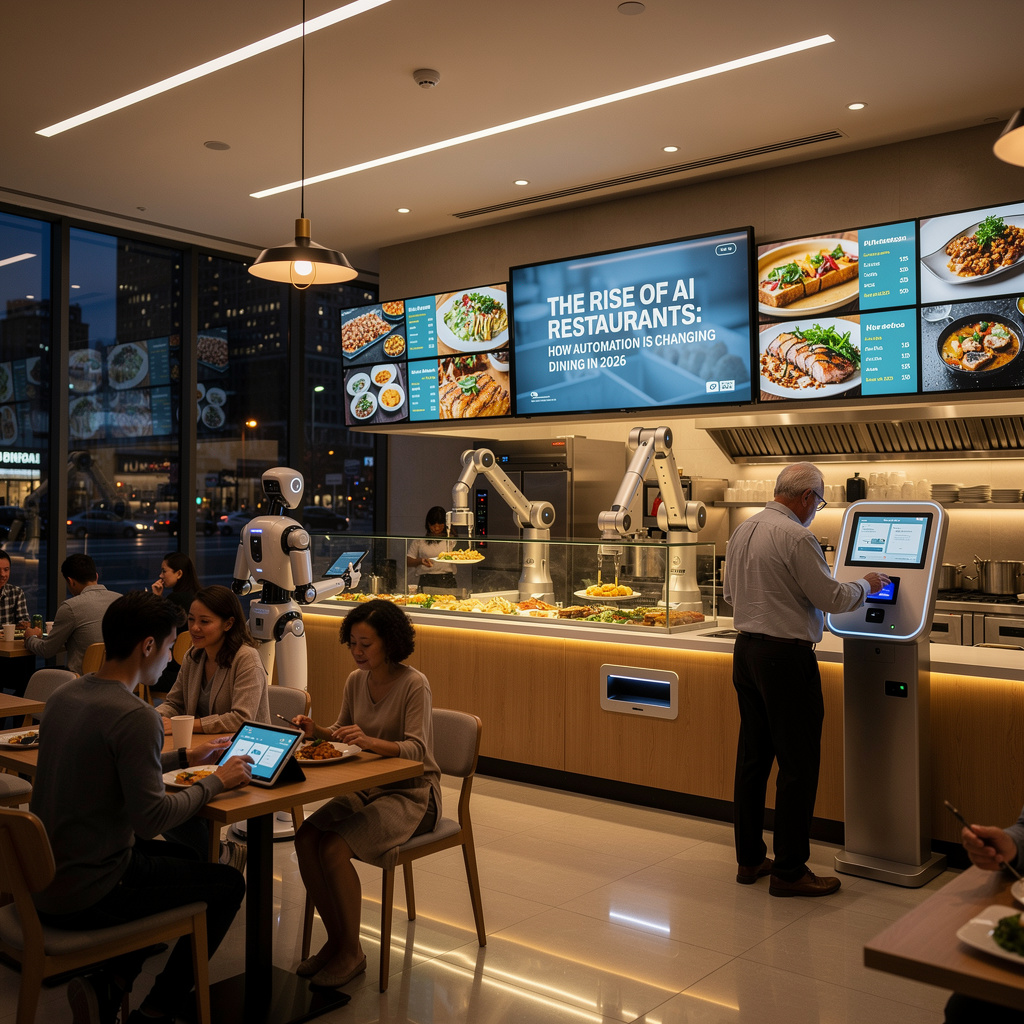
Automation in restaurants has moved from small pilots to enterprise deployments because hygiene, speed, and consistency are now business priorities that operators cannot ignore. As a result, restaurant chains are increasingly viewing automation as a core operational strategy rather than a temporary experiment.
For example, Hyper-Robotics has documented how these pressures are pushing chains to treat robot restaurants as strategic assets. In fact, the Hyper-Robotics knowledgebase analysis of bots, restaurants, and automation for 2026 highlights how large operators are already preparing for automated deployment at scale.
Ultimately, if you want to scale with confidence, automation becomes a powerful lever for achieving predictable unit economics.

What Autonomous Fast-Food Robots Look Like Today
Picture modular units built for repeatability and speed-to-market. Typical components you will see in production-grade robot restaurants include:
Hardware And Physical Form Factors
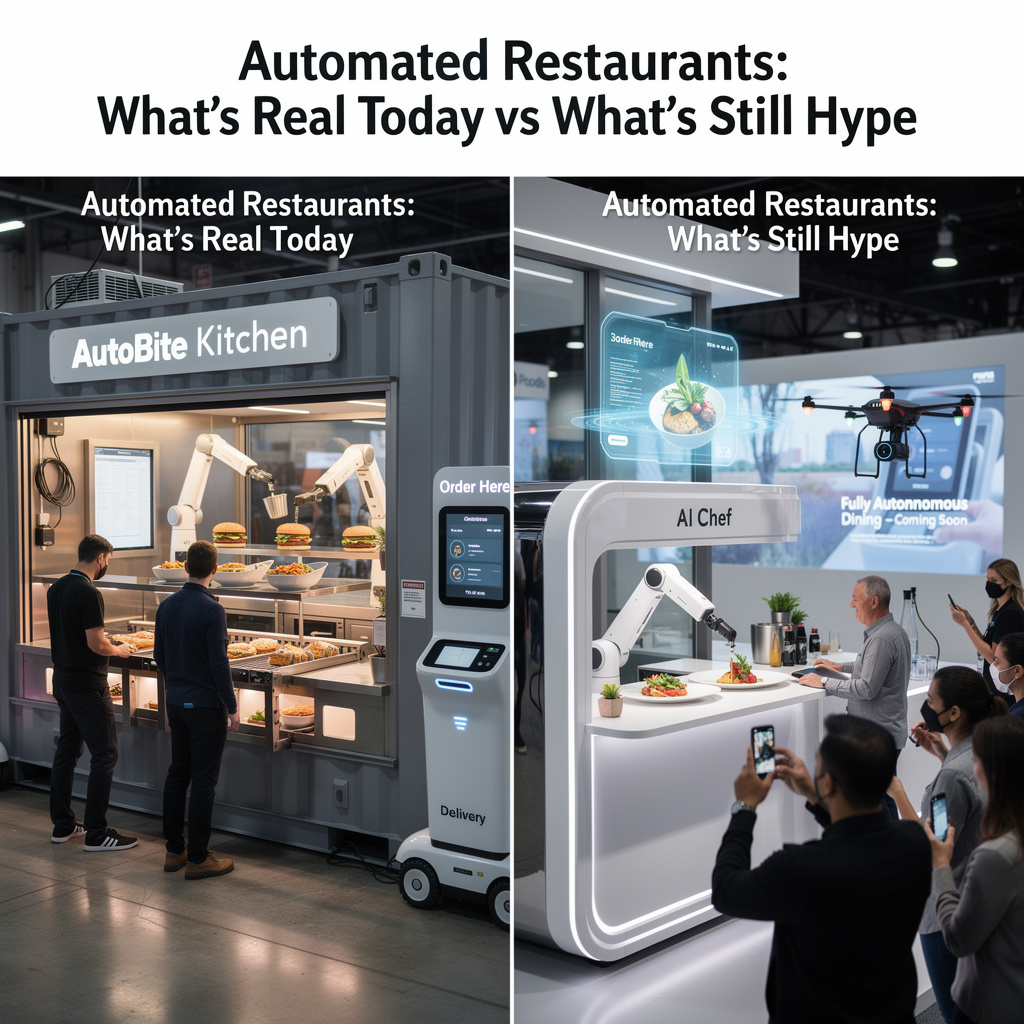
- 40-foot container restaurants that ship, plug into utilities, and begin operations within days.
- 20-foot robotic delivery kitchens that convert delivery-heavy locations into high-throughput automated hubs.
- Food-safe materials, stainless construction, and self-sanitizing surfaces for easier compliance.
Sensing, Vision And Orchestration
- Multi-camera machine vision systems and dozens of sensors to track temperature, position, and process state.
- Edge computing for real-time control and cloud services for fleet orchestration and analytics.
For practical guidance on removing rollout friction and scaling beyond pilots, read the Hyper-Robotics guidance on increasing fast-food chain scalability without the headaches of traditional expansion.
How Robotics Lets You Scale 10x Faster
You want speed without chaos. Fortunately, robotics provides a structured way to achieve both.
First, rapid site activation becomes possible because prebuilt units arrive virtually turnkey. As a result, instead of months of construction and local trade coordination, commissioning can be compressed to days or weeks.
Second, predictable unit economics emerge because standardized equipment, menus, and processes make cost per order a number you can accurately model and finance.
Meanwhile, remote orchestration allows a central operations center to monitor dozens or even hundreds of units. From there, operators can deploy software updates and manage clusters in much the same way cloud providers manage servers.
In addition, consistent quality improves because robots follow exact recipes. Consequently, order accuracy rises and food waste declines. Over time, that reliability builds customer trust and reduces returns.
Finally, labor risk mitigation becomes possible by reducing dependence on local hiring in markets with tight labor pools. Instead, human staff can shift toward exception handling, logistics coordination, and customer experience roles.
Ultimately, these mechanics translate into faster location rollouts. Rather than expanding one site at a time, operators can now think in clusters and corridors. In this way, the same delivery-optimized unit can be replicated quickly across multiple markets.
Vertical Playbooks: Pizza, Burgers, Salads And Ice Cream
Automation is not one-size-fits-all. Design each vertical for the production tasks that make it different.
Pizza
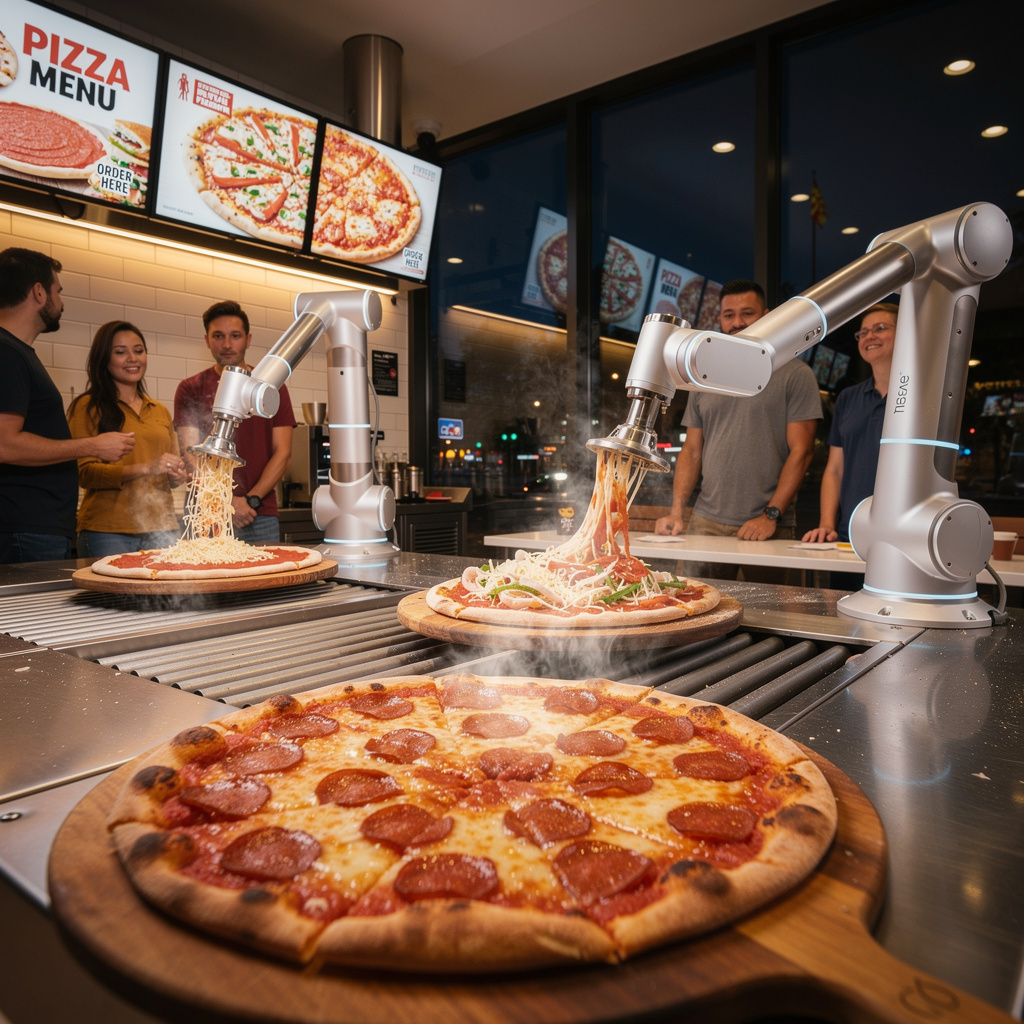
Pizza robotics are among the fastest moving innovations. Automated dough handling, topping dispensers, and conveyor ovens deliver consistent crusts and predictable bake cycles. Early adopters and vendors are proving out delivery-optimized kiosks and automated pizza shops, and the technology is reaching commercial scale in 2026, as discussed in recent coverage on pizza robotics breakthroughs (https://www.linkedin.com/pulse/pizza-robotics-breakthroughs-set-revolutionize-fast-food-pbyde). You can expect better yield on dough and fewer order errors.
Burgers
Automated patty handling, synchronized assembly lines, and precise temperature control reduce miss rates and speed throughput. Design stations for bun-to-box flow so the entire process is hands-off and repeatable.
Salad Bowls And Fresh Bowls
Portioning systems measure greens, proteins, and toppings. Cold chain monitoring ensures freshness while analytics optimize reorder points to reduce spoilage.
Ice Cream And Desserts
Portion accuracy and hygienic dispensing between flavors are immediate wins. Automated sanitation cycles cut labor time and lower contamination risk.
A Simple Financial Model And Payback Example
You need a frame to evaluate a pilot. The core drivers are CAPEX per unit, OPEX, the labor delta, throughput, and average ticket.
- CAPEX variables: hardware, shipping, integration, and initial site utility work.
- OPEX components: energy, ingredients, maintenance agreements, and network connectivity.
- Revenue drivers: orders per day, average ticket, contribution margin, and waste reduction.
Illustrative example using conservative, hypothetical numbers:
- Incremental revenue lift and throughput improvements yield $300,000 extra revenue per unit per year.
- Net OPEX after automation is $50,000 per year.
- Incremental margin is approximately $250,000 per year.
- CAPEX per unit around $750,000.
- Payback is about 3 years.
Your actual inputs will differ. Build scenarios around low, medium, and high throughput and include financing and tax incentives. Use the payback bands to decide whether to finance units centrally or via an asset-backed lease.
Pilot To Enterprise: Your Implementation Roadmap
Move deliberately from alignment to scale in four phases.
Phase 1, Strategic Alignment (0 to 2 months)
Create an executive steering committee, choose target KPIs, and identify pilot corridors with heavy delivery demand.
Phase 2, Pilot (3 to 6 months)
Deploy one to three units in representative markets. Measure throughput, order accuracy, customer satisfaction, and integration friction with delivery partners.
Phase 3, Cluster Scaling (6 to 18 months)
Scale to clusters of five to twenty units with shared logistics, regional spare parts inventory, and centralized operations.
Phase 4, Enterprise Roll-out (18 to 60 months)
Expand geographically using established supply chains and proven maintenance routines. Establish a permanent governance model for software releases, menu engineering, and compliance.
A targeted pilot gives you measurable data for board-level decisions and creates a repeatable blueprint.
Integration, Operations And Maintenance Best Practices
Plan integrations before you touch concrete.
- POS and ordering, map robotic menu items to POS SKUs and build failover ordering paths for manual override.
- Delivery partners, test end-to-end flows with delivery apps and your own drivers to simplify handoffs.
- Inventory and supply chain, standardize SKUs, packaging, and replenishment cycles for automated restocking.
- Maintenance SLAs, negotiate service-level agreements with guaranteed response times and remote diagnostics to minimize downtime.
- Training, cross-train employees for exception management, customer-facing roles, and technical supervision.
Operational maturity enables you to manage hundreds of units as reliably as you manage stores today.
Food Safety, Hygiene And Sustainability Wins
Robotic kitchens reduce human contact points and make sanitation repeatable.
- Self-sanitation cycles and closed workflows simplify HACCP documentation.
- Stainless and corrosion-free materials reduce long-term maintenance.
- Software-driven inventory control reduces waste and spoilage, lowering COGS per order.
- Automation can contribute to sustainability goals by reducing overproduction, cutting energy use with optimized cook cycles, and lowering food waste.
Some consumer-facing chains are also shifting menus to higher-protein and plant-based offerings to match demand trends. You see these trends reflected in market reporting and chain updates that highlight menu innovation as a growth lever, such as this coverage of fast-food chain menu changes in 2026 on Food Republic.
Security, Data Governance And Regulatory Strategy
Treat these units like connected industrial assets.
- IoT security fundamentals, encrypted telemetry, secure boot, and role-based access.
- Update management, tested, staged firmware releases and rollbacks.
- Auditing, third-party penetration tests and periodic compliance checks.
- Data governance, minimize PII, set clear retention policies, and follow regional data laws.
Early engagement with health departments and sharing sanitized workflows speeds approvals and lowers regulatory risk.
Handling Objections: Customers, Regulators And Workforce Transitions
You will face pushback from customers, regulators, and the workforce. Therefore, it is important to address these challenges proactively.
First, with customers, preserve brand rituals, packaging, personalization, and maintain a human interface for exceptions. This helps reassure guests that quality and experience remain intact.
Second, with regulators, invite inspections early, share sanitized operating procedures, and demonstrate closed-loop processes. By doing so, you build trust and ensure compliance from the outset.
Third, for the workforce, create retraining and redeployment programs that shift staff into higher-value roles such as maintenance technicians, logistics coordinators, and guest experience hosts. In this way, employees remain engaged while the operation scales efficiently.
Ultimately, you are not replacing people so much as redirecting them to tasks that technology cannot scale for you, ensuring that human effort is focused where it matters most.

Key Takeaways
- Start with a data-driven pilot in a delivery-heavy corridor to prove throughput, accuracy, and payback quickly.
- Standardize hardware, menus, and SKUs for repeatability, and build remote orchestration to manage clusters at scale.
- Design for brand continuity, using automation to augment customer experience, not replace it.
FAQ
Q: How long does it take to commission a robotic restaurant unit?
A: Commissioning can range from a few days to several weeks depending on site utility readiness and permitting. Prebuilt container units are engineered to plug into power and water quickly, which often compresses the timeline compared with traditional construction. Plan for integration work with POS, delivery partners and supplier onboarding, which can add time. A focused project plan and a single point of contact for permitting speeds the process.
Q: What is a realistic payback period for a robot restaurant unit?
A: Payback depends on CAPEX, throughput uplift, labor savings and OPEX. A conservative modeled example shows payback in roughly three years when incremental margin is in the $200k to $300k annual range and CAPEX is near $750k. You should build low, medium and high scenarios and include financing costs, incentives and maintenance contracts to refine the estimate for your chain.
Q: Will customers accept food prepared by robots?
A: Many customers care most about speed, consistency and quality. If your robotic kitchen delivers reliably hot, accurate orders and you preserve brand elements customers love, acceptance is high. Use transparency in marketing and in-store signage to explain how automation improves safety and quality. Test with loyal customers via pilot promotions and collect net promoter scores to measure impact.
Q: What menu items can and cannot be automated right now?
A: Repetitive, discrete tasks such as dough handling, burger stacking, portioning and precise dispensing are well-suited for automation. Complex, artisanal assembly or highly variable, made-to-order dishes require menu engineering to be automated effectively. Start with 60 to 80 percent of your menu that maps cleanly to robotic workflows and iterate.
Final Thoughts And Questions
You began with an image of a container arriving and a question about whether robots could deliver scale, quality, and brand continuity. This guide walked through why automation is strategic, what the technology looks like, how to measure payback, and how to roll from pilot to enterprise. If you want speed, predictable unit economics, and a way to hedge labor risk, a phased robotic rollout gives you a clear path.
Will you start with a pilot in a dense delivery corridor or test a branded pop-up to collect customer feedback first? How will you fund CAPEX while preserving flexibility to iterate the menu and software? Who in your leadership team will own the bridge between operations and software so your fleet scales like a platform?
About Hyper-Robotics
Hyper Food Robotics specializes in transforming fast-food delivery restaurants into fully automated units, revolutionizing the fast-food industry with cutting-edge technology and innovative solutions. We perfect your fast-food whatever the ingredients and tastes you require.
Hyper-Robotics addresses inefficiencies in manual operations by delivering autonomous robotic solutions that enhance speed, accuracy, and productivity. Our robots solve challenges such as labor shortages, operational inconsistencies, and the need for round-the-clock operation, providing solutions like automated food preparation, retail systems, kitchen automation and pick-up draws for deliveries.