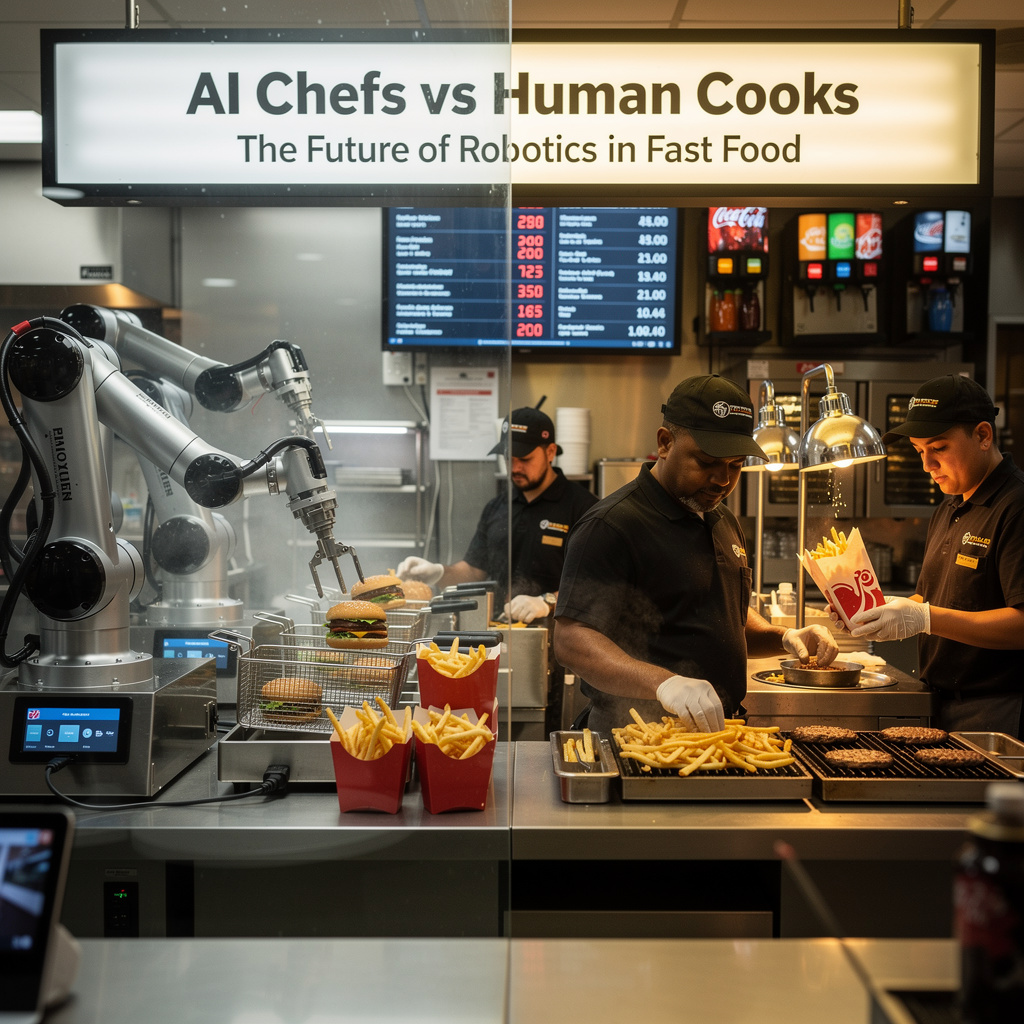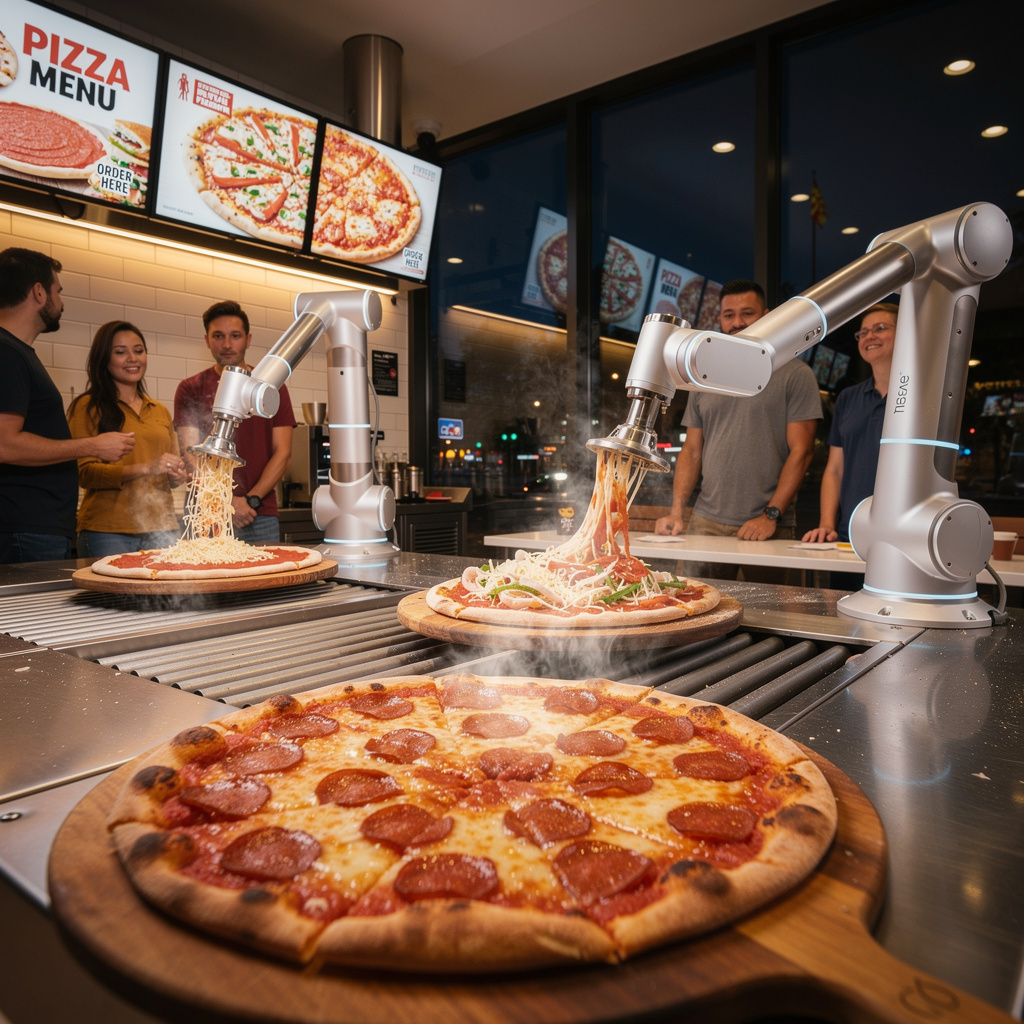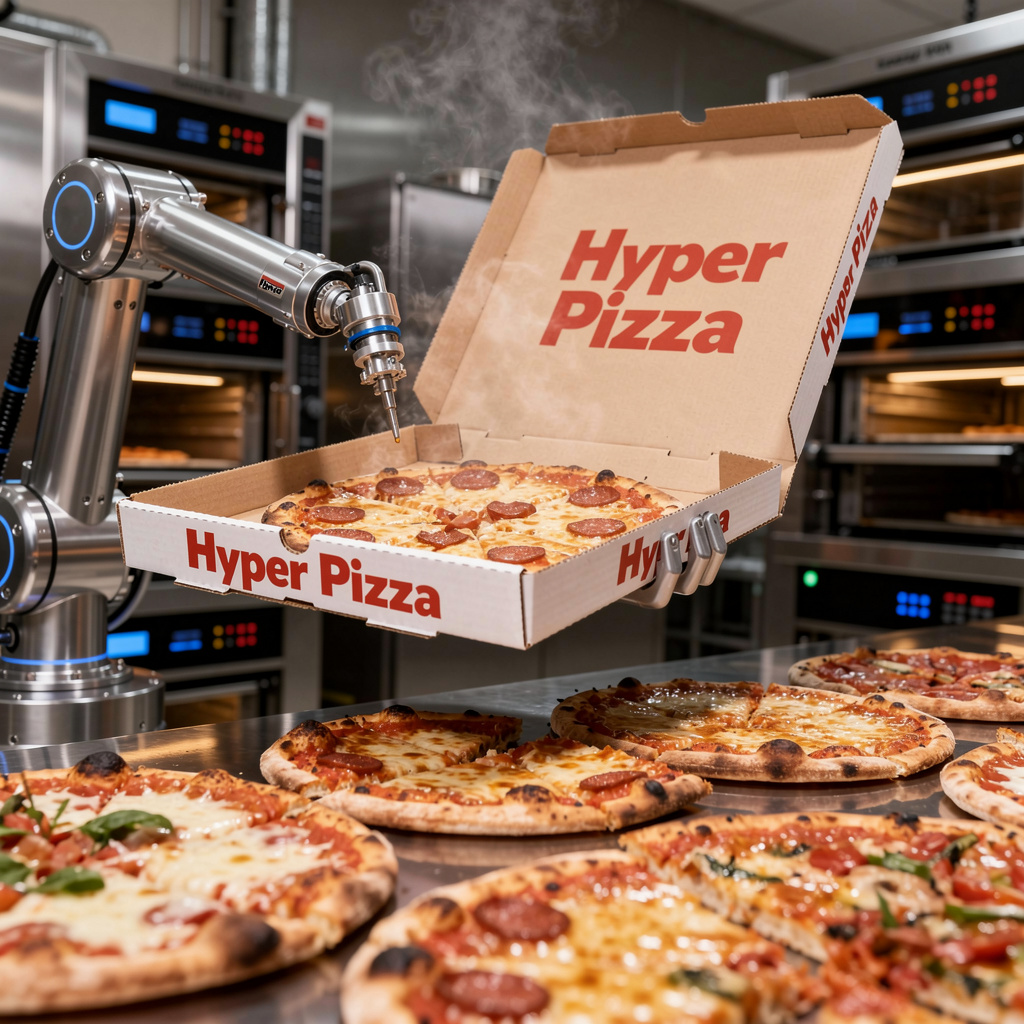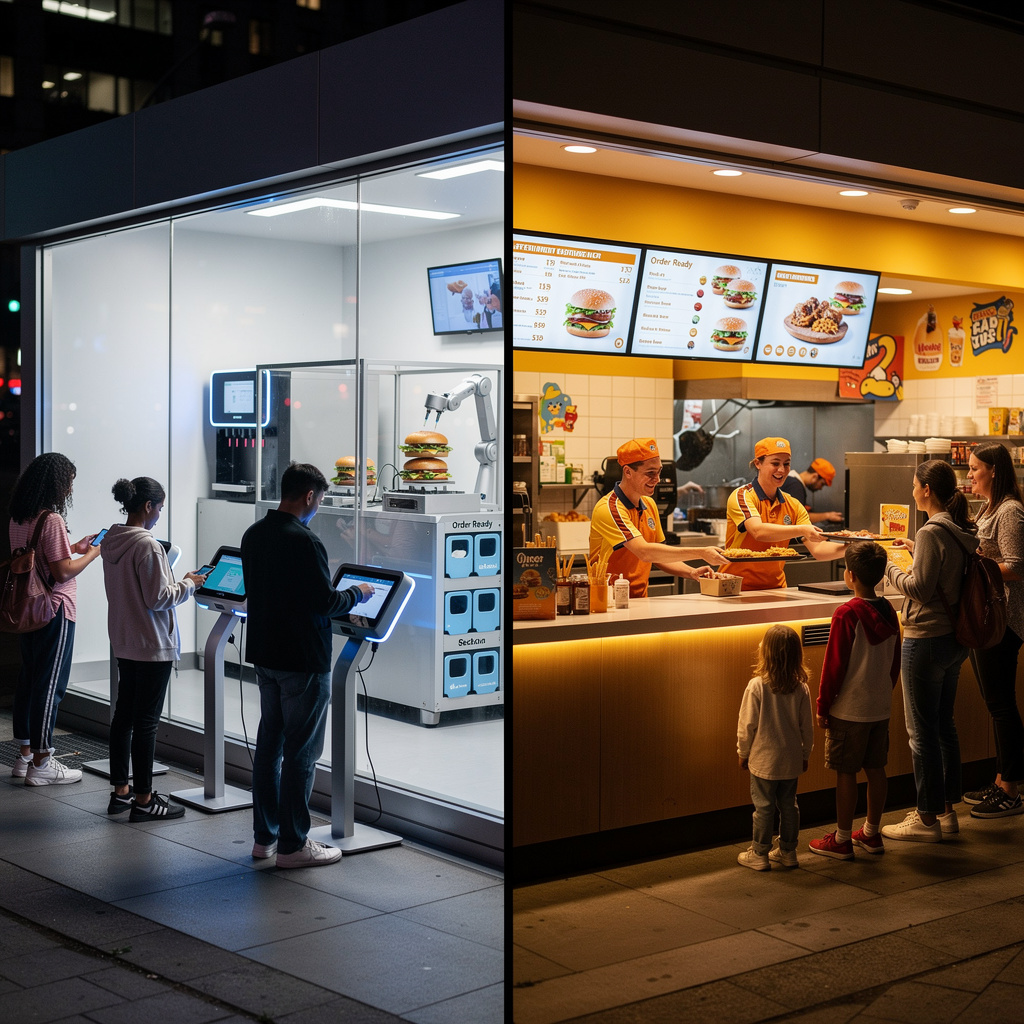
“Can you scale everywhere, overnight, and still serve food you would eat yourself?”
You want to scale robot restaurants fast, and you do not want to trade food safety or taste to get there. You want deterministic processes, airtight traceability, and flavor that matches your brand promise in every city. Playbook that turns pilot successes into fleets, without surprises.
This article shows you how to do that, with practical steps, metrics you can track, and a simple checklist to move from pilot to roll quickly.
Table Of Contents
- Why Automation Is Table Stakes For Large QSRs
- The Two Pillars: Food Safety And Taste
- How Robotics Strengthens Food Safety
- How Robotics Preserves And Enhances Taste
- Technology Architecture That Supports Safe Scaling
- Operational Playbook For Rollout
- KPIs To Measure Safety, Quality, Operations, And Finance
- Common Challenges And How To Mitigate Them
- Simple Checklist To Scale Robot Restaurants Safely And Deliciously
- Key Takeaways
- FAQ
- What Next Question To Ask Yourself
- About Hyper-Robotics
Why Automation Is Table Stakes For Large QSRs
You are under constant pressure to open new capacity, serve digital orders faster, and reduce labor churn. Manual kitchens strain to meet predictable throughput and consistent quality. Containerized, pre-commissioned robotic units can compress site build times and standardize output, so you can open in weeks rather than months. Hyper-Robotics documents this approach in its blueprint for robot restaurants and ghost kitchens, and recommends using compact 20-foot units for delivery-first sites and 40-foot units for full-service autonomy, with cluster orchestration to lower last-mile costs. Deployments like this let you scale robot restaurants without compromising food safety or taste because the hardware and software encode the controls you need.

The Two Pillars: Food Safety And Taste
You must treat food safety and taste as equal, non-negotiable requirements. First, food safety is legal and reputational. Meanwhile, taste is what keeps customers coming back. However, if automation improves safety but produces bland product, adoption will stall. Conversely, if your automated meals taste great but fail audits, you will face closures and recalls. Therefore, your program must measure and prove both, and it must do that consistently, every day at every location.
How Robotics Strengthens Food Safety
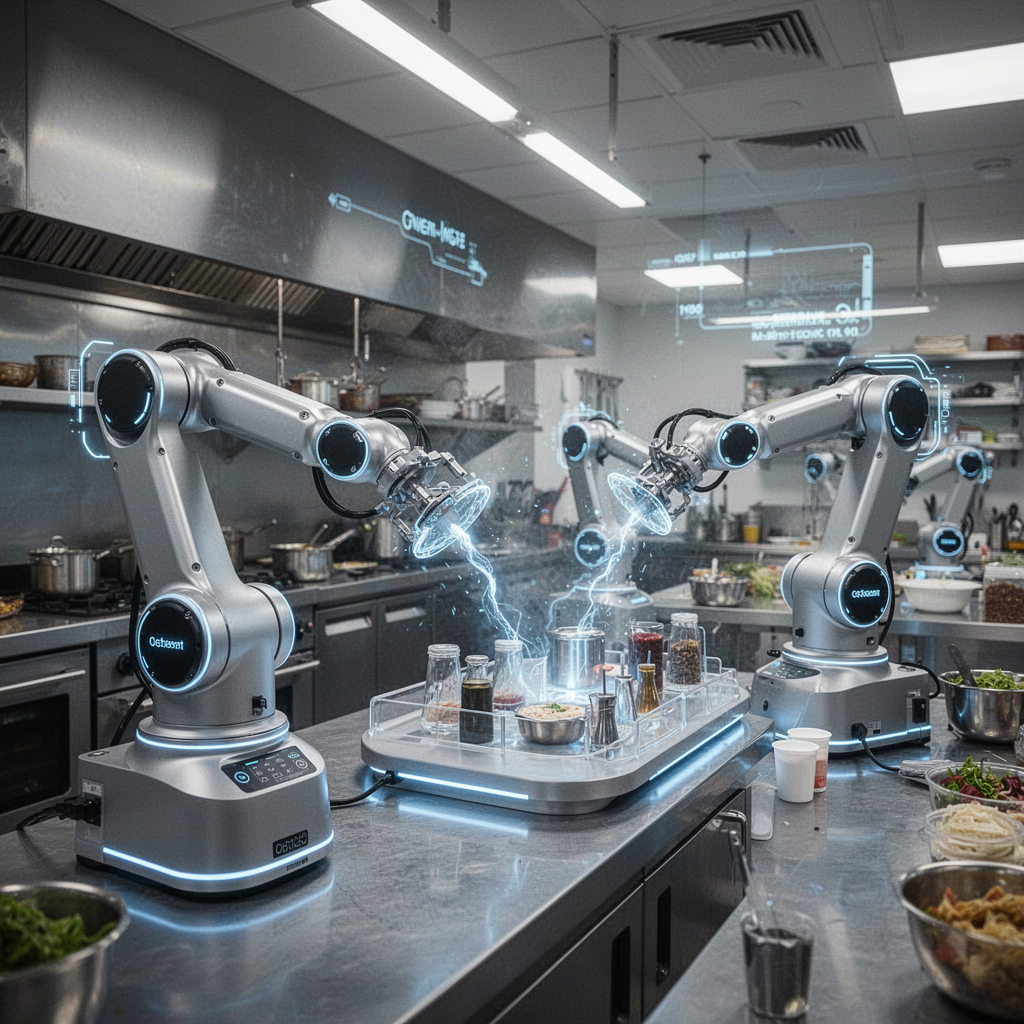
Physical separation reduces risk. When food handling is deterministic and enclosed, you remove the most common human error vectors. Automated units control time and temperature, enforce ingredient segregation, and log every critical control point. Modern systems use dozens to hundreds of sensors to validate cooking, holding, and transfer points. Those logs are essential when you need to show regulators a clear chain of custody.
You also gain the benefit of repeatable cleaning. Self-sanitizing cycles that use validated UV, steam, or ozonated water, plus designed-for-cleanability surfaces, make sanitation verifiable. Hyper-Robotics recommends running pilot cycles under audit conditions, and documenting cleaning logs automatically so inspectors can review records remotely, as described in its kitchen robotics guidance for CEOs scaling fast-food chains. That makes local health authority engagement straightforward.
Allergen control becomes easier when you can create dedicated handling paths. Software enforces separation rules, and machine actions are deterministic. If your recipes demand a wheat-free line, you can build a physical and procedural barrier that is repeatable and auditable.
How Robotics Preserves And Enhances Taste
Your recipes become code. You encode volumes, timing, motion, and thermal profiles. That removes human variability. Closed-loop controls such as PID temperature control, weight sensing, and machine vision mean the robot adjusts in real time to achieve the desired bite, texture, and appearance.
Machine vision can detect browning thresholds. Infrared sensors track core temperature. Weight and flow meters ensure portion sizes are exact. These systems let you tune a recipe for a target sensory profile and then push that optimization fleet-wide. You can run A/B sensory tests at a pilot site, collect customer feedback, and deploy adjusted profiles across clusters by signed over-the-air updates.
Taste benefits from better freshness management. Inventory telemetry enforces FIFO, flags expiring lots, and ensures that ingredients used in the morning are not reused in the evening. That reduces off-flavor risk and shrink.
Technology Architecture That Supports Safe Scaling
Modular hardware, software orchestration, and secure operations are the backbone. Use pre-built container units for rapid commissioning. Hyper-Robotics shows how 20-foot delivery-optimized units and 40-foot full-service units can be commissioned quickly and clustered for scale in its robot restaurants blueprint. You should require device authentication, encrypted telemetry, signed OTA updates, and segmented networks. Those requirements protect both operational continuity and customer data.
Orchestration software is your fleet brain. It balances load across clusters, manages inventory transfers, and enforces recipe governance. Telemetry gives you the per-unit view you need to detect drift, schedule calibration, and route maintenance. Predictive maintenance reduces unplanned downtime and keeps food-safe systems running.
Operational Playbook For Rollout
Design a pilot that simulates real stress. Include peak-hour loads, delivery surges, ingredient variance, and failure modes. Hyper-Robotics suggests starting small, with one to three container units in dense delivery zones, and aiming for time-to-live under two months, as outlined in its guidance on scaling delivery with zero human contact robotics. That speed matters when you are chasing market share.
Your acceptance testing must include HACCP validation points, cleaning verification under audit, allergen challenge tests, and taste panels. Involve local health authorities early. Provide them with digital logs and the test criteria you used. If regulators can see deterministic controls and evidence, you remove a major scaling obstacle.
Operationalize field service. Pre-position spare-part caches and train technicians on calibrations and cleaning verification. Move staff roles from repetitive prep to service, quality oversight, and customer experience.
KPIs To Measure Safety, Quality, Operations, And Finance
You must track metrics that map to executive decisions. Here are the ones executives ask for.
Safety KPIs
- Temperature excursions per 10,000 orders, tracked by severity and time-to-correct.
- Cleaning cycle pass rate, recorded per shift.
- Audit nonconformance count and mean time to close.
Quality KPIs
- Recipe adherence rate, measured by sensor checks and weight variance.
- Delivery temperature at handoff, with percent within target band.
- Customer taste satisfaction and repeat rate.
Operational KPIs
- Uptime, measured as percentage availability during defined service hours.
- Throughput, orders per hour under peak load.
- Mean time to repair.
Financial KPIs
- Cost per order including amortized hardware and service.
- Payback horizon for a cluster deployment.
- Labor cost delta and shrinkage reduction.
Quantify these for your business. Hyper-Robotics frames scaling as a path to 10x faster market entry for certain deployments when you use modular, pre-built units, which has a direct effect on payback calculations, in how-to scale. Use pilot data to populate these metrics. A small pilot will tell you whether you get the expected ROI in a given market.
Common Challenges And How To Mitigate Them
Ingredient variability
You will face lot-to-lot difference. Lock suppliers to tight specs. Use lot-level acceptance testing and real-time calibration routines. If a batch of potatoes has higher moisture, your system must detect and adjust cook profiles.
Software and hardware drift
Robots and sensors age. Schedule re-calibration. Run automated self-tests at startup. Build fail-safe defaults that route orders away from units that report out-of-tolerance conditions.
Regulatory nuance
Codes vary by municipality. Localize procedures and keep a central repository of audit-ready logs. Engage health departments early and provide validation data to reduce surprises.
Consumer acceptance
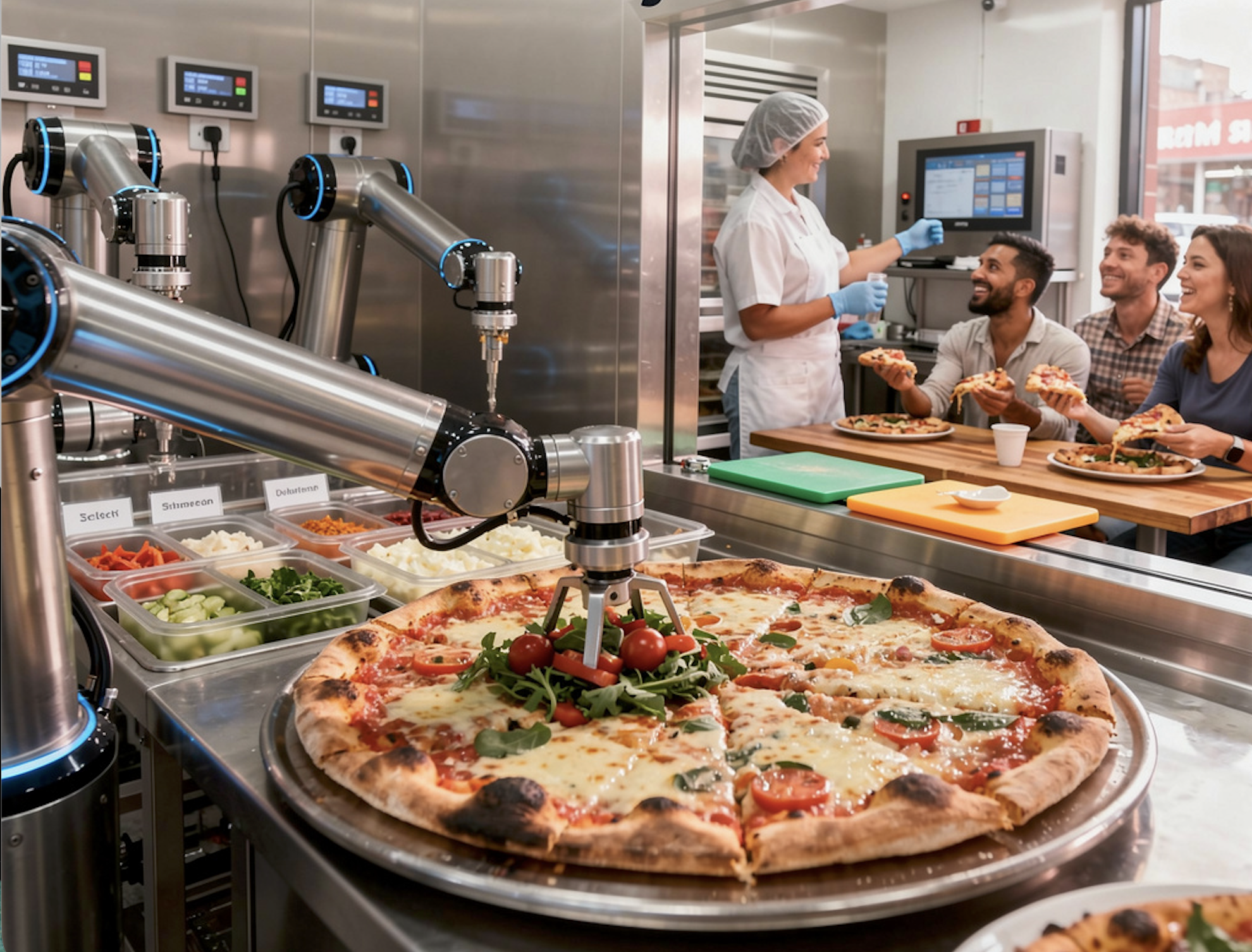
Some customers mistrust automated kitchens. Manage perception by keeping visible brand cues. Train your staff to be hosts. Use marketing to tell the story of safer, fresher, and more consistent food. Industry trend pieces show that public perception evolves rapidly as the technology proves itself, and vendors are already experimenting with robot servers and delivery robots, as discussed in this industry overview of robot restaurant automation trends.
Simple Checklist To Scale Robot Restaurants Safely And Deliciously
Goal: move from pilot to safe, repeatable fleet operations that preserve food safety and brand taste
Why a checklist? A checklist forces clarity.
- It breaks a complex program into repeatable, auditable tasks.
- It assigns ownership.
- It reduces cognitive load during stress, and it creates the exact records regulators want.
- You want to turn ambition into repeatable steps.
Task 1: first item on the checklist
Define pilot scope and success criteria, including KPIs for safety, taste, uptime, and finance. Select the site profile, order mix, and stress tests. Secure local regulatory contact and schedule inspection windows. Lock suppliers and ingredient specs for the pilot period.
Additional tasks, building to the result
Task 2: procure modular units and require documented sensor suites, self-sanitizing mechanisms, and encrypted logging in vendor contracts. Insist on signed OTA update mechanisms and device authentication.
Task 3: design acceptance tests that include HACCP validation, allergen challenge tests, cleaning cycle audits, and sensory panels. Record all results automatically.
Task 4: run a 6-12 week pilot in 1 to 3 dense delivery zones, measure KPIs daily, and iterate recipes based on sensory feedback and telemetry. Use cluster orchestration to balance load.
Task 5: train field technicians, create spare-part caches, and automate maintenance scheduling with predictive analytics.
Task 6: engage marketing and customer experience teams to craft the product story and gather consumer feedback.
Final task: certify the pilot for scale, lock the recipe-as-code, create a governance process for recipe changes, and launch phased cluster rollouts with audit trails and regional field support.
Benefit of completing the checklist
Completing this checklist gets you a validated blueprint. You will reduce safety incidents, deliver consistent taste, and shorten time-to-market. You will also produce the audit-ready records regulators ask for. That lowers legal and reputational risk and drives scalable revenue growth.

Key Takeaways
- Start small, measure fast, and replicate what works, with one to three container units in dense delivery zones as your initial cluster.
- Encode recipes and safety controls in software. Deterministic processes cut variability and improve auditability.
- Require audit-ready telemetry, signed OTA updates, and device authentication in vendor contracts.
- Track safety and taste KPIs daily, and use sensory panels plus telemetry to tune recipes fleet-wide.
- Build field service and spare-part strategy before scaling to avoid downtime-driven safety lapses.
FAQ
Q: How do I prove to health inspectors that a robot kitchen is safe?
A: Provide audit-ready logs that show time and temperature records, cleaning cycles, and sensor validation. Invite inspectors to observe the pilot and share your HACCP maps and acceptance-test results. Offer to run challenge tests, such as allergen cross-contact simulations, and provide evidence of automated cleaning cycle efficacy. Early engagement builds trust and shortens approval times.
Q: Will robots change how my brand tastes to customers?
A: They should not, if you encode your recipes properly and use closed-loop controls. Use machine vision, PID temperature control, and portion-weight checks to reproduce the original sensory profile. Run blind taste panels during pilot and iterate recipes based on feedback. Use OTA governance to deploy adjustments fleet-wide with rollback capability.
Q: How do I manage ingredient variability across hundreds of sites?
A: Tighten supplier specs and require lot-level barcoding and acceptance testing. Use inventory telemetry and FIFO controls. Implement automated calibration routines that adjust cook profiles based on measured moisture, density, or oil content. If a lot is out of spec, the system should quarantine it and notify operations.
Q: What is the expected ROI and what drives payback?
A: ROI depends on throughput, labor cost differential, and deployment speed. Faster market entry through modular units, standardization that reduces shrink, and 24/7 operation all shorten payback. You should model cost per order including amortized hardware, service, and reduced labor. Use pilot data to refine the model and validate assumptions.
About Hyper-Robotics
Hyper Food Robotics specializes in transforming fast-food delivery restaurants into fully automated units, revolutionizing the fast-food industry with cutting-edge technology and innovative solutions. We perfect your fast-food whatever the ingredients and tastes you require.
Hyper-Robotics addresses inefficiencies in manual operations by delivering autonomous robotic solutions that enhance speed, accuracy, and productivity. Our robots solve challenges such as labor shortages, operational inconsistencies, and the need for round-the-clock operation, providing solutions like automated food preparation, retail systems, kitchen automation and pick-up draws for deliveries.