Would you eat a meal if one tiny mistake could put hundreds of customers at risk?
You face two painful truths when you run or scale a fast-food operation: humans are brilliant and fallible, and food-safety failures crush brands fast. Human errors, inconsistent hygiene practices, and the pressure of peak service create predictable contamination points. At the same time, robotics, sensors, and deterministic software offer a way to remove those touchpoints, deliver repeatable hygiene, and produce auditable, real-time evidence of safety. In short, zero-human interface restaurants replace uncertainty with measurable controls, reduce contamination vectors, and let you prove compliance across hundreds of locations.
Table Of Contents
What I will cover for you
1. The problem: why human touch remains the largest safety risk
2. The solution: how zero-human interface designs remove risk vectors step-by-step
3. Hygiene-first engineering: materials, cleaning, and verification
4. Traceability and audits: immutable logs as your safety evidence
5. Security, reliability, and maintenance: keeping automation safe and online
6. Business impact and ROI snapshot: numbers you can measure
7. Real-world precedent and validation: examples that matter
The Problem
Start with a clear truth. When food safety breaks you rarely lose a single order. You lose trust, you face liability, and you pay for cleanup that outlives the incident. Improper handwashing, glove misuse, poor temperature control, and cross-contamination are not rare anomalies. They are the most common root causes regulators and investigators find after outbreaks. Staff shortages and rushed shifts make those failures more likely. When you run dozens or thousands of locations, variance in training multiplies that risk into systemic exposure.
You need numbers to care. Even in pilot projects, operators report that human error accounts for a large majority of daily sanitation lapses. You also need context. Manual checklists fail under stress. A sanitation protocol that works on paper often falls apart during a Friday dinner surge. For you as a CTO, COO, or CEO, that means the process is the risk, not just individual staff. The problem is not staff intent. The problem is that humans cannot deliver deterministic outcomes at industrial scale.
The Solution
How zero-human interface design removes risk vectors, step-by-step
You get safety by removing the unreliable element from the chain. Here is how that works in practice.
1) Eliminate routine touchpoints with deterministic robotics
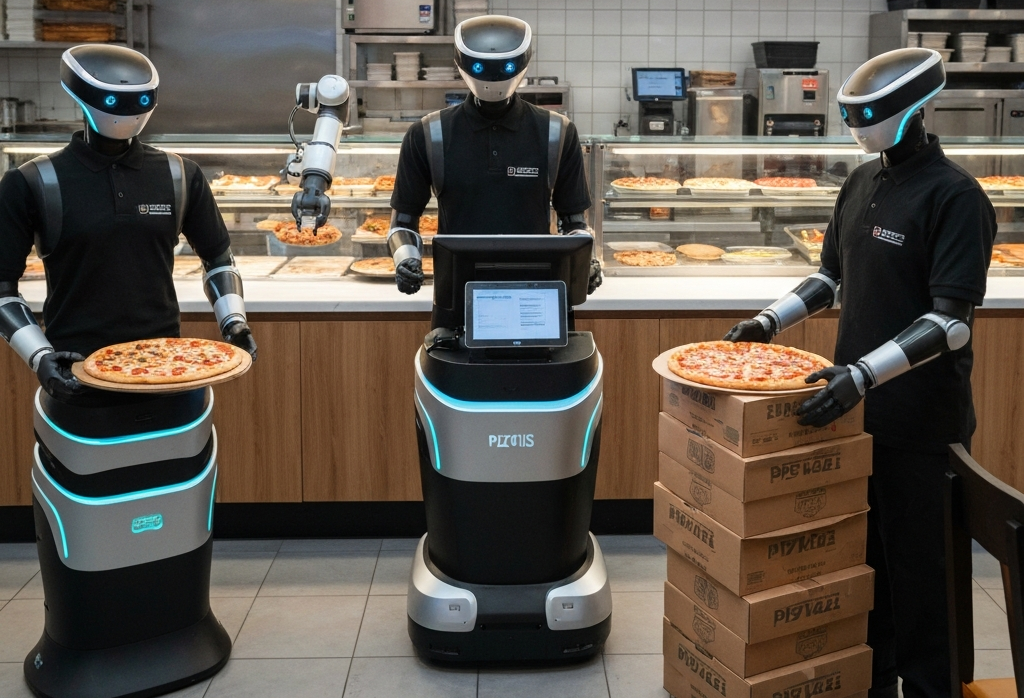
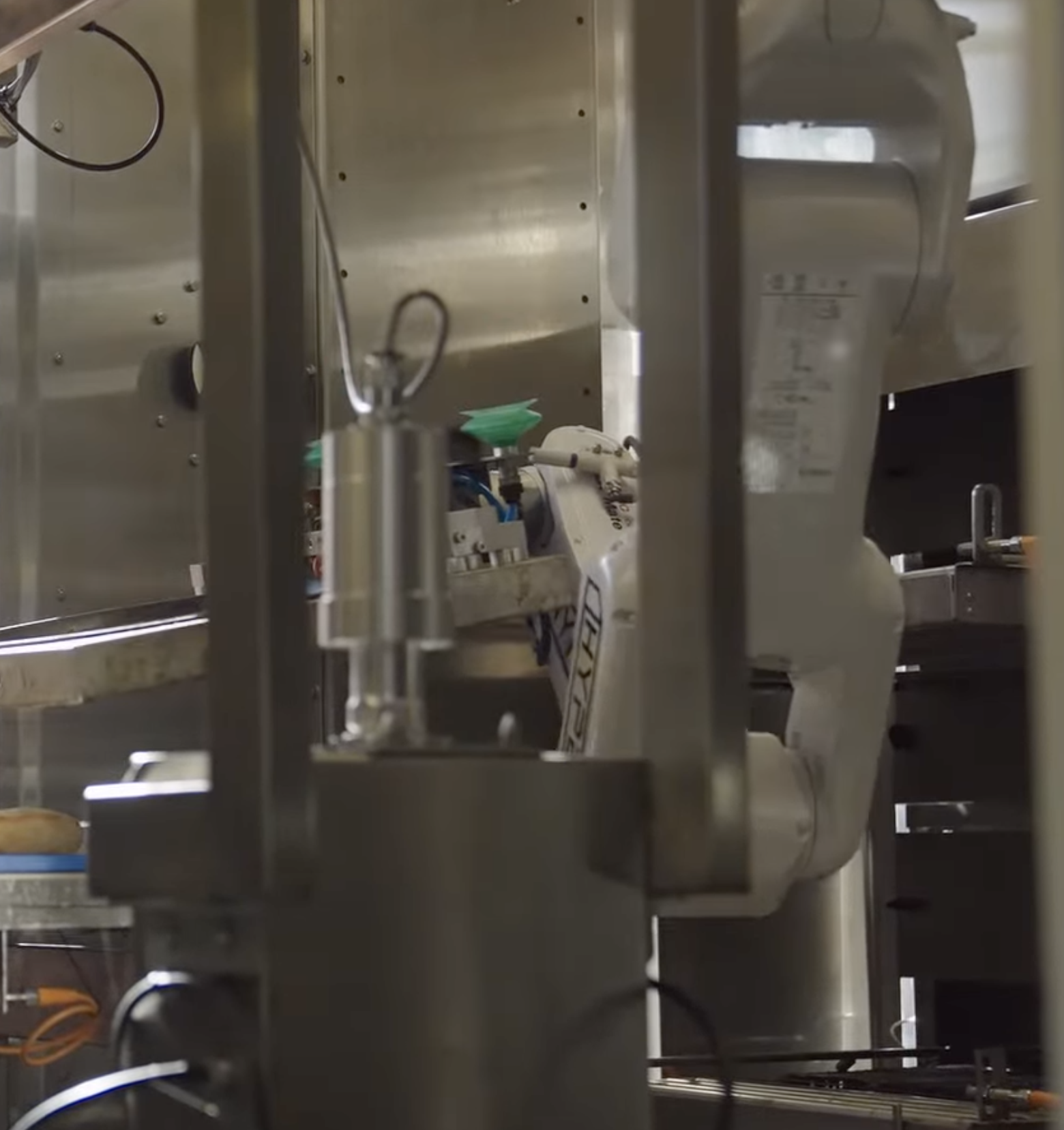
Replace repetitive touch actions with robots that perform the same motion, the same way, every time. Robots do not forget to wash hands, they do not double-handle an allergen item, and they will not rush a cook cycle because the line is backed up. When assembly, portioning, cooking, and handoff are robotic, the main vectors for contamination disappear.
2) Instrument everything with sensors and machine vision
Add dense sensor arrays and high-resolution AI cameras to verify ingredient identity, portion size, cooking state, and packaging integrity. For example, many systems implement designs with roughly 120 sensors and 20 AI cameras to monitor the full preparation process. When a camera or sensor detects an anomaly, the system can quarantine that product automatically and create a time-stamped case for inspection. That makes reaction faster and more precise than manual spot checks.
3) Enforce recipes as code
Convert cooking and assembly steps into version-controlled code. Recipes, temperatures, cook times, and sequence logic are pushed to every unit in your fleet. If a supplier changes an ingredient, you push an updated recipe and can roll it back if needed. That removes variability that comes from human memory or interpretation.
4) Zone-based environmental control
Give each work area localized control. Prep, cooking, holding, and packaging zones each have temperature and humidity sensors. That prevents incorrect cold holding or improper hot holding from occurring because the system drives set points automatically rather than relying on periodic human checks.
5) Dedicated channels for allergens and contamination control
Design separate physical pathways and robotic sequences for allergen-prone items. Where humans might inadvertently use the same surface for two incompatible foods, robots follow pre-planned, non-overlapping paths and automatic cleaning cycles between product classes. That prevents cross-contact in a way manual processes struggle to guarantee during busy periods.

6) Continuous verification and quarantine logic
Build rules that do not let ambiguous outcomes through. If a sensor does not confirm a cook state or a camera fails to match a barcode or visual signature, the system halts the packing step and tags the order for human review. That hybrid moment preserves safety while keeping throughput predictable.
Read a practical perspective on how automation and hygiene lift safety and monitoring in 2025 from Hyper-Robotics, in which the company explains operational benefits and verification strategies in detail: [Hyper-Robotics knowledgebase: Fast Food Automation Enhancing Safety and Hygiene in 2025].
Learn why containerized, IoT-enabled kitchens are a fast route to zero-contact operations and predictable deployment economics at [Hyper-Robotics knowledgebase: What Makes Hyper Food Robotics the Leader in Zero Human Contact Fast Food Automation].
Hygiene-First Engineering: Materials And Cleaning
You cannot automate hygiene without engineering for it. Start with surfaces that do not harbor microbes. Use stainless steel and non-porous, corrosion-resistant materials on all food-contact and near-food surfaces. Design welds, joints, and fasteners to be inaccessible to residue build-up.
Next, automate the cleaning process. Self-sanitizing cycles operate between batches and after defined time windows. Many systems use high-temperature rinses, UV-C cycles, or validated chemical cleaning protocols that are executed automatically and logged. Those cleaning cycles can be chemical-free for some components, reducing residues and worker exposure.
Finally, require verification. The system must record a pass or fail for every sanitation cycle and attach that data to the audit trail. Automation can log the cleaning temperature, contact time, and sensor readings needed to prove compliance. That level of recorded verification is far stronger than a manual checklist signed at the end of a shift.
Traceability And Audits: Immutable Logs As Your Safety Evidence
You need to prove safety as well as deliver it. Robotic kitchens create dense telemetry. Every ingredient batch, every recipe version, every sensor reading, and every corrective action becomes part of a time-stamped chain of custody for each order. That is invaluable when an incident occurs. You can quickly determine which units received a suspect lot and isolate them across the fleet.
This traceability reduces recall cost and scope. It also speeds regulatory responses and internal root-cause analysis. Centralized cluster management consolidates logs so your compliance team can run remote audits. The result is a system that not only prevents many incidents but shows auditors the evidence you need when you are inspected.
Security, Reliability, And Maintenance
Automation only improves safety when it is secure and dependable. Focus on three engineering areas.
1) Cybersecurity by design
Protect IoT endpoints, cameras, and cloud links with industry-standard encryption and strict role-based access. Use network segmentation so kitchen control systems are isolated from guest Wi-Fi and corporate guest services.
2) Redundancy and fail-safe design
Design the system so single-module faults do not create unsafe states. Redundancy in sensors and the ability to fall back to safe holding modes keep food safe even during technical issues.
3) Remote diagnostics and SLA-backed support
Use predictive maintenance and remote monitoring to reduce downtime. When you can spot rising failure patterns before they cause problems, you reduce the chance that a malfunction will create an unsafe condition. Hyper-Robotics packages plug-and-play units in 20 and 40 foot formats that include remote support and cluster management to minimize onsite complexity.
Business Impact And An ROI Snapshot
Safety drives margins in several direct ways. When you reduce food-safety incidents you avoid settlements, PR costs, and lost sales after a public incident. You control portions precisely you reduce waste and COGS. When systems run reliably you get predictable throughput and can open more units faster with standard economics.
Pilot KPIs you should measure
– Food-safety incident rate per 10,000 orders
– Order accuracy percentage
– Food waste percentage
– System uptime percentage
– Average order cycle time
A well-run pilot can show dramatic delta on each metric in a matter of weeks. Those numbers feed directly into CAPEX and payback models the CFO and COO will want to see.
Real-World Precedent And Industry Validation
This is not science fiction. Companies such as Hyper Food Robotics Miso Robotics with Flippy, Spyce, and Creator have run pilots that show robotics can hold or improve food quality while reducing human error. Pizza automation initiatives and other robotic vendors have demonstrated speed and hygiene gains in real kitchens.
Trade coverage and industry pieces document these pilots and the broader push into automated kitchens. For industry perspective on how food robotics reshape hygiene by reducing human contact and improving consistency, see this overview at [Food Robotics: Revolutionizing Fast Food and Beyond](). For analysis of automated preparation and hygiene in professional networks, see this LinkedIn perspective on enhancing food safety with automation: [Enhancing Food Safety and Hygiene Through Automated Fast-Food Preparation].
Treat those examples as validation, not a turnkey answer. Each operator must prove outcomes against their menu, suppliers, and customer expectations. But the trend is clear. Robotic kitchens are moving from pilots into scaled deployments because they deliver repeatable hygiene and measurable economics.
The Impact
Operational impact for you
You get consistency at scale. Automated kitchens mean the same process runs the same way in every unit. That gives you predictable labor models, predictable throughput, and fewer surprises during audits or PR crises. For delivery and ghost-kitchen models, 24/7 automated operation opens revenue windows that were previously expensive or unreliable to staff.
Regulatory and compliance impact
You create audit-ready evidence. HACCP-style requirements depend on demonstrated control of critical points. When your system logs every critical control point, including temperature, time, cleaning verification, and ingredient traceability, you move from anecdote to evidence in regulatory interactions. That reduces the time and cost of compliance and improves recall containment.

Brand and customer impact
You protect reputation. A single publicized food-safety incident can erase years of marketing and investment. Investing in hygienic automation lowers that existential risk. Customers get consistent food, visible cleanliness, and faster fulfillment. You gain the right to tell a story about measurable safety gains, not just a promise.
FAQ
Q: How do robots compare to humans when it comes to food quality and taste?
A: Robots deliver consistency, which is the simplest path to consistent quality. You program cook curves, portion sizes, and assembly sequences into recipes. That reduces variance between shifts, cooks, and locations. Taste perception remains a human judgment, but for most fast-food formats consistency matters more than minor stylistic variation. Pilots from companies like Miso Robotics and Creator show comparable or improved quality when recipes are well tuned.
Q: Can automated systems prevent allergen cross-contact?
A: Yes, when you design channels and sequences for allergen separation. Robots can use dedicated paths, separate holding compartments, and forced cleaning cycles between allergen items. You also add software controls that prevent incompatible selections from being processed in the same run. The key is a system-level approach that combines hardware separation, cleaning verification, and recipe logic.
Q: What happens if a sensor or camera fails during service?
A: Modern systems use redundancy and safety-first defaults. If a critical sensor fails the system will enter a safe holding mode or route the product for human inspection. Remote diagnostics will report the fault and prioritize field service. Your SLA with the automation vendor should specify mean time to repair and fallback modes to keep food safe.
Q: How do you prove compliance to auditors and regulators?
A: You provide time-stamped telemetry linked to each order. That includes ingredient lot numbers, process steps, temperature logs, and sanitation cycle verification. Those logs form an audit trail that is far stronger than a manual checklist. Centralized cluster reporting allows you to export the exact data an inspector needs.
Key Takeaways
– Remove routine human touchpoints to cut the most common contamination vectors, using robotics and deterministic workflows.
– Instrument kitchens with dense sensors and AI cameras so anomalies are detected and quarantined automatically.
– Require automated cleaning cycles and verifiable sanitation logs to meet and prove HACCP-style controls.
– Measure pilot KPIs—incident rate, waste percentage, uptime, accuracy—to quantify ROI and de-risk rollout.
– Vet vendors for redundancy, cyber protections, and SLA-backed maintenance before scaling.
You Have A Decision To Make
If you want hygiene that is provable, repeatable, and auditable, you should pilot zero-human interface kitchens and measure safety and operational KPIs. Will you let one more preventable incident define your brand, or will you build a system that makes safety demonstrable and unavoidable?
About Hyper Food Robotics
Hyper Food Robotics specializes in transforming fast-food delivery restaurants into fully automated units, revolutionizing the fast-food industry with cutting-edge technology and innovative solutions.
Hyper-Robotics addresses inefficiencies in manual operations by delivering autonomous robotic solutions that enhance speed, accuracy, and productivity. Their robots solve challenges such as labor shortages, operational inconsistencies, and the need for round-the-clock operation, providing solutions like automated food preparation, retail systems, and kitchen automation.