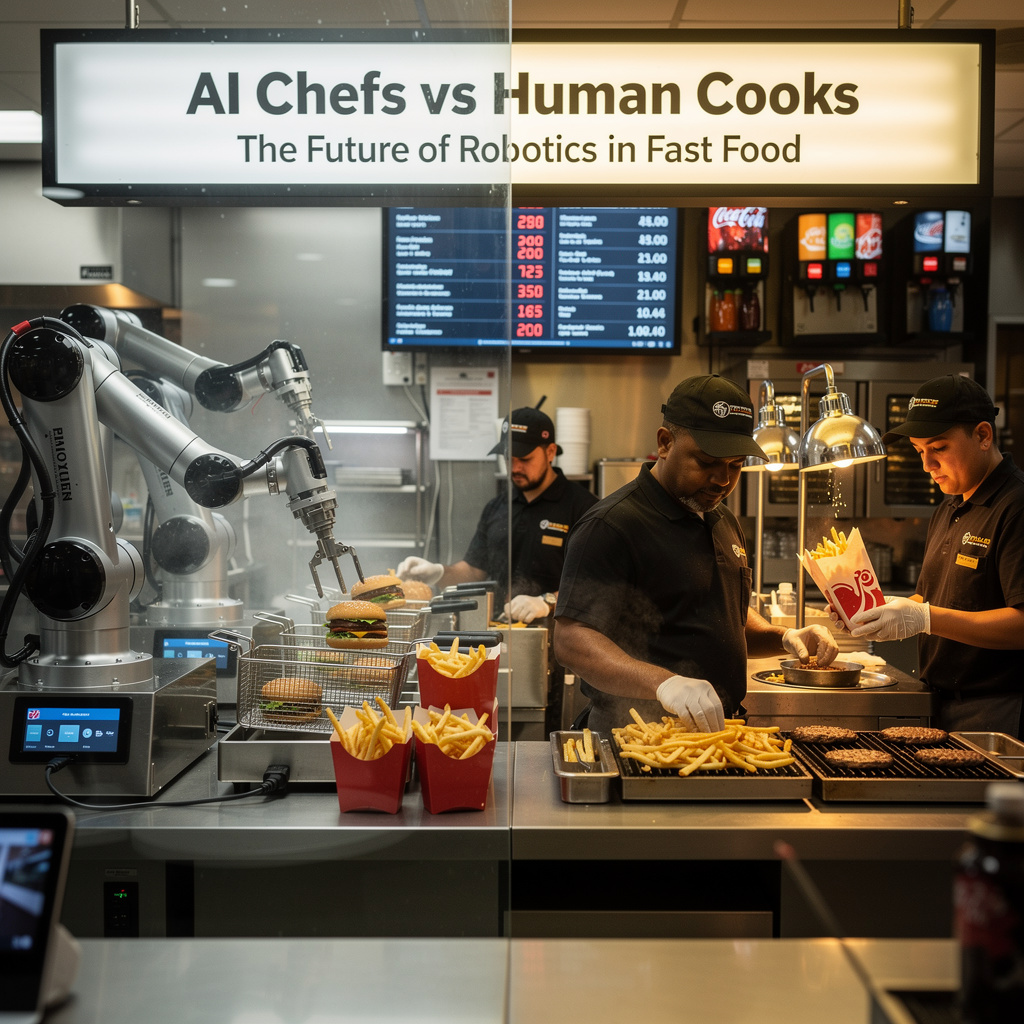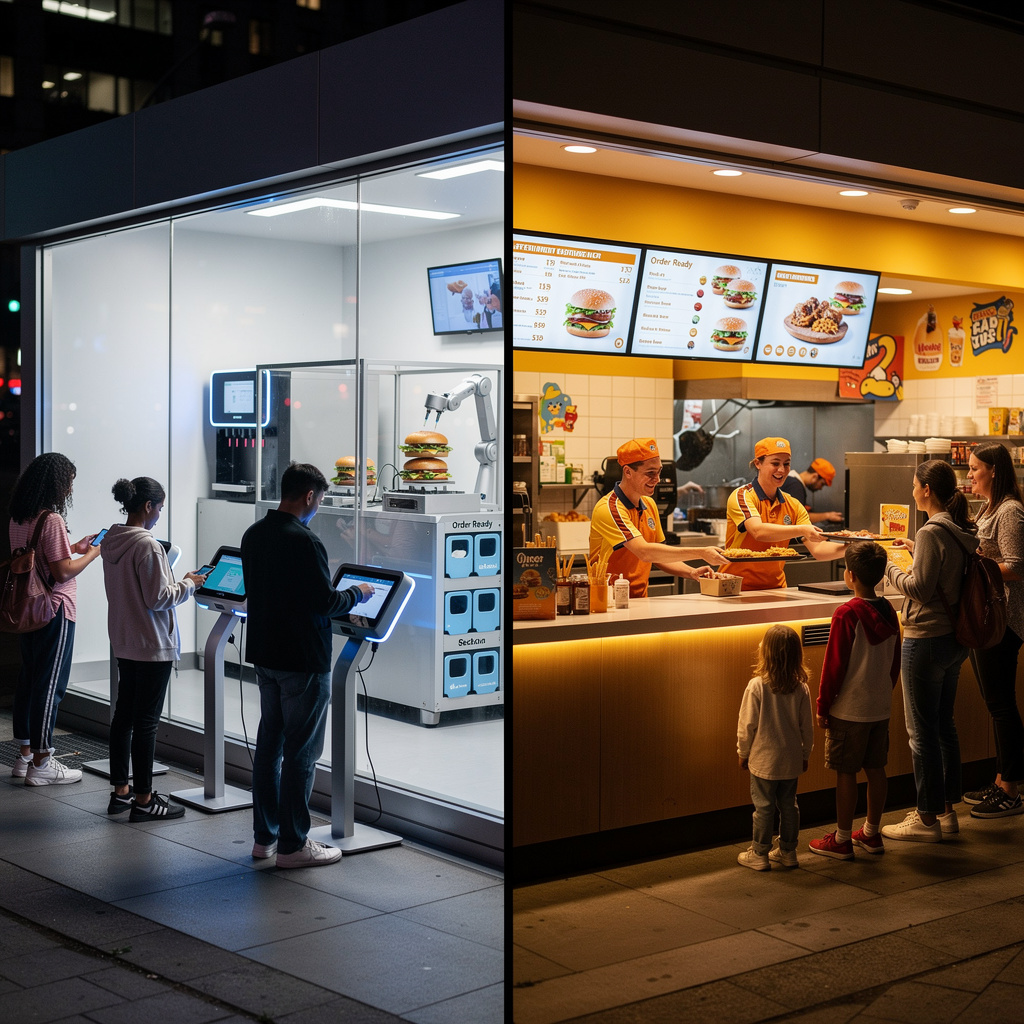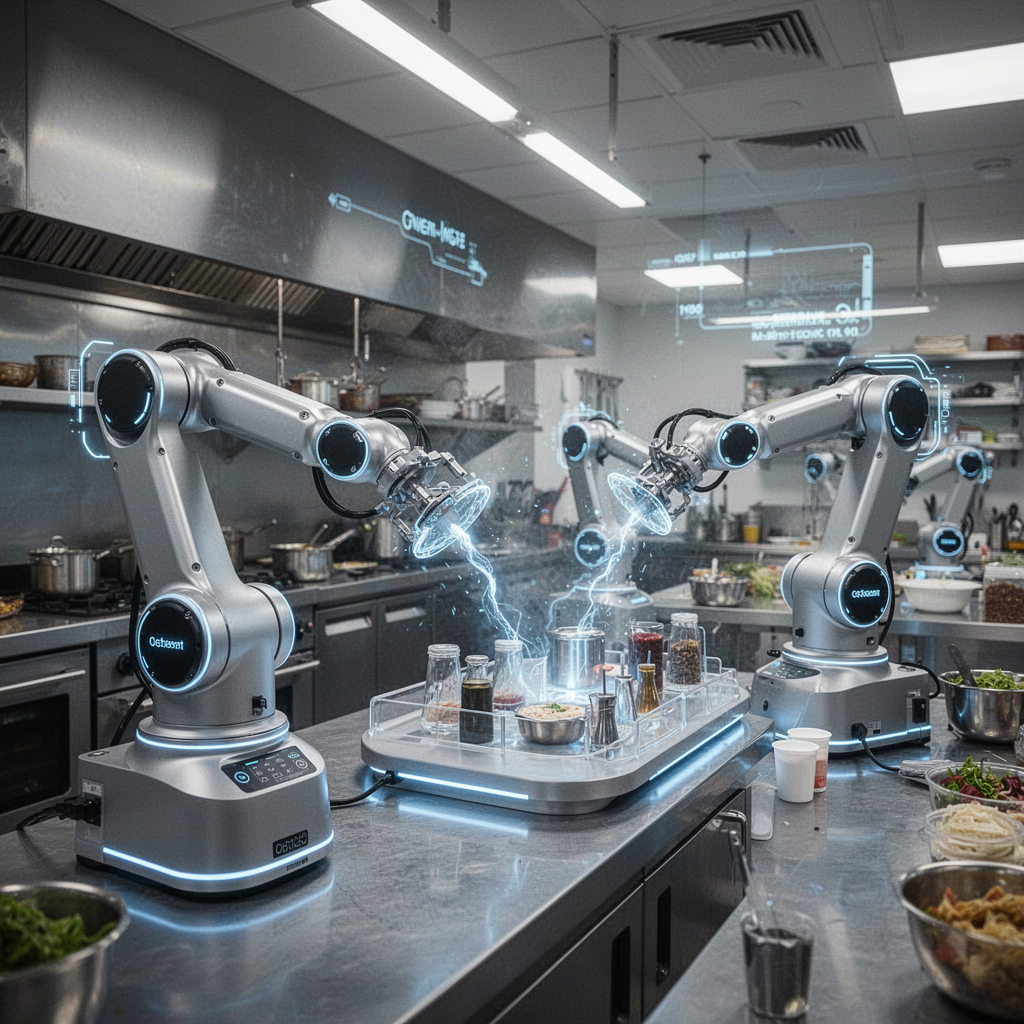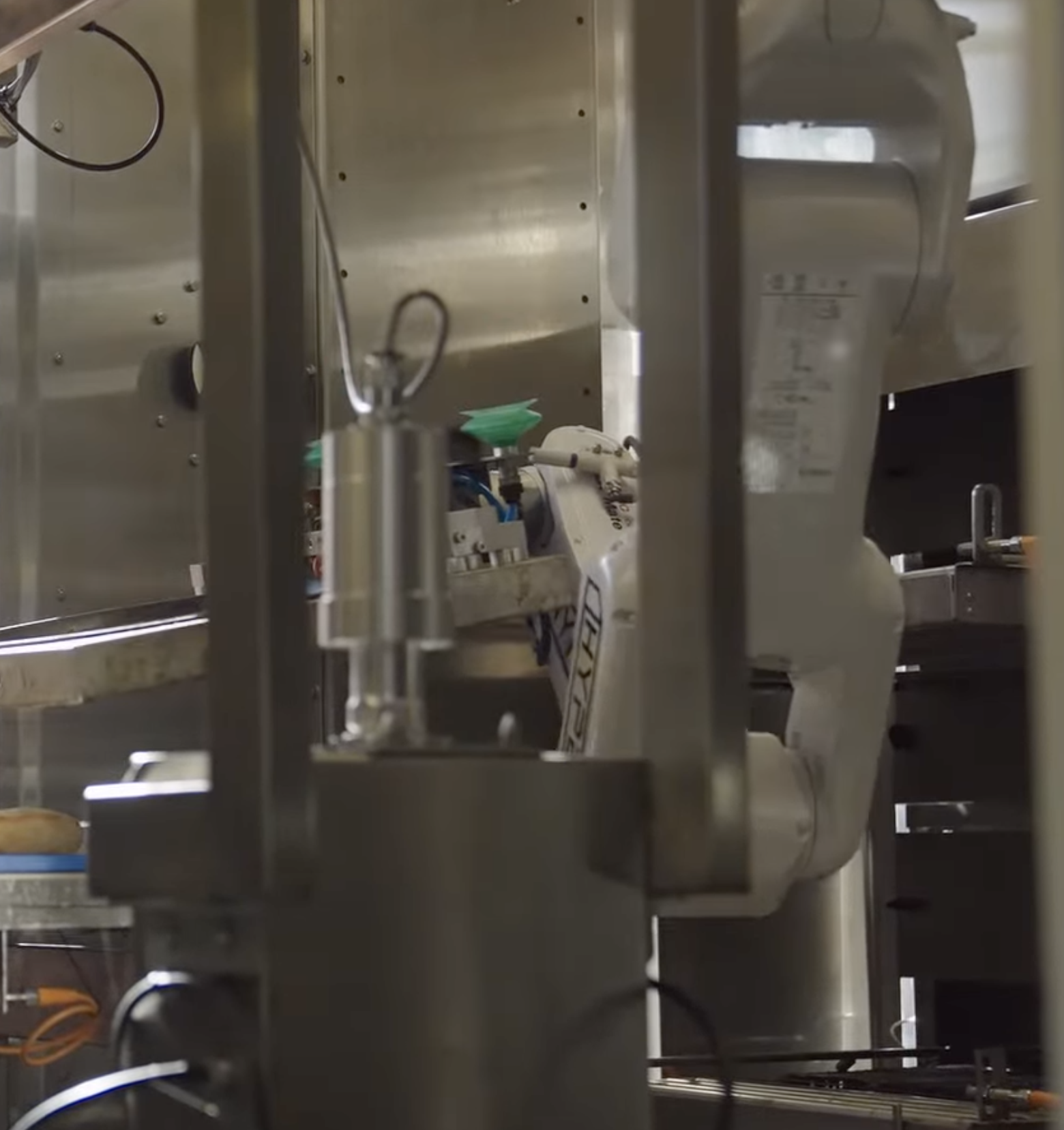
You walk into a busy downtown burger joint on a Friday night. The shift manager is juggling six phones, a line at the counter, and three no-shows on payroll. Sales peak, orders stack, and the fries are late. Now imagine a small, self-contained kitchen parked in a shipping container outside the store. It hums, it never calls in sick, and every order that leaves is the same as the last one. That scene is not science fiction. It is today’s answer to labor shortages and margin pressure, and it begins with fast food robots and automation in restaurants.
This piece explains why fast food robots solve labor shortages and boost restaurant profits. You will read concrete numbers from pilots, clear examples of how robots convert variable labor costs into predictable capital and maintenance, and a deployment playbook you can act on. You will learn how kitchen robot systems and autonomous fast food units improve throughput, reduce waste, and enable faster expansion. Early pilots show dramatic gains, including robots filling up to 82 percent of fast-food roles and potential wage savings measured in billions, and some deployments report cost cuts as high as 50 percent. See the pilot data and findings directly at the Hyper-Robotics pilot analysis and get an overview of the containerized robotic restaurant approach at the Hyper-Robotics 20-foot robotic restaurants article. You can also watch operators and industry commentators report real deployments in this YouTube discussion.
Table of Contents
1. The Problem: Labor Shortages and Margin Pressure in Fast Food
2. Why Robots Are a Practical Solution
3. How Autonomous Fast Food Systems Work in Practice
4. Quantifying the Impact: Sample ROI and KPIs to Track
5. Vertical Use Cases: Pizza, Burger, Salad Bowl, Ice Cream
6. Deployment Playbook for Enterprise Rollouts
7. Risks, Limitations, and Mitigation Strategies
8. What to Ask Vendors Before You Sign
The Problem: Labor Shortages and Margin Pressure in Fast Food
You feel the squeeze when labor is unreliable. Quick service restaurants live on thin margins. Turnover is high, hiring is unpredictable, and peak demand hits like a tidal wave. You pay overtime, you train new hires constantly, and service variability costs you customers and brand trust.
Those staffing gaps create measurable problems. You lose throughput during peaks, you get inconsistent food quality, and you incur hidden costs in refunds, extra packaging, and wasted ingredients. If you try to expand into a new market, you face another hurdle, because your growth depends on finding local workers who know the menu and can be trained quickly.
Industry-level analysis and pilot programs back that up. Hyper-Robotics summarizes pilot results where automation filled a large share of roles and reduced variability, and it points to potential savings across wages and error-related costs. See the pilot data and analysis at https://www.hyper-robotics.com/knowledgebase/heres-why-autonomous-fast-food-restaurants-solve-labor-shortages-and-boost-efficiency/.

Why Robots Are a Practical Solution
You want predictable service and predictable costs. Robots give you both.
- Predictable throughput, all the time
Robots keep a steady cycle time and can operate 24/7. You do not worry about callouts or shift gaps. That stability means you can absorb demand spikes without hiring a dozen temporary workers. - Lower variable operating costs
Automation changes your cost structure, moving spend from hourly wages to capital and predictable maintenance. In many cases that reduces per-order labor cost and improves margin stability over time. - Consistent quality and food safety
Automated portioning, machine vision checks, and documented sanitation cycles cut down on variability and contamination risk. That matters when brand consistency is critical across hundreds or thousands of locations. - Faster, repeatable expansion
Modular, plug-and-play units let you open sites faster in markets where the local labor supply is tight. A standardized robotic kitchen replicates your best practices without the variability of human teams.
Pilot programs point to big numbers. Hyper-Robotics reports that robots can fill up to 82 percent of fast-food roles and estimates potential industry savings in wages at a national scale. Other pilot data suggests operations cost reductions up to 50 percent in the right contexts. You can review that coverage at https://www.hyper-robotics.com/knowledgebase/how-fast-food-robots-can-solve-labor-shortages-in-the-restaurant-industry/ and read the operational case for containerized units at https://www.hyper-robotics.com/knowledgebase/heres-why-20-foot-robotic-restaurants-are-solving-the-fast-food-labor-crisis/.
How Autonomous Fast Food Systems Work in Practice
You do not have to imagine a robot flipping burgers by itself. Modern systems are integrated platforms of hardware and software that replace repetitive tasks and orchestrate workflows.
Hardware and sensors
A robotic kitchen packs specialized stations into a compact footprint. Typical enterprise units include dozens to hundreds of sensors and multiple cameras to verify portions and cook state. Advanced systems use sensor fusion and AI cameras at critical touchpoints to ensure each order matches the recipe.
Software and orchestration
A centralized control layer coordinates the stations, manages inventory, and logs production telemetry. Cluster management software lets you treat multiple units as a fleet, balancing load across sites and routing orders for optimal delivery times.
Sanitation and safety
Automated cleaning cycles, temperature sensors per section, and corrosion-resistant materials reduce manual sanitation labor and help you prove compliance during inspections.
Integration with existing systems
The best systems plug into your POS, delivery platforms, inventory systems, and loyalty software through APIs and middleware. That reduces friction and preserves the customer experience you already manage.
If you want to see industry reporting and demonstrations of robots at the counter, the YouTube conversation provides accessible context for operators and investors: https://www.youtube.com/watch?v=DYXsRwJAOEU.
Quantifying the Impact: Sample ROI and KPIs to Track
You need hard numbers to make the decision. Focus on the KPIs that move the P&L.
Key metrics to monitor
- Labor cost savings, including reduced headcount and overtime
- Throughput, measured as orders per hour and peak orders handled
- Order accuracy and refund rate reductions
- Waste percentage and ingredient yield improvements
- Uptime and mean time to repair
- Delivery speed and on-time percentage for delivery-first units
Illustrative ROI case
Assume a high-volume urban site with 1,200 orders per day and current staffed labor cost of $300,000 per year. An autonomous container unit has a hypothetical CapEx of $800,000, with annual maintenance and software fees of $80,000. If automation reduces labor to one onsite technician at $50,000 per year and throughput improves by 10 percent, the first-year economics can improve meaningfully.
Simplified year 1 comparison:
- Traditional approach: labor $300k + other ops $200k = $500k
- Automated approach: amortized CapEx $160k + maintenance $80k + tech staff $50k + other ops $120k = $410k
That simplified example shows a path to payback in roughly 3 to 5 years, depending on financing and utilization. The real lever for you is scale. When you deploy clustered units across a region, you capture network benefits, reduce spare-part inventories, and increase software-driven efficiency.
Use pilot KPIs to validate assumptions, and require vendors to show real pilot data for throughput, waste reduction, and uptime. Hyper-Robotics documents pilot reductions in variability and suggests cost cuts up to 50 percent under ideal conditions; review those pilot findings in the Hyper-Robotics pilot analysis.
Vertical Use Cases: Pizza, Burger, Salad Bowl, Ice Cream
You must match technology to menu. Robotic kitchens are not one-size-fits-all. They excel in high-repeatability workflows.
Pizza
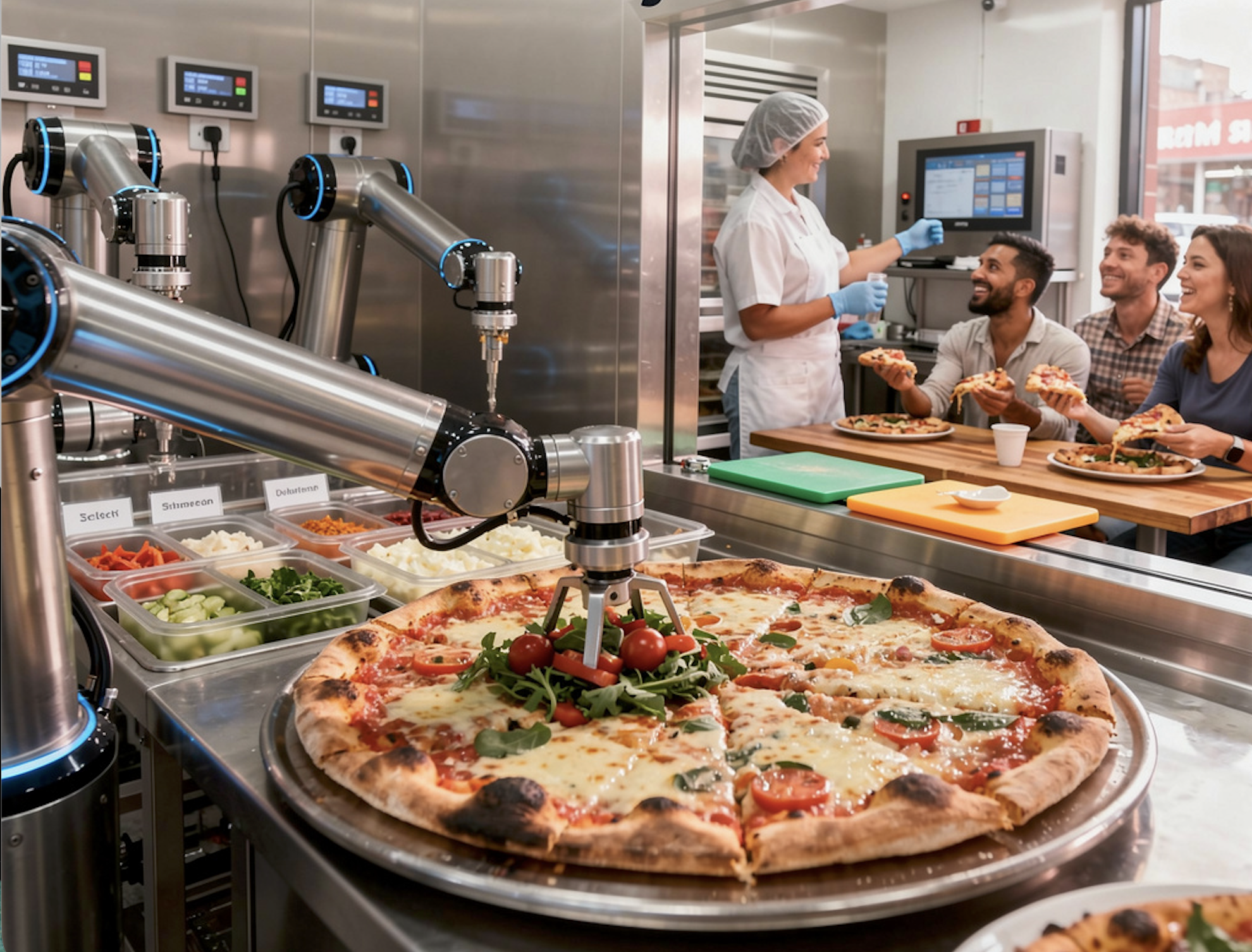
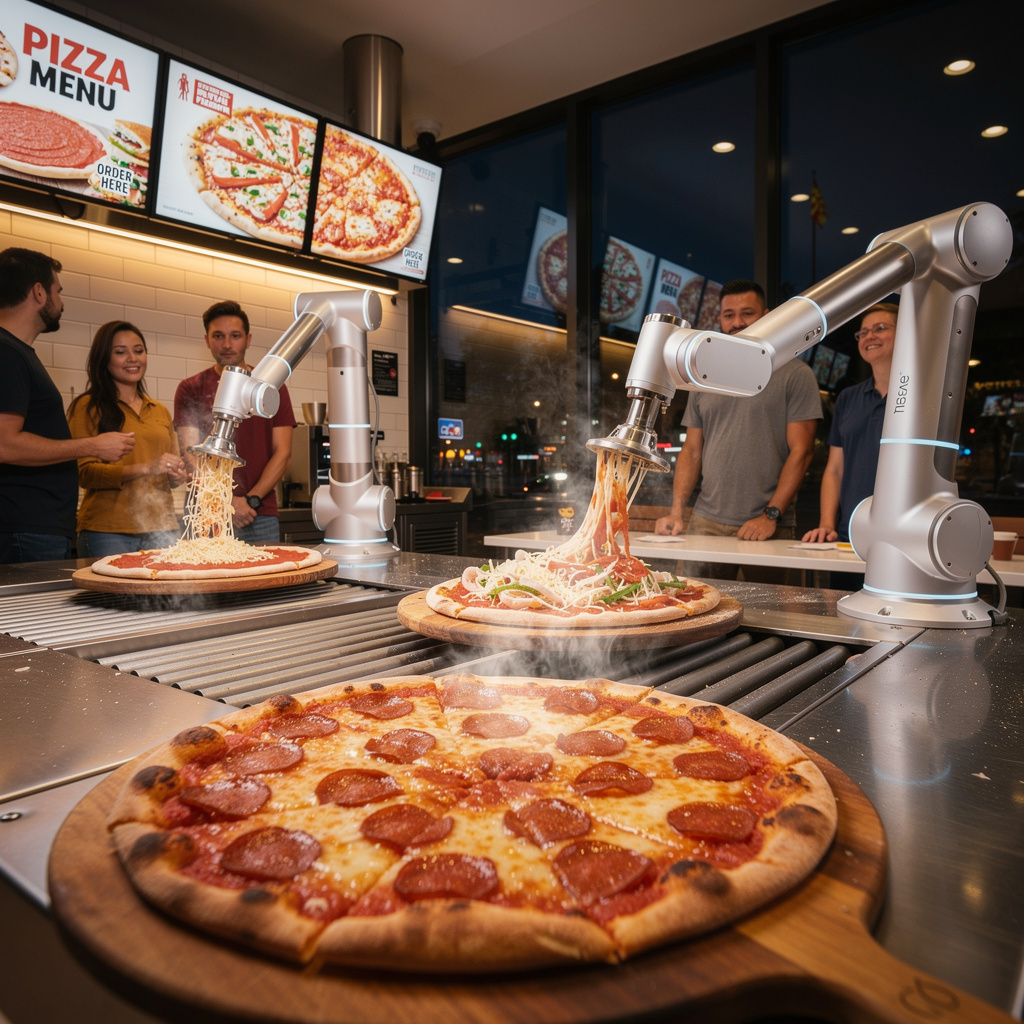
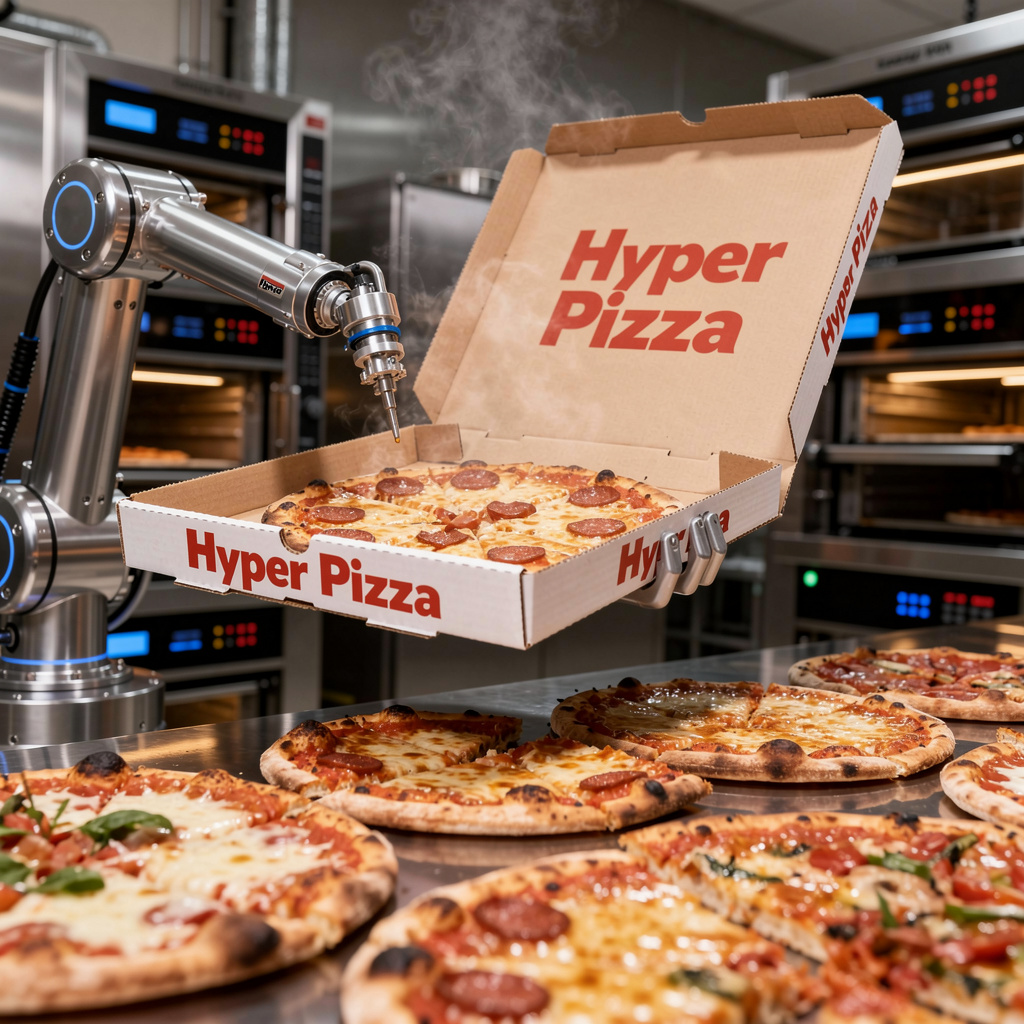
Automated dough handling, precision topping, and consistent baking create identical pies with faster throughput. Pizza operations benefit from precise temperature control and timing automation.
Burger
Robots can manage grill timing, patty handling, and multi-station assembly so you get consistent cook levels and assembly speeds during lunch and dinner rushes.
Salad bowl
Precise portioning and sealed packaging preserve freshness and minimize waste. For health-forward menus, robots reduce human handling and maximize yield control.
Ice cream
Automated dispensing and portion control reduce over-serve and contamination risk. You can implement multi-flavor combos with consistent texture and presentation.
These verticals illustrate how you can choose the right automation profile for your menu. If you have a limited menu or predictable workflows, you will often see faster paybacks.
Deployment Playbook for Enterprise Rollouts
You are responsible for results. Follow a clear rollout sequence.
- Pilot design and selection
Pick representative sites with varied traffic patterns. Set success thresholds for throughput, ticket time, and waste. Define pilot duration and data collection methods. - Systems integration
Validate POS and delivery aggregator integrations in a sandbox, then run a phased live test. Confirm inventory and back-office reporting match on both sides. - Operational readiness
Train local technicians and managers. Define clear escalation paths and remote support windows. Document SOPs that blend robot operation with human oversight. - Cluster rollout
Roll out in regional clusters so you can centralize spare-part inventory and remote monitoring. Use cluster orchestration software to route demand and balance inventory. - Continuous improvement
Use production telemetry and AI to refine cook cycles, portion sizes, and predictive maintenance. Iterate on menu items to maximize efficiency.
Risks, Limitations, and Mitigation Strategies
You will face valid questions from your finance, operations, and HR teams. Address them head on.
CapEx and financing
High initial outlay is a common objection. Consider leasing, revenue-share models, or long-term service agreements to preserve cash flow.
Labor relations and redeployment
You will need a plan to reposition employees into higher-value roles such as guest experience, quality assurance, and delivery coordination. Transparent communication and retraining programs reduce friction.
Regulatory and safety
Automated systems need certification and documentation. Automated sanitation logs and temperature records help with inspections and audits.
Cybersecurity and uptime
Require vendors to supply independent security audits, encrypted telemetry, secure update pipelines, and an agreed SLA for uptime and support.
What to Ask Vendors Before You Sign
You are buying more than hardware. Ask these questions.
- Can you show live pilot data with KPIs for throughput, waste reduction, and uptime?
- What are your POS, delivery, and ERP integrations, and do you support real-time APIs?
- What SLAs do you offer for field service, spare parts, and software uptime?
- What security certifications and independent audits do you publish?
- How do you support cluster orchestration and remote troubleshooting?
Vendors who can present pilots, verified metrics, and enterprise integrations will make your evaluation much faster.

Key Takeaways
- Start with pilots that define clear KPIs, so you can validate throughput, waste, and uptime before broad rollout.
- Focus on the cost structure shift, automation replaces unpredictable labor with predictable CapEx and maintenance, improving margin stability.
- Match automation to menu, high-repeatability workflows such as pizza, burgers, salads, and ice cream yield the fastest payback.
- Require vendors to show live pilot data and integration capabilities with your POS and delivery partners to minimize go-live risk.
- Use cluster orchestration to scale efficiently and improve utilization across regions.
FAQ
Q: How much of fast-food labor can robots actually replace?
A: Pilots suggest that robots can fill a very large portion of repetitive kitchen roles, with some estimates showing up to 82 percent coverage for select tasks. That does not mean zero human staff, but it usually means you can reduce frontline staffing and shift employees into higher-value roles. Use pilots to map which roles are automated and which are retained for guest experience and maintenance.
Q: What is a realistic payback period for an automated unit?
A: Payback depends on utilization, financing, and menu complexity. Simplified examples show payback windows of 3 to 5 years when you account for labor savings, throughput improvements, and waste reduction. Cluster deployments and extended operating hours shorten that timeline. Ask vendors for pilot-level ROI under your specific traffic profile.
Q: Will customers accept robot-made food?
A: Customers care about taste, speed, and consistency more than the identity of the operator. Early deployments show acceptance rises when the quality is consistent and service is fast. Use a staged rollout that preserves customer-facing service and communicates the benefits of reliability.
Q: How do automated kitchens handle sanitation and inspections?
A: Many modern systems include automated cleaning cycles, temperature logging, and material choices that meet food-safety standards. The automation of logs and documentation often simplifies inspection processes. Require vendors to provide audit trails and sanitation validation documentation.
Q: What happens if a robot fails during peak hours?
A: Enterprise vendors should offer SLAs for uptime and remote troubleshooting tools that let operators diagnose issues quickly. You should also plan for partial human fallback procedures, spare-part inventories, and rapid field service. Define escalation paths and financial remedies in the contract.
About hyper-robotics
Hyper Food Robotics specializes in transforming fast-food delivery restaurants into fully automated units, revolutionizing the fast-food industry with cutting-edge technology and innovative solutions. We perfect your fast-food whatever the ingredients and tastes you require.
Hyper-Robotics addresses inefficiencies in manual operations by delivering autonomous robotic solutions that enhance speed, accuracy, and productivity. Our robots solve challenges such as labor shortages, operational inconsistencies, and the need for round-the-clock operation, providing solutions like automated food preparation, retail systems, kitchen automation and pick-up draws for deliveries.
You have choices to make. If you want to see pilots, validate assumptions with real KPIs, and deploy incrementally, begin with one representative site and require live performance data. If you want assistance designing a pilot or evaluating vendors, start by requesting demonstrable metrics and an integration plan.
Are you ready to turn your staffing problem into a competitive advantage?