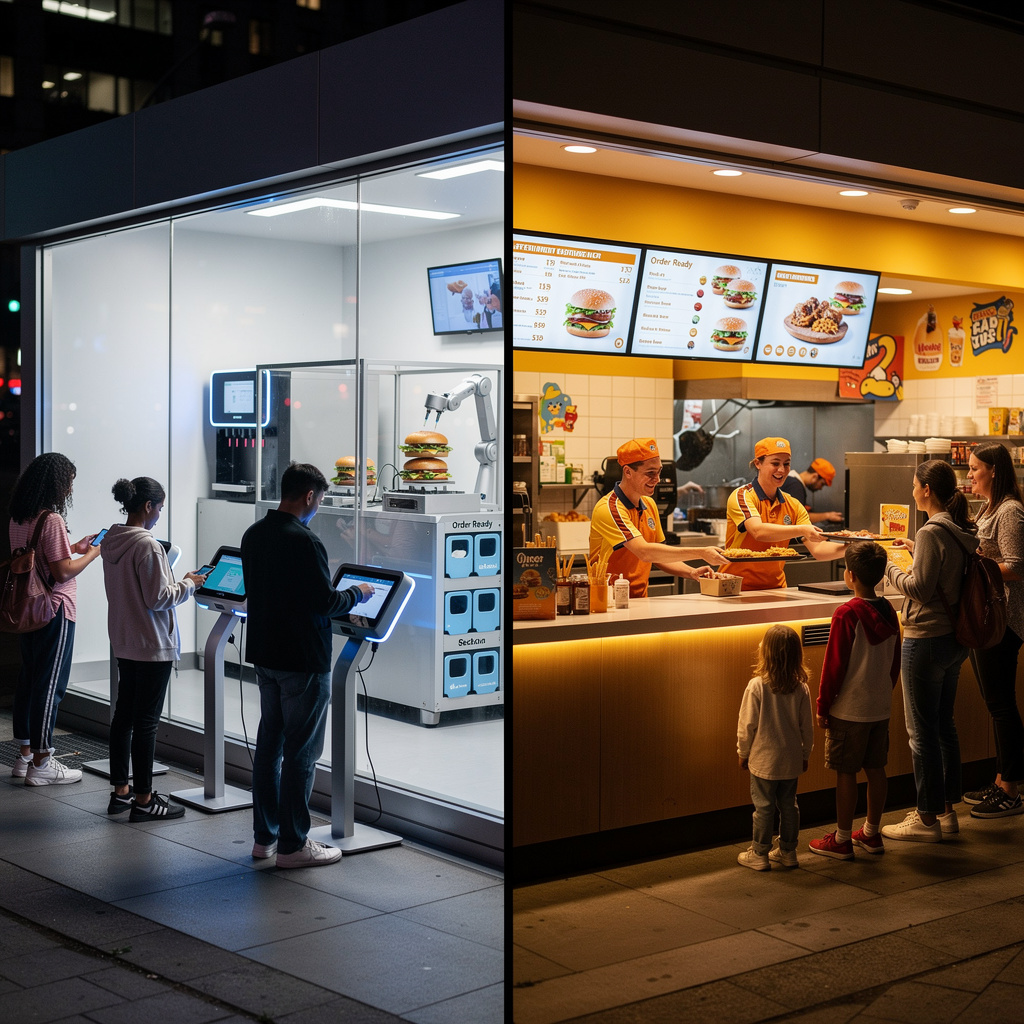
“Would you rather scale a thousand identical kitchens, or hire a thousand cooks?”
You are standing at an inflection point. Autonomous fast food, kitchen robot fleets, and AI chefs promise speed, repeatability, and measurable sustainability gains. Human-staffed outlets promise adaptability, empathy, and local nuance. Early pilots turned prototypes into deployable products in 2026, and you need a clear, practical view of scalability and sustainability, plus the tradeoffs that determine whether robots or people make better sense for your growth plan.
In this article you will compare autonomous fast food and human-staffed outlets across concrete axes: deployment speed, unit economics, waste and energy, throughput and quality, maintenance and security, and customer acceptance. You will get figures you can model, real company names and product types to frame decisions, and a step-by-step rollout recommendation you can use to run a pilot. Keywords you should spot early are kitchen robot, robotics vs human, fast food robots, ai chefs, robot restaurants, automation in restaurants, and ghost kitchens. You will read practical, second-person advice aimed at CTOs, COOs, and growth leaders who must pick a scalable, sustainable path.
Table of contents
1. What you need to know right now
2. What autonomous fast food looks like
3. Scalability comparison
4. Sustainability comparison
5. Operational performance and customer experience
6. Cost and unit economics
7. Risks, maintenance and security
8. Vertical use cases
9. Implementation roadmap and KPIs
10. Comparison table
11. Key takeaways
12. FAQ
13. About Hyper-Robotics
14. Final questions for you
What you need to know right now
You face rising labor costs, chronic turnover, and growing delivery demand. Autonomous fast-food platforms are now shipped as containerized, plug-and-play units that minimize site work and centralize software control. Hyper-Robotics and similar vendors are shipping 40-foot container restaurants and 20-foot delivery units that aim to compress build time, cut human variability, and instrument sustainability metrics with sensors and cameras. For factual detail on product categories and sensor stacks, see this knowledge entry on automation in restaurants.
What autonomous fast food looks like
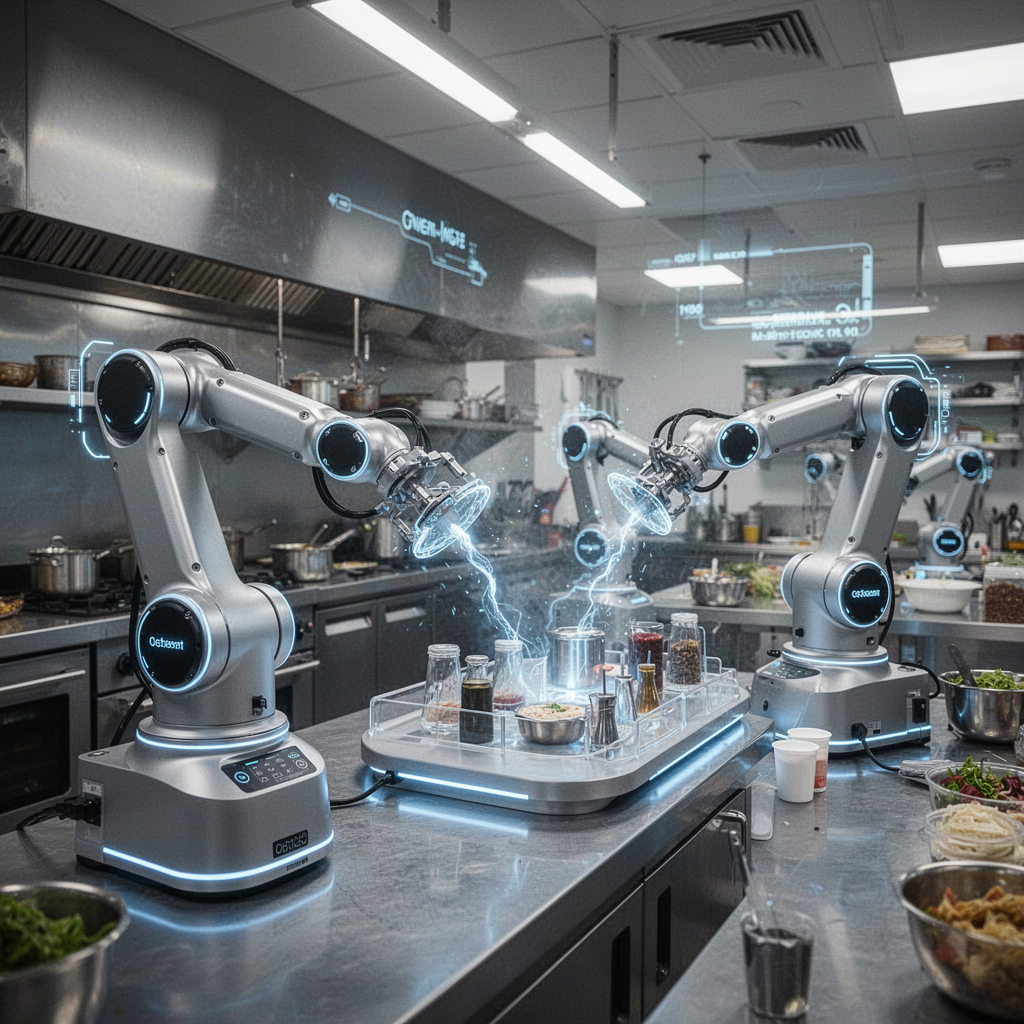
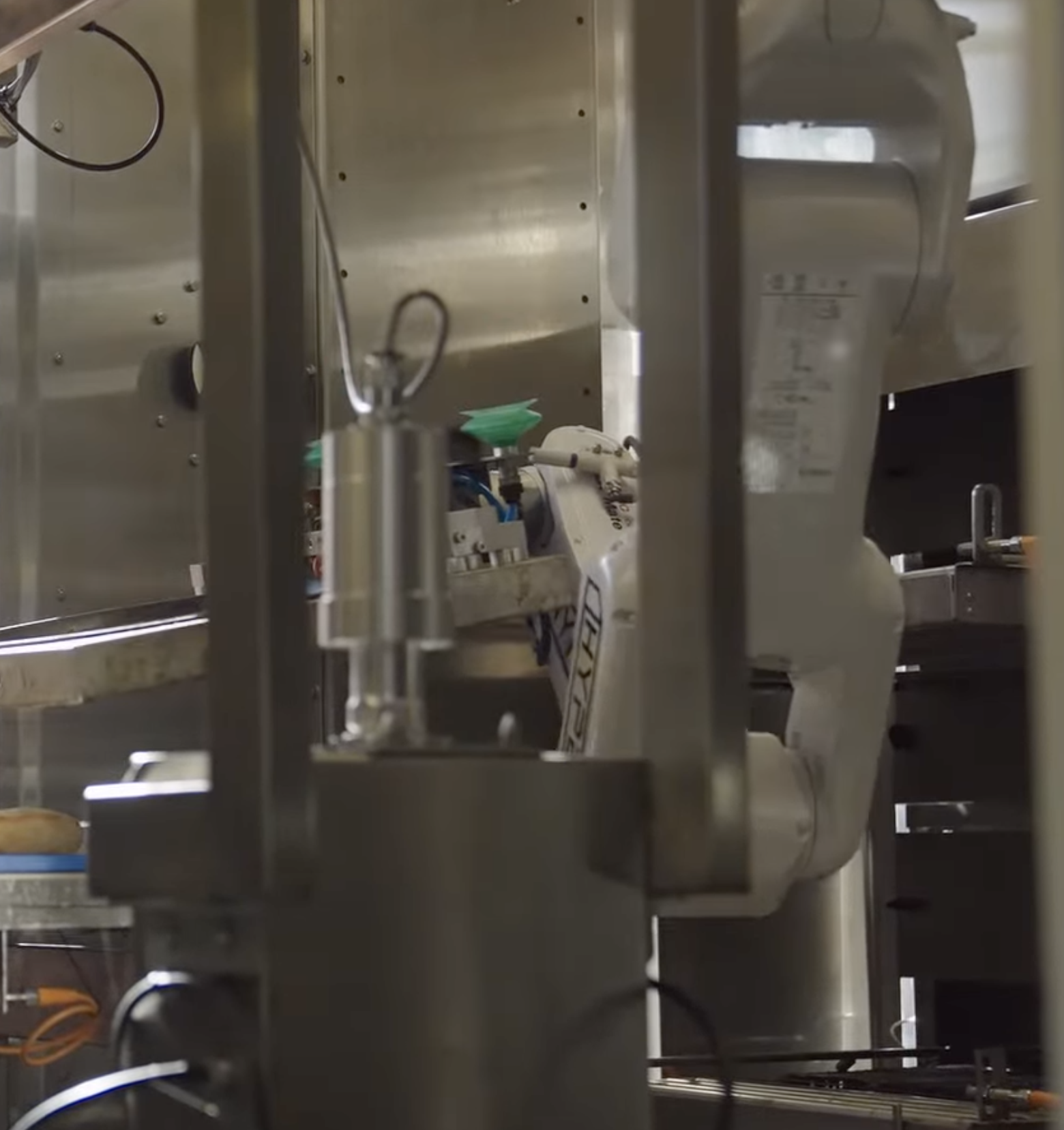
Autonomous units combine industrial robots, machine vision, multi-sensor telemetry, and cloud orchestration. Vendors describe 120 sensors and 20 AI cameras in advanced units, per their technical briefs, which enable per-order traceability, thermal logging, and automated sanitation sequences. Some suppliers now offer standalone 20-foot robotic kitchens designed for delivery-first concepts; Hyper Food Robotics highlighted a fully autonomous 20-foot unit in a recent LinkedIn announcement. These units are built with corrosion-resistant materials and software-first control stacks to support cluster management across many sites.

Scalability comparison table
| Attribute | Autonomous fast food | Human-staffed outlets |
|---|---|---|
| Deployment time (site to live) | Weeks to 3 months (containerized) | 3 to 12+ months (construction, hire) |
| Capex per unit (illustrative) | $250k to $800k (automation level dependent) | $100k to $500k (build-out plus equipment) |
| Staffing required | Minimal on-site staff, remote ops team | 3 to 12 staff per shift depending on volume |
| Orders per hour (peak) | Highly repeatable, scaled by robotic throughput | Variable, depends on team experience |
| Order accuracy | >95% documented with vision and sensors | Typical range 85% to 98% depending on training |
| Food waste per order | Lower via portioning and dynamic batching | Higher due to overproduction and prep waste |
| Energy per order | Optimized zones and lower standby losses | Less optimized, higher idle energy use |
| Uptime / availability | Designed for 24/7 operation with remote diagnostics | Limited by staff schedules and shift changes |
Scalability: autonomous fast food
Expect faster site-to-live timelines with containerized robotic kitchens. Because the hardware is manufactured, tested, and configured centrally, the on-site work is focused on utilities and pick-up interfaces. Vendors position these units as plug-and-play, which reduces permitting friction and enables same-quarter rollouts in many markets. Centralized software, remote orchestration, and cluster management cut the number of local managers you need per region.
Scalability: human-staffed outlets
Budget for construction, local contractors, hiring, and training. Even with a standardized build pack, local realities cause variability. Recruiting and retaining the right number of employees in market micro-economies will slow rollouts. For rapid national scale you either accept higher variability in product and service, or you centralize training and accept higher travel and coordination costs.
Scalability: strengths and weaknesses
Autonomous strengths:
Autonomous units scale by replication, using the same bill of materials and software stack. Remote updates and telemetry let you improve every unit at once. Units are ideal where you want consistent product and rapid footprint growth.
Human strengths:
Humans adapt, improvise, and cope with anomalies. When site conditions or customer preferences vary, local staff provide flexibility that robotics cannot match. Human staff are also brand ambassadors and can upsell, which is hard to automate.
Autonomous weaknesses:
Upfront capital is higher. You assume new vendor relationships and a dependency on remote support. Some customers will prefer human interaction. You must design for parts supply, firmware updates, and change management.
Human weaknesses:
Scaling human teams increases payroll, recruitment, and training overhead. Variability in quality creates brand risk. Turnover drives re-training costs and inconsistent customer experience.
Which fits when:
Choose autonomous for cities where you want rapid, consistent scaling, or for delivery-first concepts and ghost kitchens. Choose human-staffed outlets when local service, brand experience, and human interaction materially drive revenue.
Sustainability: autonomous fast food
Autonomous kitchens are instrumented by design. Per-order telemetry, portion control, and dynamic batching reduce overproduction and spoilage. Automated cleaning cycles with thermal and mechanical methods replace frequent chemical cleaning, cutting chemical consumption. The Hyper-Robotics knowledgebase entry on automation describes portioning and waste reduction strategies that drive measurable sustainability gains.
Sustainability: human-staffed outlets
Human kitchens can be sustainable with training and monitoring, but manual portioning and varied cleaning practices make consistent outcomes harder. Chemical use, variable cook time, and inconsistent inventory rotation increase waste. Sustainability gains often depend on tight training and supervisory regimes that are costly to maintain at scale.
Sustainability: strengths and weaknesses
Autonomous strengths:
Automation reduces waste through exact portioning, and logs energy and chemical usage per order, which helps with ESG reporting. Insulated container designs and targeted heating lower energy per order.
Human strengths:
Human teams can apply judgment to rescue near-expiry ingredients, run local sourcing programs, and reduce packaging when motivated. These actions rely on human initiative.
Autonomous weaknesses:
Equipment lifecycle and embodied carbon matter. If devices are replaced frequently, benefits erode. You must design for long life, recyclable materials, and upgradeable software components.
Human weaknesses:
Scaling high-quality sustainability programs is labor intensive and inconsistent.
Which fits when:
If ESG metrics are corporate priorities and you need auditable, repeatable reductions in waste and chemical use, automation offers a clear path. If your brand relies on hyper-local sourcing and human stewardship of ingredients, staffed outlets may perform better.
Operational performance: autonomous fast food
Robots reduce variation and can cut preparation and cooking timelines substantially. Internal studies report preparation and cooking time reductions up to 70 percent when routine tasks are automated, which improves throughput during peak periods. Autonomous operations shine in high-volume, repetitive menus like pizza and burgers where timing and portioning are determinative.
Operational performance: human-staffed outlets
Humans excel at handling exceptions, special requests, and complex customizations. If your menu is high-touch and requires judgment, human staff can deliver perceived higher value. However, human error is a common source of complaints, and throughput depends on recruitment, morale, and training.
Operational performance: strengths and weaknesses
Autonomous strengths:
Predictable speed, high order accuracy, and constant performance during long shifts. Data-driven QA and sensor logs give you auditable compliance.
Human strengths:
Personalized service and flexibility handling multi-layered custom orders.
Autonomous weaknesses:
Handling rare, complex customizations can be brittle. You must design human-in-the-loop processes for edge cases.
Human weaknesses:
Performance degrades with staff turnover and during peak stress periods.
Cost and unit economics: autonomous fast food
You will pay more capital up front for robotics, but you will reduce variable labor costs and training spend. Use sensitivity models: assume average ticket, orders per day, local wage levels. In many scenarios automation payback falls in the 2 to 5 year range when you assume high throughput, lower waste, and reduced turnover costs. Run a rigorous NPV analysis before committing.
Cost and unit economics: human-staffed outlets
Lower upfront build costs can be attractive, but labor is recurring and often the largest controllable operating expense. If you expect to scale quickly, payroll volatility and turnover amplify long-term costs. For many large QSRs, labor routinely sits in the 25 percent to 40 percent range of operating expenses, and automation is attractive where that line item dominates unit economics.
Risks, maintenance and security: autonomous fast food
You must plan for parts replacement, remote diagnostics, SLAs, and robust cybersecurity. Design for segmented networks, encrypted communications, and controlled software updates. Partner with vendors that publish security postures and provide rapid field service. Hyper-Robotics documents remote orchestration and service models in their product stack and operations model to help reduce on-site resolution times and to guide the operations model you will need at scale.
Risks, maintenance and security: human-staffed outlets
Risk vectors include labor disputes, theft, hygiene lapses, and inconsistent compliance. You reduce some cyber risk because systems are less instrumented, but you increase operational risk from human factors. Training, retention, and strong local management are your mitigation levers.
Vertical use cases
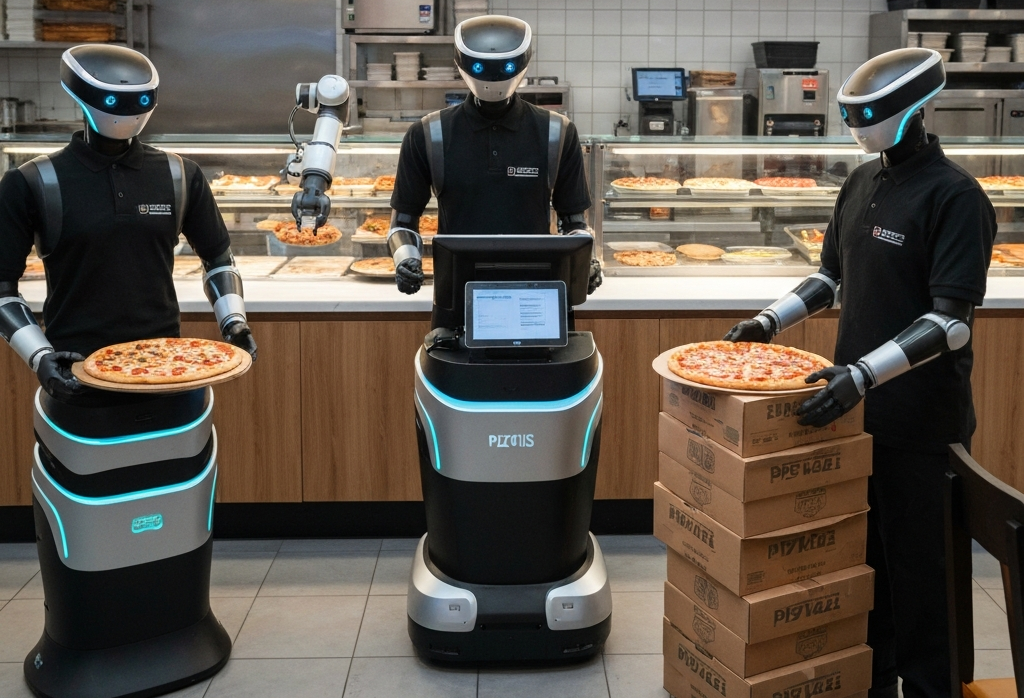
Pizza robotics benefit from repeatability in dough, toppings, and oven timing, delivering high throughput and consistent product. Burgers profit from timed patty cooking and assembly. Salad bowls and fresh concepts gain from precise portioning to reduce produce waste. Ice cream and frozen desserts require strict temperature control that robotics can deliver without human handling errors.
Implementation roadmap and KPIs to measure
You should stage your rollout in three phases:
1) Proof of concept, 1 to 3 sites, mixed customers, measure order accuracy, orders per hour, downtime.
2) Pilot cluster, 10 to 30 units, test logistics, replenishment frequency, and remote ops.
3) Regional scale, 100+ units, integrate SLAs, maintenance hubs, and supply chains.
Track these KPIs:
- Orders per hour and orders per day
- Order accuracy rate (%)
- Food waste per order (%)
- Labor hours per order
- Downtime minutes per day
- Energy per order (kWh) and chemicals use per month

Key takeaways
- Run a vertical-focused pilot first, for example pizza or burgers, to prove throughput and waste reduction before broad rollout.
- Instrument every unit with sensors and telemetry so you can track order accuracy, waste, and energy per order.
- Model unit economics with multiple scenarios for ticket, throughput, and local labor rates to understand realistic payback windows.
- Design hybrid operations where robots handle production and humans handle service, upsell, and edge-case customization.
- Require vendor SLAs for parts, remote diagnostics, and cybersecurity before signing enterprise contracts.
FAQ
Q: How quickly can you deploy an autonomous unit compared to a staffed outlet?
A: Deployment time varies, but containerized autonomous units often go live in weeks to a few months once site utilities are available. Traditional build-outs typically take 3 to 12 months due to construction, permitting, and staffing. You should plan pilot timelines that include integration to POS and delivery platforms and account for local health inspections.
Q: Will automation reduce food waste significantly?
A: Yes, automation reduces waste through precise portioning, dynamic batching, and inventory telemetry. Typical reductions depend on your baseline, but automation provides consistent controls that you can measure and optimize. Track waste per order and run A/B pilots to quantify real gains in your operation.
Q: What are the main maintenance and security concerns with robotic kitchens?
A: Plan for field service SLAs, parts inventory, remote diagnostics, and secure OTA updates. Cybersecurity must include network segmentation, encrypted comms, strong authentication, and vendor transparency about security posture. Neglecting these areas will increase downtime and risk.
Q: How do customers react to fully autonomous outlets?
A: Reactions vary by segment and region. Many customers accept robot restaurants for delivery-first or late-night orders. Others value human contact for dine-in or premium experiences. Hybrid models often reduce friction and preserve brand warmth.
Q: How should you evaluate vendors?
A: Evaluate on demonstrated throughput, security certifications, SLAs, parts availability, and real-world pilots. Demand telemetry access and sample data to validate claims. Consider lifecycle costs, not just capex.
Q: Can automation coexist with your current franchise model?
A: Yes, many operators run hybrid estates with both automated and human-staffed outlets. Governance, training, and clear franchise agreements must be in place so franchisees understand capital responsibilities, maintenance, and revenue sharing.
About Hyper-Robotics
Hyper Food Robotics specializes in transforming fast-food delivery restaurants into fully automated units, revolutionizing the fast-food industry with cutting-edge technology and innovative solutions. We perfect your fast-food whatever the ingredients and tastes you require. Hyper-Robotics addresses inefficiencies in manual operations by delivering autonomous robotic solutions that enhance speed, accuracy, and productivity. Our robots solve challenges such as labor shortages, operational inconsistencies, and the need for round-the-clock operation, providing solutions like automated food preparation, retail systems, kitchen automation and pick-up draws for deliveries.
Would you pilot 3 robotic units in high-density delivery zones, or invest the same capital to open five staffed outlets?
How will your brand measure sustainability success in the next 12 months, and can automation give you auditable metrics to prove it?
If your growth target is hundreds of units, do you have the organizational design to manage a remote orchestration model, or will local staffing complexity slow you down?