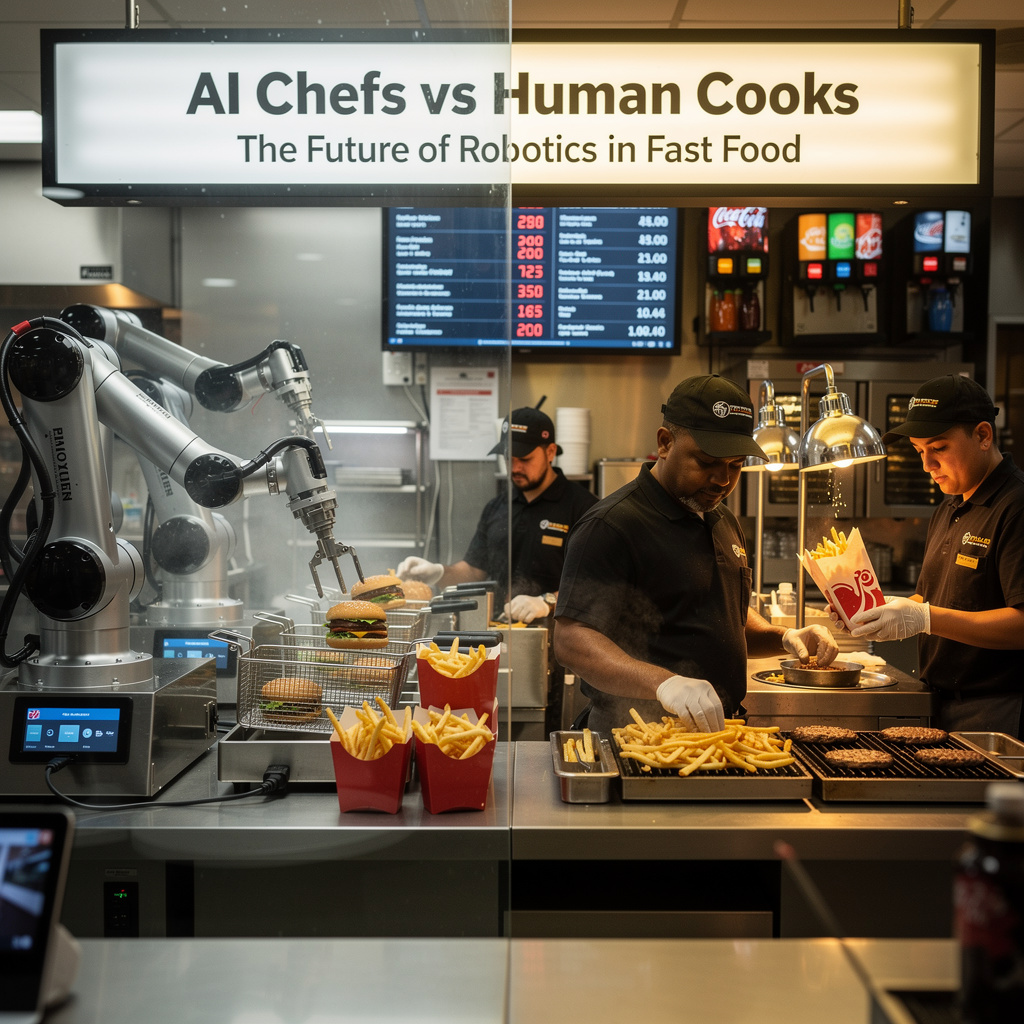
What if your next burger comes from an algorithm that never tires, never misreads a ticket, and never calls in sick?
You should care about this now because AI chefs and kitchen robot systems are changing who cooks your food, how fast it appears, and how consistent it tastes. This briefing explains robotics versus human tradeoffs, where AI chefs outperform human cooks, and where human creativity still matters. Early pilots show robotic systems cutting repeatable prep and cook times by as much as 70 percent, and containerized plug-and-play units let you scale a new location rapidly. You will see the technology behind these claims, learn the measurable metrics to track, and get a practical checklist to run a pilot and decide when to scale. You will also get guidance to guard against downtime, compliance gaps, and customer pushback. For a deeper technical and strategic breakdown, see the complete guide to fully autonomous fast food restaurants.
Table Of Contents
1. Executive Summary
2. Why Automation Matters For Your Operation
3. How AI Chefs Work: The Technology You Should Know
4. AI Chefs Vs Human Cooks: The Quick Comparison Table
5. Detailed Axis-by-Axis Comparison
6. Verticals Where Robots Perform Best
7. Deployment And Operational Checklist For Pilots
8. Challenges And Mitigation Strategies
9. Future Directions And Hybrid Models
Executive Summary
You run a fast-food or quick-service operation that needs reliable throughput, predictable economics, and consistent quality across many outlets. In this context, robotics in fast food promise those gains, especially for standardized items in pizza, burgers, salads, and soft-serve dessert lines. For example, in high-volume repeatable tasks, AI chefs and robotic arms beat human cooks on speed and consistency, reducing variability that costs you refunds, reworks, and bad reviews. However, robots still struggle with complex customizations, creative finishing, and ambiguous edge cases. Therefore, the smartest path is not replacement, it is redesign. Instead, use robots to own the repetitive core, keep humans for exceptions and hospitality, and finally, instrument everything so you can measure payback precisely.
Why Automation Matters For Your Operation
You face three hard realities every quarter: wages rise, turnover drains training budgets, and delivery demand creates peak throughput you may not staff reliably. Ghost kitchens and delivery-first models amplify that pressure. Robotics offer a lever to stabilize labor costs, improve portion control, and run 24/7 when needed. Containerized plug-and-play units let you open a street-level or delivery hub quickly without long lease negotiations. For a tactical framing on robotics versus human cooks, see the Hyper-Robotics perspective on Robotics vs human cooks: Who wins in the future of autonomous fast food?. For strategic context on containerized automation and rollout models, read Robotics vs human: what ai chefs mean for the future of fast food.

How AI Chefs Work: The Technology You Should Know
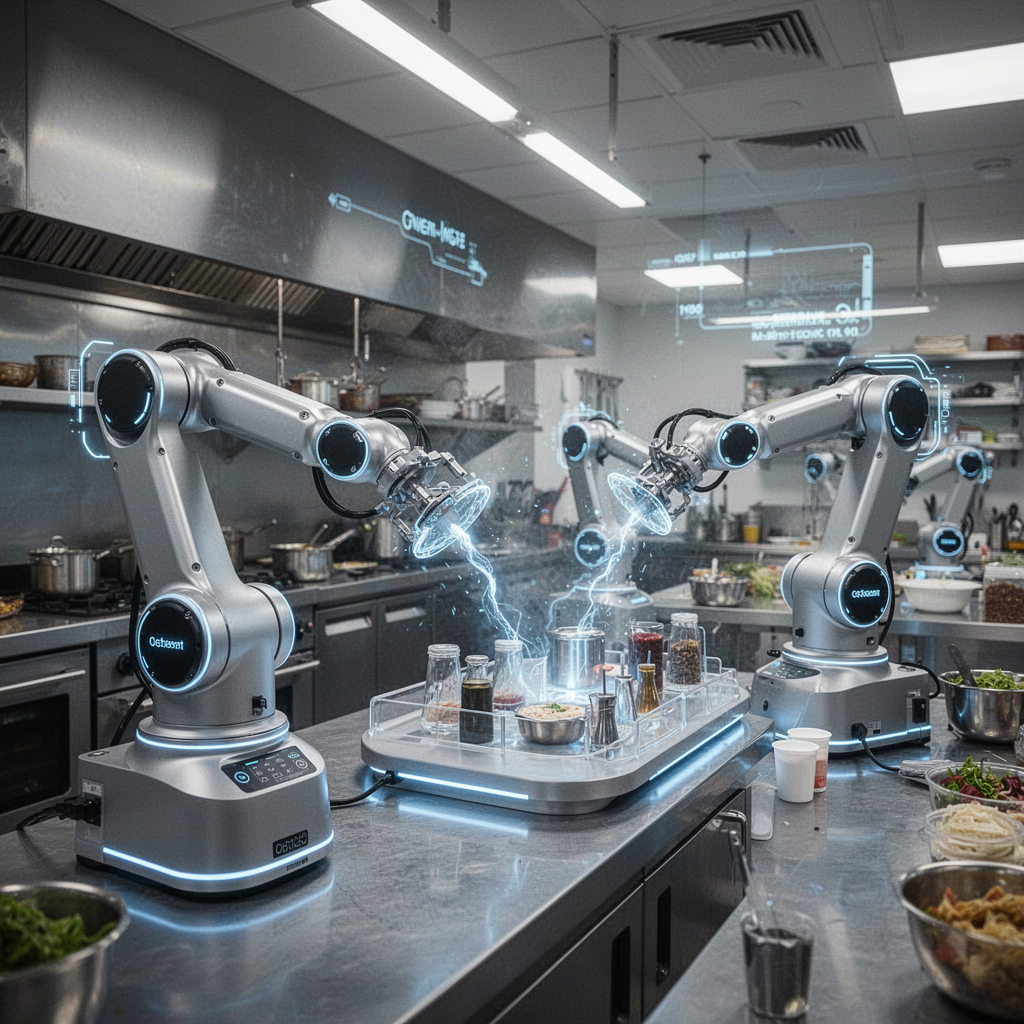
You should evaluate vendors by what goes inside an AI chef so you can measure integration risk and operational resilience. Modern systems combine:
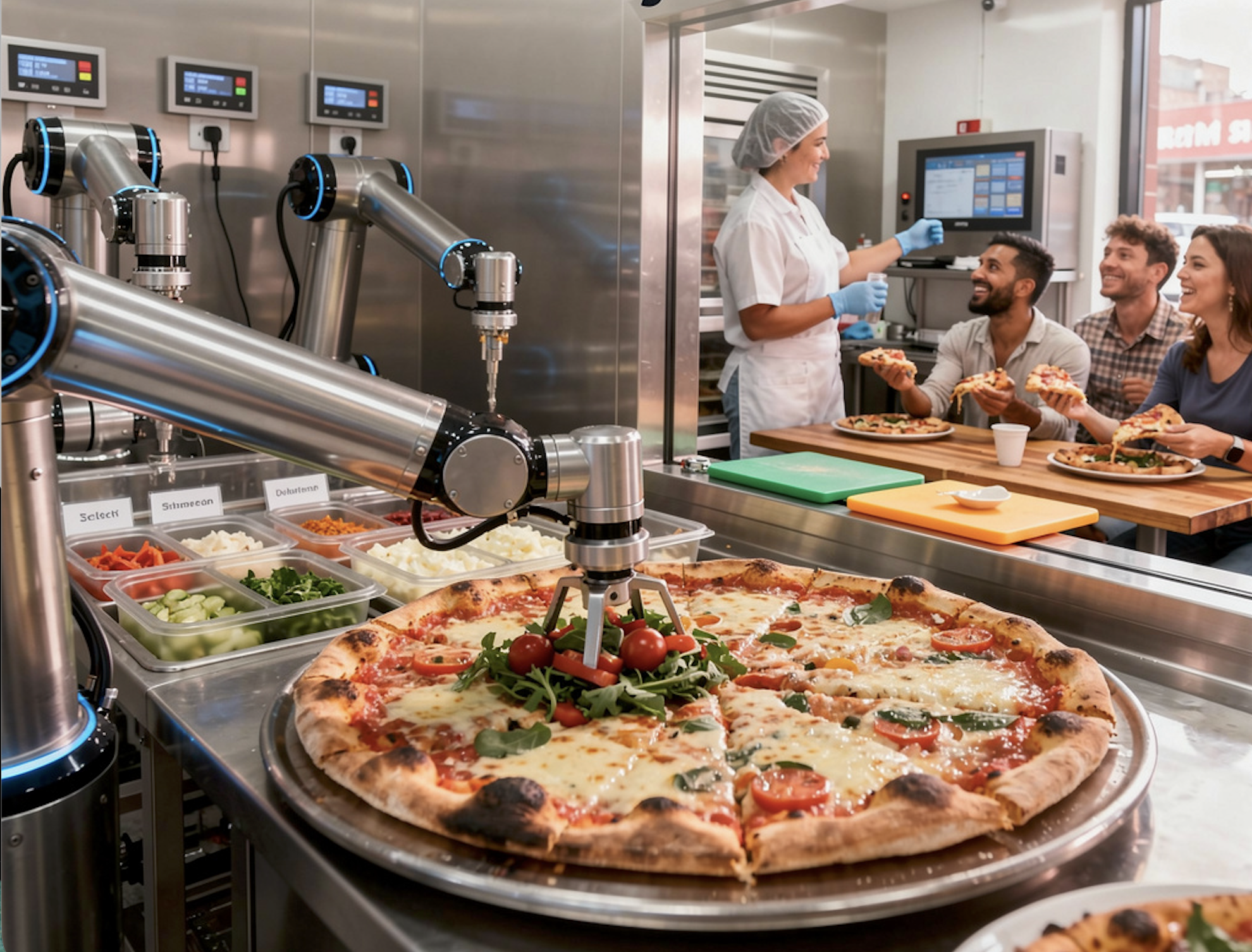
- Perception hardware, often dozens of cameras and sensors, with advanced machine vision to detect items, doneness, and fill levels. Some systems use up to 20 AI cameras and more than 100 sensors for redundancy and safety.
- Purpose-built manipulators and end-effectors for specific tasks, like dough stretchers, portion dispensers, patty flippers, or sauce nozzles.
- A software stack that manages order orchestration, just-in-time inventory, cluster-level balancing across units, and predictive maintenance.
- Sanitation mechanisms: automated clean-in-place cycles, temperature sensing in zones, and audit logs for compliance.
- Enterprise integrations: POS, delivery platforms, ERP, telemetry, and remote diagnostics.
If you want to see the cultural conversation about automation and culinary creativity, consider this short explainer on how AI writes recipes and guides appliances, available as a video demonstration on YouTube.
AI Chefs Vs Human Cooks: The Quick Comparison Table
| Attribute | AI Chefs (robotic systems) | Human Cooks |
|---|---|---|
| Price (capex per unit) | $150k–$750k (varies by tooling and enclosure) | $20k–$50k initial fit-out, ongoing labor expense |
| Throughput (orders/hour) | High: 100+ for simple builds (estimate, high-volume config) | Variable: 30–80 depending on staff skill and shift |
| Order accuracy (%) | 95–99% on standard builds | 85–98%, depends on training and pressure |
| Uptime / MTTR | Target 98% uptime with SLAs; MTTR depends on support | Near 100% (humans present), but performance degrades with fatigue |
| Menu flexibility (customization) | Limited to moderate, engineered changes cost time | High, instant ad hoc customization |
| Food waste (%) | Lower, due to precision dispensing, often <10% reduction | Higher, depends on portion control and training |
| Hygiene & traceability | High, reduced touchpoints and audit logs | Variable, depends on compliance and culture |
| Adoption rate / scalability | Growing rapidly in controlled menus, container model eases scaling | Limited by labor market and training capacity |
After you review this table, we will go axis by axis and compare AI chefs and human cooks directly.
Axis 1: Speed And Throughput
AI Chefs: Speed And Throughput
You need speed for peak windows. In practice, robots run timed cycles without fatigue. For example, in pilots reported by vendors like Hyper-Robotics, robotic systems reduce repeatable preparation time by up to 70 percent for constrained workflows. As a result, a robot that dispenses, cooks, and assembles can sustain a cadence you would struggle to staff for a 4 p.m. dinner surge. In addition, containerized units designed for delivery hubs can hit 100+ standardized orders per hour in high-volume configurations, provided that supply lines and queuing are optimized.
Human Cooks: Speed And Throughput
Humans are adaptive. You can ask a cook to triage a rush, prioritize orders, or multi-task through irregular demand. But humans slow down when orders pile up, when new items are introduced, and when fatigue sets in. You will pay for overtime, training, and error correction. For throughput predictability, human performance is variable in a way robots are not.
Axis 2: Consistency And Quality Assurance
AI Chefs: Consistency And Quality Assurance
Robots give you repeatability. Portion sizes, cook times, and plating routines are consistent across shifts and locations. That reduces refunds, improves customer expectations, and simplifies QA. Traceability is easier with logs that show temperatures, cycle times, and dispensing volumes for each order.
Human Cooks: Consistency And Quality Assurance
Humans can vary. Good cooks deliver high-quality, but quality drifts across shifts and locations. You can mitigate this with training and checklists, but it costs money. Where you want a signature finish or creative touch, humans win, but for thousands of standardized stores, that variability is expensive.
Axis 3: Flexibility And Customization
AI Chefs: Flexibility And Customization
Robots are configurable, but not instantly flexible. Adding a new topping, changing the stacking order, or supporting an unusual allergy may need mechanical tweaks and software updates. If you design your menu to fit the robot, you get scale. If your menu demands many ad hoc changes, robotics will add friction.
Human Cooks: Flexibility And Customization
Humans handle substitutions and odd requests with minimal disruption. If a customer asks for no onion, extra pickles, and a sauce on the side, a human can adjust. That agility is central to customer experience, especially for brands that trade on personalization.
Axis 4: Creativity And Menu Innovation
AI Chefs: Creativity And Menu Innovation
Robots accelerate iterations on engineered, repeatable items. You can A/B test toppings, cook profiles, and portion sizes across stores rapidly. But true culinary creativity that emerges from tactile trial and error still needs chefs. When you prototype a novel texture or finishing technique, human skill remains faster and cheaper for early experimentation.
Human Cooks: Creativity And Menu Innovation
You rely on humans to invent. A line cook’s riff can become a best-seller overnight. Human intuition senses subtle flavor interactions that sensors do not. For seasonal launches and chef-driven items, keep humans central in R&D and for final presentation.
Axis 5: Safety, Hygiene And Waste
AI Chefs: Safety, Hygiene And Waste
Robots reduce touchpoints and log every action. Automated cleaning cycles and temperature sensing lower contamination risk. Precision dispensing reduces over-portioning and waste, improving food cost. For allergy handling, mechanical segregation reduces cross-contact risk if designed correctly.
Human Cooks: Safety, Hygiene And Waste
Humans are fallible but can adapt to emergent safety issues. Training and culture matter. Hygiene compliance depends on supervision and audits. You will still need humans to manage exceptions, spills, and non-standard cleaning tasks.
Axis 6: Economics And Scalability
AI Chefs: Economics And Scalability
Robotics require higher upfront investment but lower variable labor cost. For chains with high throughput, payback can be attractive when you model labor replacement, waste reduction, and extended operating hours. Containerized robotics reduce time-to-market and capex tied to real estate. Ask vendors for modeled sensitivity analyses across throughput and downtime.
Human Cooks: Economics And Scalability
Humans have lower upfront cost for small-scale experiments, and they scale in headcount rather than capital. But labor inflation, training, and volatility make long-term unit economics uncertain. For rapid multi-market expansion, labor sourcing can be the bottleneck.
Verticals Where Robots Perform Best
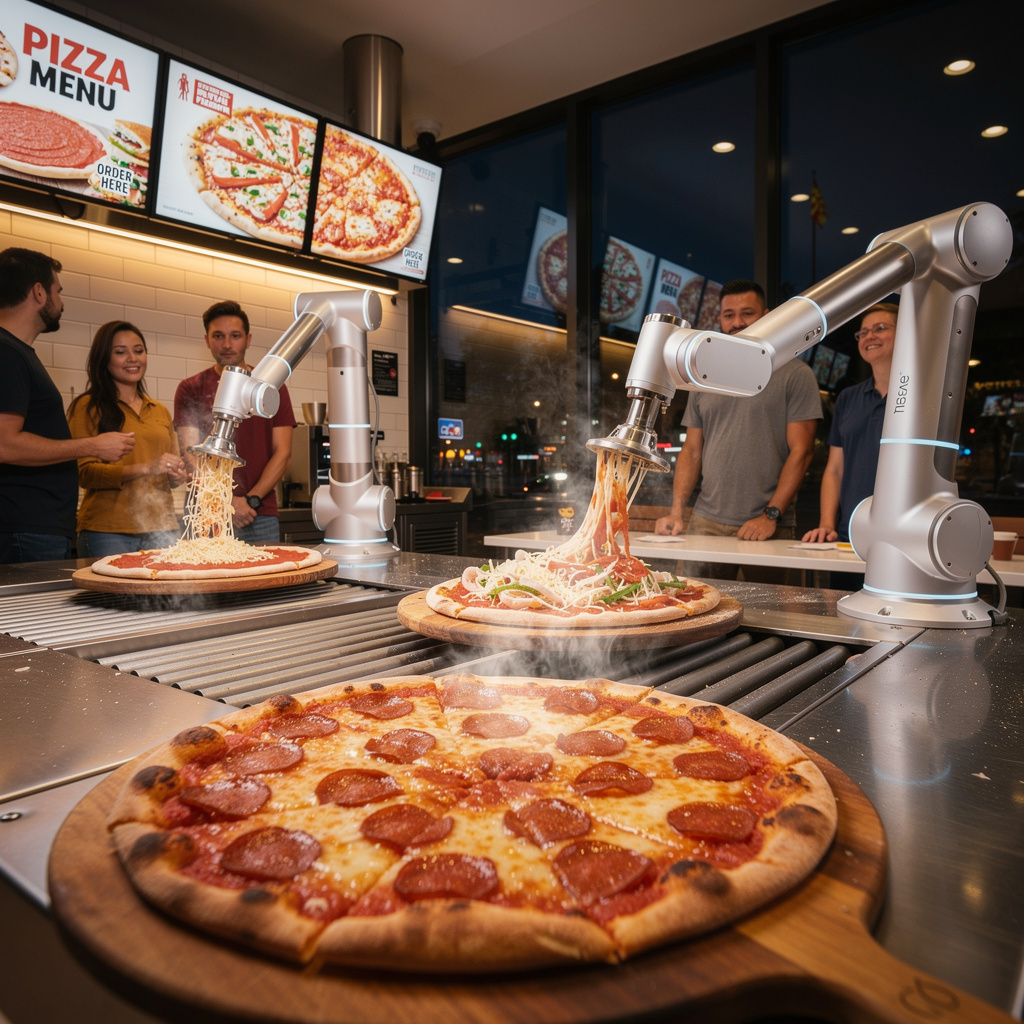
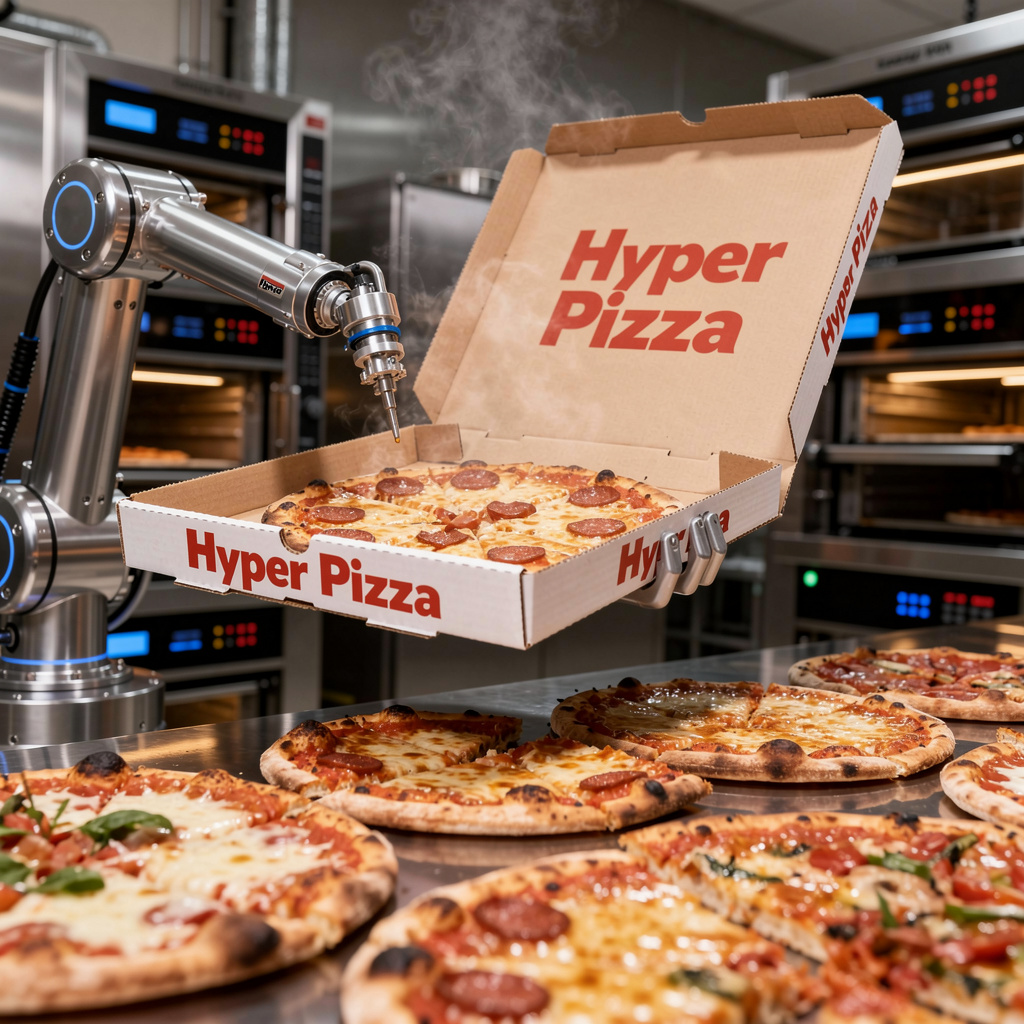
Prioritize pilots by vertical. Pizza is a clear fit because dough handling and topping deposition are repeatable. Burger assembly, when engineered, also maps well to automation; vendor examples include Creator for structured burger assembly and Miso Robotics for grills and fryers. Salad bowls and soft-serve machines succeed when portioning and cold chain are automated, as with Sally-style salad robots. Complex pastry and intricate confectionary remain firmly human territory.
Deployment And Operational Checklist For Pilots
You will want a short, practical checklist before signing a pilot:
- Define pilot objectives: throughput target, uptime target, waste reduction, and customer satisfaction goals.
- Require vendor SLAs for MTTR and remote diagnostics.
- Validate POS, delivery and ERP integrations in a staging environment.
- Require a security baseline: firmware update process, encrypted telemetry, and network segmentation.
- Run exception workflows that route odd orders to humans seamlessly.
- Instrument KPIs with dashboards and weekly reviews.
- Lock in spare-parts availability and on-call technicians.
Challenges And Mitigation Strategies
You will face edge-case failures, supply variance, and customer resistance. Design a human-in-the-loop exception layer so robots handle the core and humans handle anomalies. Build audit trails for food-safety inspectors. Negotiate support SLAs and spare-part pools. Harden IoT stacks to prevent remote tampering and maintain an incident response plan.
Future Directions And Hybrid Models
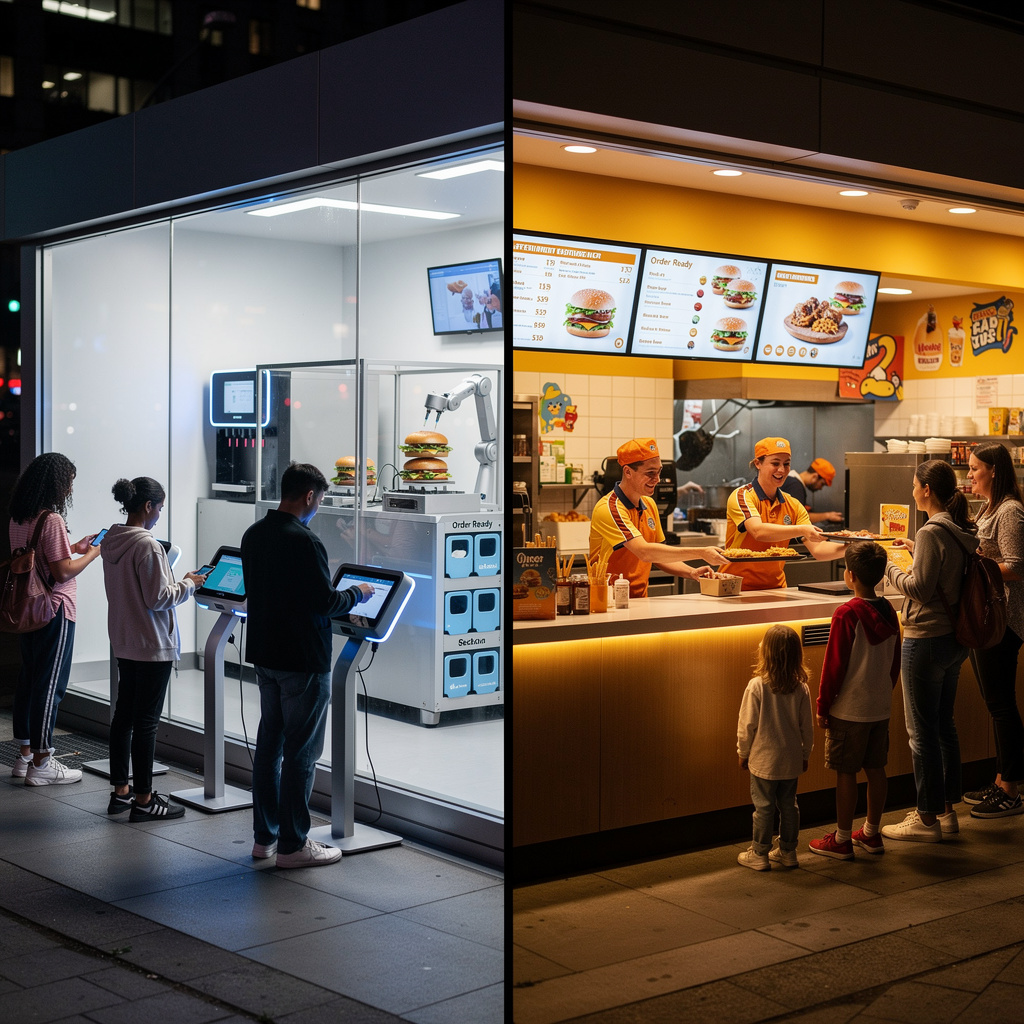
Expect hybrid kitchens to dominate. Robots will handle repetitive core tasks while humans do finishing, service, and R&D. Adaptive AI will let robots learn from quality feedback and tune cook profiles. Multi-site orchestration will optimize inventory and maintenance at the cluster level. To observe social reactions and cultural debates around robotic dining, see a short-form consumer reaction captured on Instagram.

Key Takeaways
- Start with a focused pilot at a high-volume, standardized location and measure five KPIs: orders/hour, accuracy, waste, uptime/MTTR, customer satisfaction.
- Demand enterprise integrations and SLAs from vendors, and insist on cybersecurity and audit logs before deployment.
- Design hybrid workflows that keep human cooks for exceptions and creative work, while robots manage the repetitive core.
FAQ
Q: How quickly can I expect a robotic kitchen to pay back?
A: Payback varies by throughput, labor rates, and menu complexity. For high-volume standardized locations you may see payback in 2–5 years assuming consistent demand and high uptime. Make sure the vendor provides sensitivity scenarios for uptime, throughput and menu changes. Include hidden costs like spare parts, integration work and training in your model. Run a pilot with defined KPI gates to validate the vendor claim before wide rollout.
Q: Will robots reduce food-safety incidents?
A: Robots reduce human touchpoints and produce audit logs, which lowers some contamination risks. They also enable precise temperature control and automated cleaning cycles. However, design matters, because poor sealing or bad maintenance can introduce risks. You must validate cleaning protocols, keep maintenance logs, and get third-party food-safety certification where required. Keep humans involved for sanitation checks and exceptions.
Q: How do customers react to robotic food?
A: Reactions vary by segment and brand positioning. Some customers appreciate consistency and novelty. Others prefer human-made items, especially for artisanal or premium lines. Transparent communication, visible hybrid workflows, and taste-testing programs reduce friction. Track NPS and repeat purchase rates during pilots to measure acceptance.
You will have to make tradeoffs. Robots give you consistency, data and scale. Humans give you flexibility, nuance and creativity. Start with a pilot that maps to your highest-volume, lowest-complexity menu items. Design the pilot to fail fast on measurable gates, and scale where the math and brand fit align.
What will you automate first in your kitchens to improve reliability and margins?
How will you redesign roles so your best people supervise quality and hospitality, instead of doing tasks robots can own?
Are you ready to demand SLAs, telemetry and cybersecurity from vendors as if your brand reputation depended on them?
About Hyper-Robotics
Hyper Food Robotics specializes in transforming fast-food delivery restaurants into fully automated units, revolutionizing the fast-food industry with cutting-edge technology and innovative solutions. We perfect your fast-food whatever the ingredients and tastes you require.
Hyper-Robotics addresses inefficiencies in manual operations by delivering autonomous robotic solutions that enhance speed, accuracy, and productivity. Our robots solve challenges such as labor shortages, operational inconsistencies, and the need for round-the-clock operation, providing solutions like automated food preparation, retail systems, kitchen automation and pick-up draws for deliveries.